
Loaded Nachos (Cheesy, Spicy, and Made for Sharing) are the food that turns a quiet evening into a gathering. You set a tray down in the middle of the table, and suddenly everyone is leaning in, reaching for the same corner piece, arguing about who gets the last jalapeño. Nachos are not really a recipe. They are an event.
The difference between great nachos and a sad pile of chips is layering. If you dump all the cheese on top, the chips underneath stay bare and the whole thing falls apart after the first scoop. Build it in layers, with cheese and toppings between the chips, and every single chip comes out loaded.
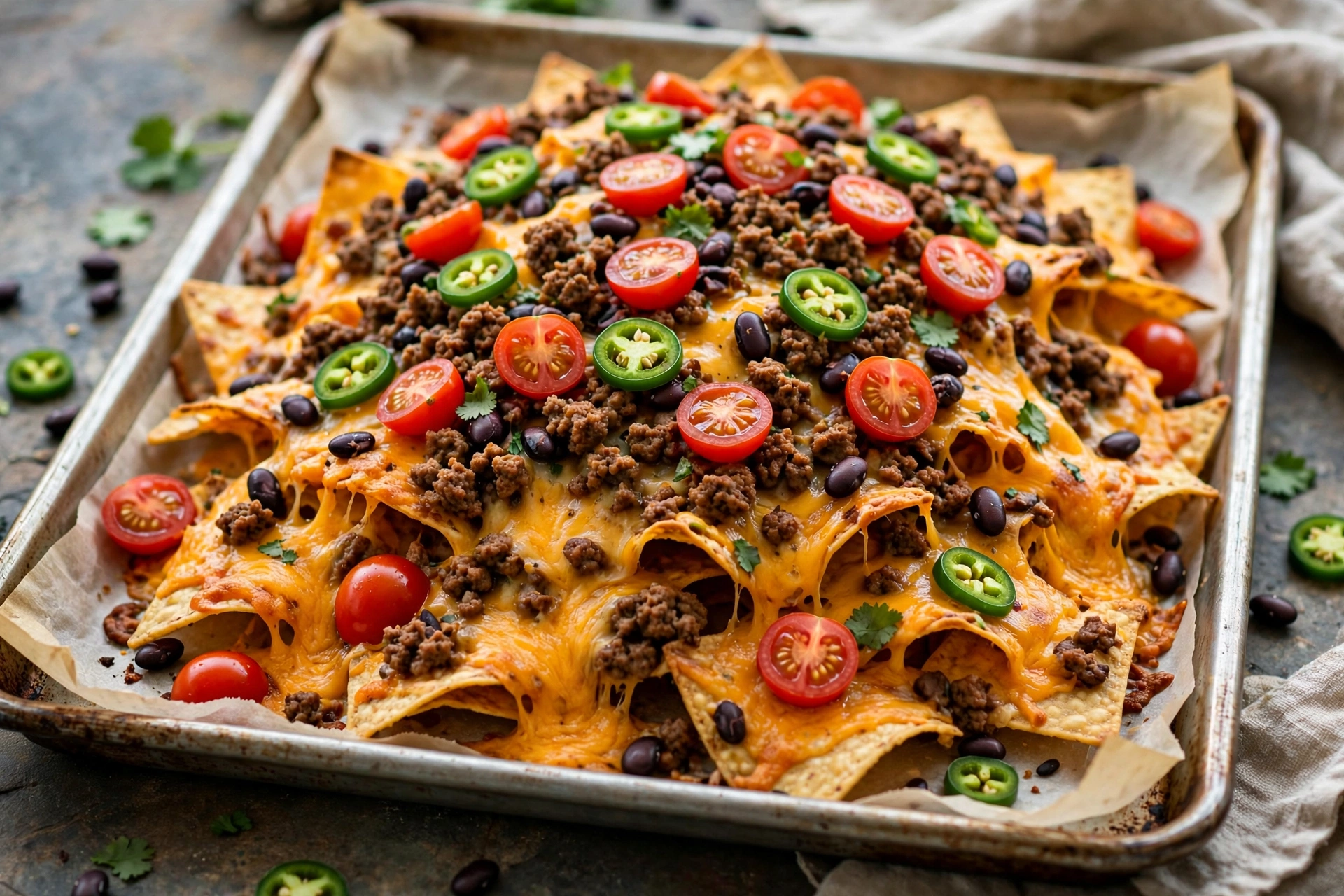
This version uses seasoned ground beef, black beans, two kinds of cheese, and fresh toppings added after the bake so they stay bright and crunchy. It takes about 25 minutes from start to finish, and it feeds four people as a snack or two very happy people as dinner.
Ingredients
For the beef and beans
- 1/2 pound ground beef
- 1 tablespoon olive oil
- 1 small onion, finely diced
- 2 cloves garlic, minced
- 1 teaspoon chili powder
- 1 teaspoon ground cumin
- 1/2 teaspoon smoked paprika
- 1/2 teaspoon kosher salt
- 1/4 teaspoon black pepper
- 1 can (15 oz) black beans, drained and rinsed
For the nachos
- 1 large bag (13 oz) sturdy tortilla chips
- 2 cups shredded cheddar cheese
- 1 cup shredded Monterey Jack cheese
- 1/2 cup pickled jalapeños, sliced
- 1 cup cherry tomatoes, halved
- 1/2 red onion, thinly sliced
- 1 avocado, diced, or 1/2 cup guacamole
- 1/2 cup sour cream
- 1/4 cup fresh cilantro, chopped
- 1 lime, cut into wedges
Sturdy tortilla chips are non-negotiable. Thin, flimsy chips shatter under the weight of the toppings and turn to mush in the oven. Look for thick restaurant-style chips, the kind that feel solid in your hand. If your chips are thin, use two layers of them and go lighter on the wet toppings.
Freshly shredded cheese melts far better than the pre-shredded kind, which is coated in starch to keep it from clumping in the bag. That starch also keeps it from melting smoothly. Grating a block of cheddar and a block of Monterey Jack takes two minutes and the difference is obvious. The cheddar brings flavour and the Jack brings that perfect stretchy pull.
Step-by-Step Method
Step 1: Cook the seasoned beef
Heat the olive oil in a large skillet over medium-high heat. Add the onion and cook for 3 minutes until it softens, then add the garlic and cook for 30 seconds more. Add the ground beef and break it into small crumbles with a wooden spoon. Cook for 5 to 6 minutes until it is browned all over, then stir in the chili powder, cumin, smoked paprika, salt, and pepper. Cook for 1 minute more so the spices bloom in the hot fat, then set the pan aside.
Step 2: Warm the beans
Put the drained black beans in a small saucepan with a pinch of salt and a splash of water. Warm them over medium heat for 3 to 4 minutes, stirring now and then, until they are heated through. You can mash about a third of them with the back of a spoon for a creamier texture, or leave them whole if you like the bite. Either way, warm beans spread more easily than cold ones and they will not cool the nachos down.
Step 3: Build the first layer
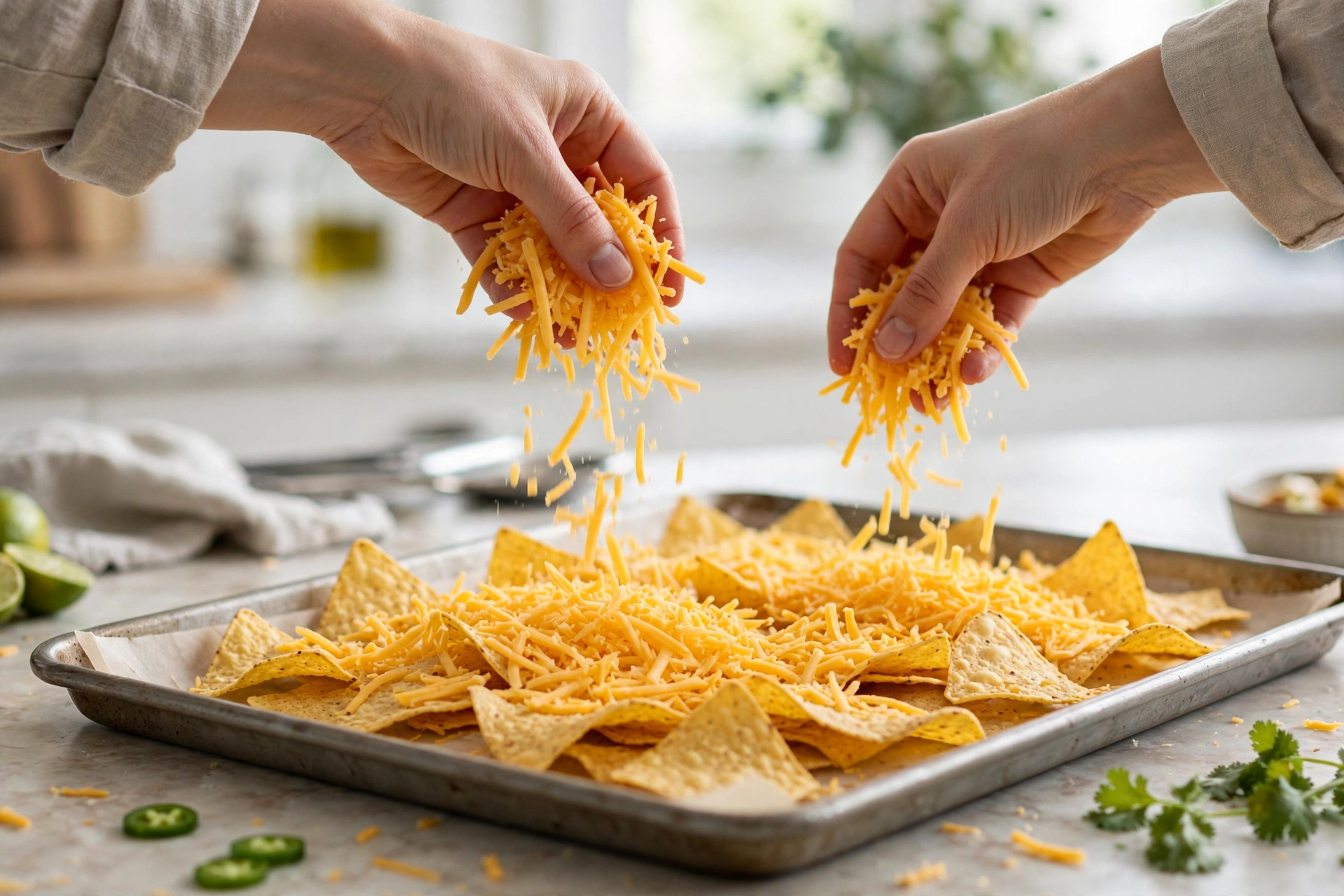
Heat the oven to 400°F. Spread half the tortilla chips in a single layer on a large rimmed baking sheet lined with parchment paper. Scatter half the seasoned beef, half the beans, and half of both cheeses over the chips. Try to get a little of everything on every chip. This is the layer that most people skip, and it is the reason their nachos are half naked.
Step 4: Build the second layer and bake
Layer the remaining chips on top, then scatter the rest of the beef, beans, and cheese over them. Add the pickled jalapeños now so they warm through in the oven. Bake for 8 to 10 minutes, until the cheese is fully melted and bubbling at the edges. Watch the chips at the corners, since they brown fastest. Pull the tray out the moment the cheese melts. An extra minute turns golden chips into burnt ones.
Step 5: Add the fresh toppings
Let the nachos sit for 2 minutes so the cheese sets a little and the tray stops sizzling. Then scatter the cherry tomatoes, red onion, and avocado over the top. Dollop the sour cream in spoonfuls, sprinkle the cilantro, and tuck the lime wedges around the edges. Serve the tray right in the middle of the table with plenty of napkins, and let everyone dig in.
Tips for Perfect Results
Layering is everything. Two thin layers beat one thick pile every time. With one layer, the toppings sit on top and the chips below stay plain. With two layers, every chip has cheese and beef on it, and the whole tray eats evenly from the first handful to the last.
Keep wet toppings off until after the bake. Tomatoes, sour cream, avocado, and salsa all release moisture, and moisture is what turns crisp chips soft. Bake the cheese and the hot toppings first, then add the fresh stuff at the end. The contrast between the hot, melty cheese and the cool, fresh toppings is half the pleasure.
Use a rimmed baking sheet, not a deep dish. A flat sheet lets the heat reach every chip and keeps the layers spread out. In a deep dish, the chips in the middle steam instead of crisping, and the cheese on top never reaches the chips at the bottom. If you only have a small sheet, make two smaller trays instead of one overloaded one.
Drain the beef well. Greasy beef makes soggy chips. After browning, tilt the pan and spoon out any extra fat before you add the spices. The same goes for the beans. Drain them fully and do not add the can liquid, or the bottom layer of chips will go soft before the tray even reaches the table.
Serve immediately. Nachos have a short window. They are perfect for about 10 minutes after they come out of the oven, good for 20, and sad after 30. Have the fresh toppings ready before the tray goes in, so the moment it comes out you can finish it and serve it while the cheese is still stretching.
The cheese you pick changes the whole tray. Sharp cheddar brings the most flavour, but on its own it can turn greasy as it melts. Monterey Jack melts smoother and stretches better, which is why the mix of the two works so well. If you want a little more depth, swap half the cheddar for pepper jack. It adds a gentle heat without changing anything else in the recipe. And whatever cheese you use, grate it yourself from a block. The bagged kind is coated to stop it clumping in the bag, and that same coating stops it melting smoothly on the chips.
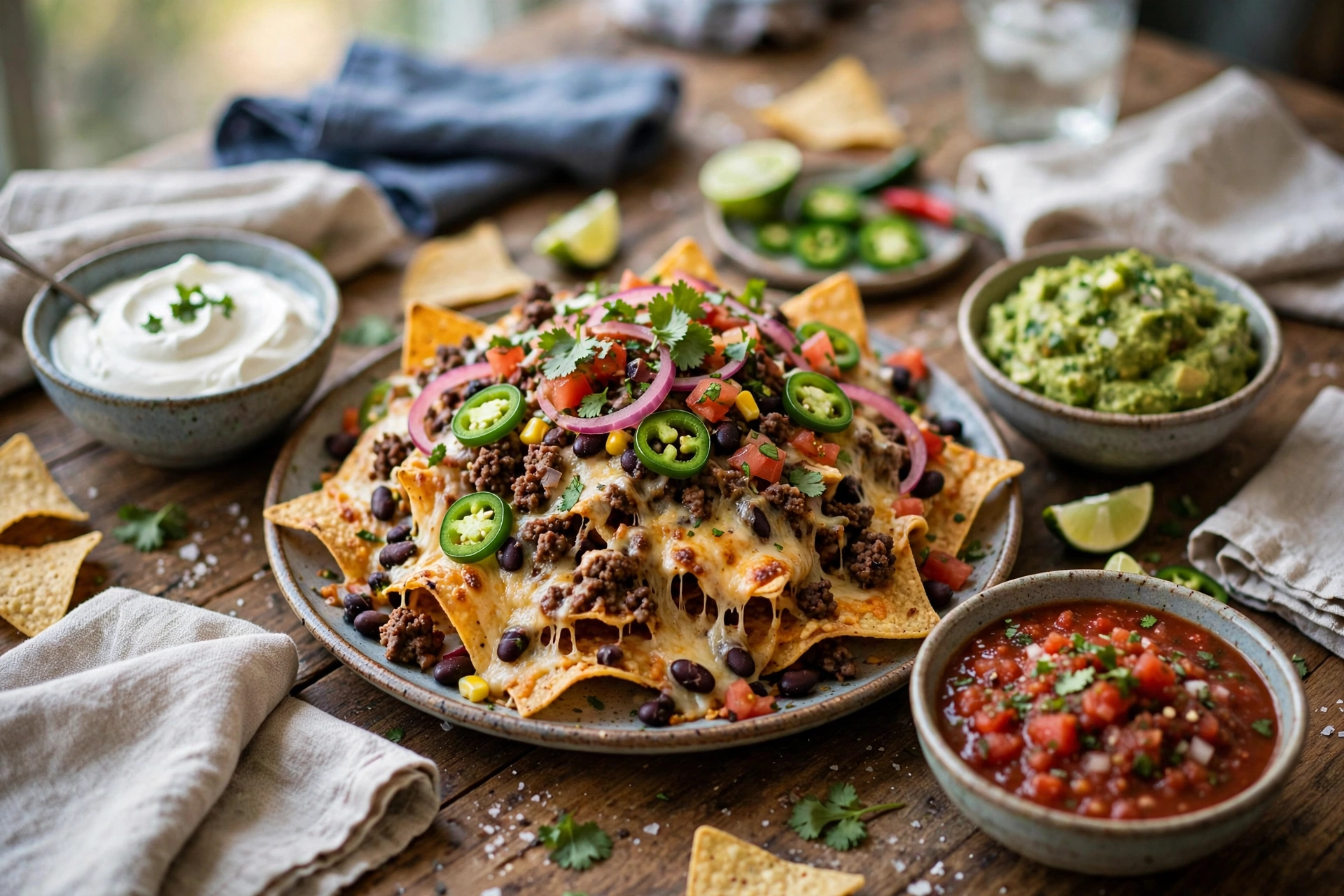
Salsa belongs on the side, not on the tray. A spoonful of salsa on hot nachos releases water as it heats, and that water softens the chips underneath within minutes. The same goes for guacamole, which thins out and browns in the heat, and sour cream, which melts into a puddle. Keep the cool toppings in bowls next to the tray and let people add their own. The hot cheese and the cool toppings stay at their best that way, and every handful is crisp.
The baking sheet you use matters too. A dark metal sheet browns the chips on the bottom faster than a light one, which can be a good thing if you watch it, but it can also burn the corners. A light-coloured rimmed sheet gives you the most even result. Line it with parchment paper so the cheese does not weld itself to the metal. The parchment also makes serving easier, since you can slide the whole sheet of nachos onto a board and carry it to the table without disturbing the layers.
One last thing about the cheese: if you buy a block of cheese and grate it yourself, you will notice the difference the moment the tray comes out of the oven. The cheese melts into a smooth blanket instead of staying in separate shreds, and it stretches when you pull a chip away. It is a small step that makes a visible difference.
Serving and Storage
Nachos are a sharing food, so serve them on the tray, in the middle of the table, with a stack of small plates and a lot of napkins. They work as a game-night snack, a movie-night dinner, or the centrepiece of a casual get-together. If you want a full Mexican-inspired spread, start with Authentic Mexican Beef Tacos (Juicy Beef, Fresh Salsa, Warm Tortillas) and put the nachos alongside as the dish everyone fights over.
For a lighter spread, add a bowl of Venezuelan Cheese Arepas (Crispy Outside, Gooey Inside) to the table. The arepas bring a different kind of cheesy comfort, and the two dishes together cover every craving at once. A cold drink, some lime wedges, and a bowl of extra salsa are all the extras you need.
Leftovers are tricky, since loaded nachos do not reheat well. The chips go soft and the fresh toppings wilt. If you do have leftovers, pick off the fresh toppings, spread the chips and cheese on a sheet, and reheat them in a 375°F oven for 5 minutes. They will not be as good as fresh, but they will be edible. The best move is to make only as much as you will eat, and save the uncooked beef and beans for the next round.
Easy Variations
For a chicken version, swap the ground beef for shredded rotisserie chicken tossed with the same spices and a squeeze of lime. It is faster, since the chicken is already cooked, and it tastes just as good under the cheese. A little hot sauce stirred into the chicken adds a nice kick.
For a vegetarian version, skip the beef and double the beans, adding a can of corn and a diced bell pepper to the pan. The corn adds sweetness and the pepper adds crunch, and nobody misses the meat when the cheese is melting over everything. A spoonful of refried beans spread on the chips first helps everything stick.
For a breakfast version, top the baked nachos with scrambled eggs, crumbled bacon, and a drizzle of hot sauce instead of the beef and beans. It is a weekend brunch that takes 15 minutes and disappears even faster. Serve it with coffee and orange juice and call it a morning.
For a barbecue version, use pulled pork or shredded barbecue chicken, swap the cheddar for smoked gouda, and finish with pickled red onions and a drizzle of barbecue sauce. The smoky flavour changes the whole dish, and it is a great way to use up leftover pulled pork from the weekend.
Frequently Asked Questions
How do I keep nachos from getting soggy?
Layer the chips and cheese instead of piling everything on top, drain the beef and beans well, and keep wet toppings like tomatoes, sour cream, and salsa off until after the bake. A rimmed baking sheet helps too, since it lets the heat reach every chip. Serve within 10 minutes of baking for the best crunch.
What cheese melts best on nachos?
A mix of sharp cheddar and Monterey Jack is the classic combination. The cheddar brings flavour and the Jack brings a smooth, stretchy melt. Grate it fresh from a block for the best results, since pre-shredded cheese is coated in starch and melts less smoothly.
Can I make nachos ahead of time?
You can prep everything ahead: cook the beef, warm the beans, chop the toppings, and shred the cheese. Store them separately and build the tray just before baking. Assembled nachos should go straight into the oven, since sitting with wet toppings on them softens the chips fast.
What chips are best for loaded nachos?
Thick, sturdy restaurant-style tortilla chips. They hold up under the weight of the toppings without breaking. Thin chips shatter and turn to mush. If your chips feel flimsy, use two layers of them and go lighter on the wet toppings.
Are nachos a meal or a snack?
Both. A full tray with beef, beans, and cheese is a meal for two or a hearty snack for four. If you want a lighter snack, skip the beef and keep the cheese and beans. They also sit well next to Argentine Beef Empanadas (Flaky Pastry, Juicy Filling) as part of a bigger Latin-inspired spread for a crowd.
Final Thoughts
Loaded nachos are proof that the best food is often the simplest. Chips, cheese, seasoned beef, beans, and fresh toppings, layered right and baked until bubbling. No fancy technique, no special equipment, just a hot oven and a tray everyone gathers around.
Make them for game night, for a movie, or for no reason at all on a Tuesday. Build them in layers, keep the wet stuff off until the end, and serve them the moment the cheese melts. Then step back and watch the tray empty itself.