
Few dishes stop a table quite like a proper seafood paella. The wide pan arrives still crackling, the rice glowing gold from saffron, prawns curled pink on top and mussels opened like little sails. It looks like a celebration, yet it is more achievable than most people think. The secret is not skill — it is patience. You build the flavour base slowly, add the rice, and then, hardest of all, you leave it alone. No stirring, no peeking. Do that, and you may even get the famous socarrat, the crisp, toasty layer of rice at the bottom that everyone fights over. This recipe serves 6 generously, in a 38–40 cm (15–16 inch) pan.
Ingredients
For the seafood
- 500 g (about 1 lb) large raw prawns or shrimp, peeled, tails left on, deveined
- 500 g (about 1 lb) fresh mussels, scrubbed and debearded
- 300 g (about 10 oz) squid, cleaned and cut into rings
- 2 tablespoons (30 ml) olive oil, for searing
- 1/2 teaspoon fine sea salt
For the rice and base
- 3 cups (600 g) Bomba rice or other short-grain paella rice
- 6 cups (1.4 litres) good fish or seafood stock, kept warm
- 1/2 teaspoon saffron threads (about 0.5 g)
- 1/3 cup (80 ml) extra virgin olive oil
- 1 large onion (about 200 g / 7 oz), finely chopped
- 1 large red bell pepper (about 200 g / 7 oz), finely diced
- 4 garlic cloves, minced (about 1 tablespoon)
- 2 ripe tomatoes (about 300 g / 10 oz), grated or finely chopped
- 1 teaspoon smoked paprika (pimentón)
- 1/2 cup (120 ml) dry white wine (optional)
- 1 cup (150 g) frozen peas, thawed
To serve
- 1 lemon, cut into 6 wedges
- 2 tablespoons fresh flat-leaf parsley, roughly chopped
- Extra olive oil, for drizzling
Step-by-Step Method
- Prepare the seafood (10 minutes). Rinse the mussels under cold water; discard any that are cracked or stay open when tapped sharply. Pat the prawns and squid dry and season the prawns lightly with the salt — dry seafood cooks far better than wet.
- Bloom the saffron (5 minutes). Crumble the saffron into the warm stock and let it sit; it will turn deep golden — this is the soul of the dish.
- Sear the prawns (2–3 minutes). Heat 2 tablespoons of olive oil in the pan over medium-high heat. Cook the prawns about 1 minute per side, just until pink and barely cooked through (prawns are safe at 63°C / 145°F), then lift them out — they finish on the rice later.
- Cook the squid (2 minutes). In the same pan, fry the squid rings for 1–2 minutes until just opaque, then set aside with the prawns; overcooked squid turns rubbery.
- Make the sofrito (12–15 minutes). Add the 1/3 cup (80 ml) olive oil and lower the heat to medium. Cook the onion and pepper with a pinch of salt for 8–10 minutes, until soft and sweet. Stir in the garlic for 30 seconds, then the tomato; cook 4–5 more minutes until dark and thick. Add the paprika for 30 seconds only — it burns quickly.

- Toast the rice (2 minutes). Tip in the rice and stir it through the sofrito for 1–2 minutes so every grain is coated. Pour in the wine, if using, and let it bubble away.
- Add the stock and stop stirring (18–20 minutes). Pour in the saffron stock, stir once to spread the rice evenly, and taste the stock for salt. From now on, do not stir again. Simmer over medium heat for 10 minutes, then on low for 8–10 minutes more, turning the pan occasionally on a small burner.
- Add the seafood and peas (5 minutes). Scatter the peas, squid and prawns over the rice, pushing them in slightly, with the mussels hinge-side down. Cover loosely with foil and cook 4–5 minutes, until the mussels open and the rice has absorbed almost all the liquid. Discard any that stay shut.
- Create the socarrat (1–2 minutes). Turn the heat up to medium-high for 60–90 seconds, until you hear gentle crackling and smell toasted rice — that is the prized crust forming. Remove from the heat before it smells burnt.
- Rest (5–10 minutes). Cover with foil or a clean tea towel and rest for at least 5 minutes, so the rice finishes steaming. Scatter with parsley, add the lemon wedges, and carry the pan to the table.
Tips for Perfect Results
- Use the right rice. Bomba or Calasparra rice absorbs lots of liquid without going mushy. Never use long-grain rice, and never rinse it — the surface starch helps the texture.
- Keep the stock hot. Cold stock drops the pan temperature and cooks the rice unevenly.
- Respect the no-stir rule. Stirring releases starch and turns paella into risotto. Spread the rice once, then trust the pan.
- Season the stock, not just the dish. The rice absorbs it completely, so the stock should taste well salted before it goes in.
- Watch the socarrat with your nose. Listen for crackling and check the smell — toasted is wonderful, burnt is bitter.
- Common mistakes: overcrowding the pan (a thin layer of rice cooks best), adding the seafood too early so it overcooks, and using a pan so small the rice sits deep and soggy.
Serving and Storage
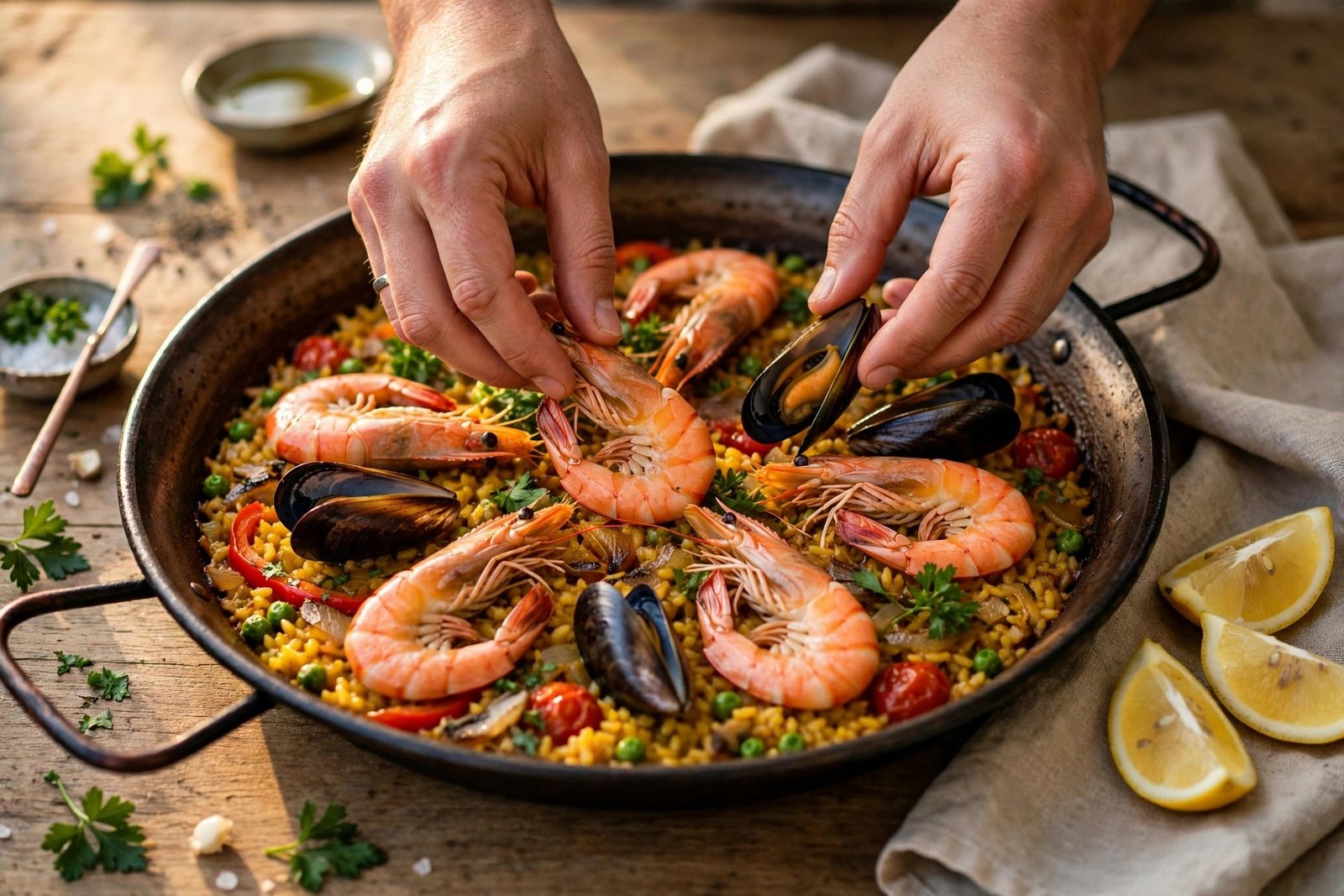
At FoodoraNest, we serve paella the Spanish way — straight from the pan, everyone helping themselves and squeezing lemon over their portion. A green salad and crusty bread complete it.
Leftover paella keeps in the fridge for up to 2 days. Reheat in a covered frying pan with a splash of water, over low heat for 8–10 minutes, until steaming hot throughout; reheat seafood only once. Freezing is not recommended — the rice turns grainy and the seafood tough.
Frequently Asked Questions
Can I use a regular frying pan instead of a paella pan?
Yes — a wide, heavy skillet of 35–40 cm works well. The key is a thin, even layer of rice; avoid deep, narrow pots.
What if I can’t find Bomba rice?
Any short-grain rice, such as Arborio, works, though it may need slightly less stock and a minute less cooking. The result is a little softer but still delicious.
How do I know the seafood is cooked safely?
Prawns should be pink and opaque (63°C / 145°F inside), squid white and opaque, and mussels fully opened. When in doubt, give it one extra minute — and always discard mussels that refuse to open.
Can I add chicken or chorizo?
Valencian traditionalists say no to chorizo, but home cooks mix things up. Brown small pieces of chicken with the squid if you like — just keep the total modest so the rice cooks in a thin layer.
Why is my rice still hard in the middle?
The heat was probably too high, so the liquid evaporated before the rice cooked. Cover with foil, add 3–4 tablespoons of hot stock, and cook gently for 3–4 more minutes.
Pingback: Peruvian Ceviche (Fresh, Zesty, and Ready in Minutes) – FoodoraNest