
In Argentina, the empanada is not just a snack — it is an event. Families argue cheerfully about the best filling, every province has its own style, and a tray of homemade Argentine beef empanadas disappears the moment it reaches the table. The classic version is hard to beat: juicy ground beef with sweet onion, warm spices, green olives, and chopped egg, wrapped in a golden, flaky crust with a hand-crimped edge.
This recipe makes 12 empanadas and serves 4 to 6 people. Store-bought discs keep it weeknight-friendly, while the filling follows the traditional Tucumán-style balance of savoury, sweet, and gently spiced. Bake them for a lighter finish, or fry them for the full celebratory crunch.
Ingredients
For the dough
- 12 store-bought empanada discs (tapas), about 12–13 cm (5 inches) across, roughly 400 g total, thawed if frozen
- 1 tablespoon plain flour, for dusting
- A small bowl of water, for sealing
- 1 egg beaten with 1 tablespoon (15 ml) milk, for egg wash (baked version only)
For the beef filling
- 500 g (1 lb 2 oz) ground beef (about 85% lean)
- 2 medium onions (about 300 g), finely diced
- 1 red bell pepper (about 150 g), finely diced
- 2 tablespoons (30 ml) olive oil or neutral oil
- 2 garlic cloves (about 6 g), finely chopped
- 2 teaspoons (4 g) sweet paprika
- 1 teaspoon (2 g) ground cumin
- 1 teaspoon (1 g) dried oregano
- ½ teaspoon (1 g) chilli flakes (optional)
- 1½ teaspoons (9 g) fine sea salt
- ½ teaspoon (1 g) black pepper
- ⅓ cup (80 ml) beef stock or water
- ⅓ cup (50 g) raisins (traditional and lovely — optional)
- 12 pitted green olives (about 50 g), halved
- 2 hard-boiled eggs (about 100 g), peeled and chopped
- 3 spring onions (about 45 g), green parts finely sliced
To serve (optional)
- Chimichurri sauce, or a simple squeeze of lemon
Step-by-Step Method
- Soften the onions (10 minutes). Heat the oil in a large frying pan over medium heat. Cook the onions and red pepper with a pinch of the salt for 8–10 minutes, until soft and sweet but not browned.
- Brown the beef (8 minutes). Add the garlic and beef. Cook, breaking up the meat with a spoon, for 6–8 minutes until no pink remains and the beef is cooked through to at least 71°C (160°F).
- Season and simmer (5 minutes). Stir in the paprika, cumin, oregano, chilli flakes if using, the remaining salt, the pepper, and the stock. Simmer for 3–5 minutes until the mixture is juicy but not soupy — it should hold together on a spoon. Stir in the raisins if using.
- Rest the filling completely. Tip the filling into a shallow dish, spread it out, and cool it. Then refrigerate for at least 30 minutes, or up to overnight. Cold filling is the secret: it keeps the dough crisp and stops the empanadas leaking.
- Finish the filling. Stir the chopped eggs, olives, and spring onion greens through the cold filling, gently, so the egg stays in pieces.
- Fill and crimp. Lightly flour your surface. Lay a disc out, place 2 heaped tablespoons (about 45 g) of filling in the centre, and brush the edge with water. Fold into a half-moon and press the edges firmly. Crimp with a fork, or fold the edge over itself in small twists (the traditional repulgue). Stand each empanada on a lined tray.

- Chill before cooking (20 minutes). Refrigerate the filled empanadas for 20 minutes. This firms the dough and dramatically reduces leaks and bursts.
- Bake (20–25 minutes). Heat the oven to 200°C (400°F). Brush the empanadas with egg wash and bake on the middle shelf for 20–25 minutes, until deep golden and crisp underneath.
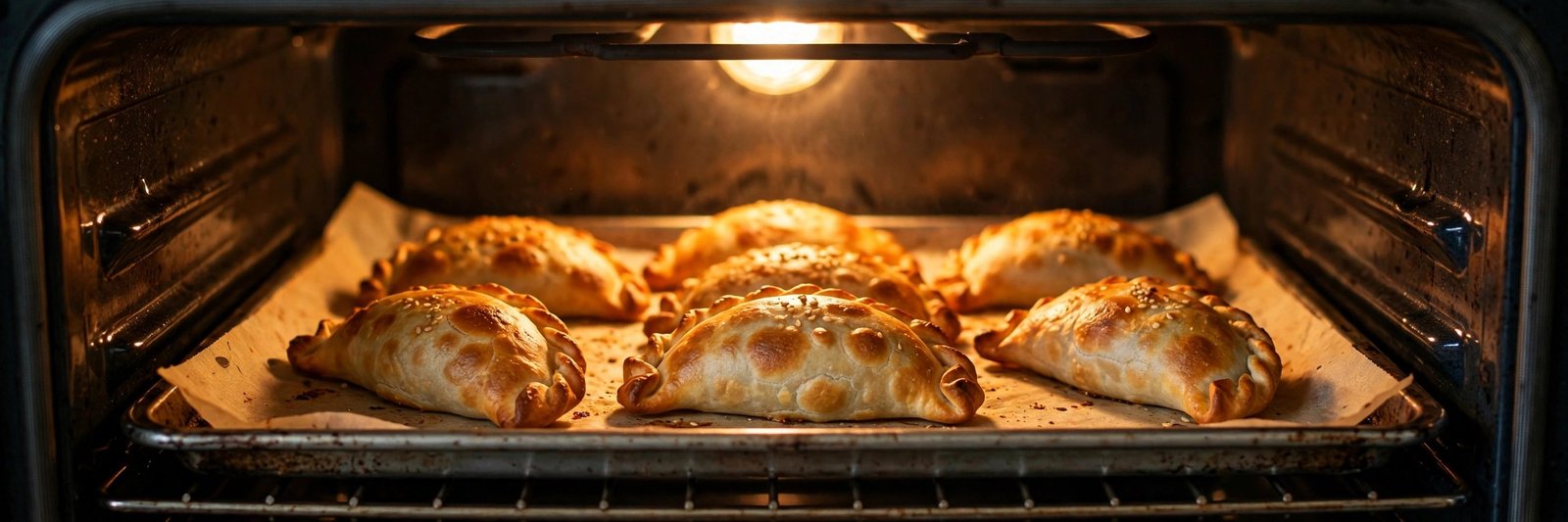
- Or fry (3–4 minutes each). Hot-oil safety first: use a deep, heavy pan filled no more than one-third with neutral oil, never leave it unattended, keep water and children well away, and lower the empanadas in gently with a slotted spoon — never drop them. Heat the oil to 180°C (350°F) and fry in small batches for 3–4 minutes, turning once, until deep golden. Drain on a rack or kitchen paper and rest for 5 minutes — the filling will be extremely hot.
Tips for Perfect Results
- Cold filling, always. Warm filling melts the fat in the dough and makes soggy, leaky empanadas.
- Do not overfill. About 45 g per disc seals properly; overfilled empanadas burst and empty themselves in the oven.
- Seal on a clean edge. Keep filling and grease away from the rim, brush with water, and press firmly — the seal is everything.
- A little juice is good. The filling should be moist but never swimming. If it looks wet after simmering, cook it a minute longer.
- Rest after cooking. Five minutes lets the juices settle so the first bite does not burn or spill.
- Taste before you wrap. The filling should taste slightly bolder than you think, because the pastry softens the seasoning.
Common mistakes: wrapping warm filling, skipping the chilling step, overfilling the discs, and — for frying — overcrowding the pan, which drops the oil temperature and makes greasy empanadas.
Serving and Storage
Serve the empanadas hot, with chimichurri or lemon wedges, a crisp green salad, and something cold to drink. In Argentina they are often eaten standing up, straight from the tray, with plenty of napkins — a tradition FoodoraNest fully supports.
Cooked empanadas keep in the fridge for up to 3 days; reheat in a 180°C (350°F) oven for 8–10 minutes to restore the crispness (the microwave makes them soft). Uncooked empanadas freeze brilliantly: freeze on the tray until solid, then bag for up to 3 months. Bake from frozen at 200°C (400°F) for 25–28 minutes, or thaw overnight in the fridge and cook as normal.
Frequently Asked Questions
Can I make my own dough instead of using discs?
Yes. Rub 75 g (⅓ cup) cold butter or lard into 375 g (3 cups) plain flour and 1 teaspoon salt, then bring together with about 180 ml (¾ cup) warm water. Rest 30 minutes, roll thin, and cut 12–13 cm rounds.
Which cut of beef is most traditional?
Many Argentine cooks hand-cut lean beef (like topside) into tiny cubes rather than using ground beef. Ground beef is the easier home version and still delicious.
Can I leave out the raisins or olives?
Of course — regional recipes vary, and home cooking should suit your table. The olives give a salty pop and the raisins a gentle sweetness, but both are adjustable.
Why did my empanadas leak?
Usually the filling was warm or too wet, the empanadas were overfilled, or the seal was greasy. Chill everything, seal on a clean edge, and do not skip the pre-cooking rest.
Can I fill them with something else?
Easily. Ham and cheese, sweetcorn (humita), spinach and cheese, or chicken are all classic Argentine fillings. Just keep the filling cool and fairly dry.
Pingback: Brazilian Feijoada (Hearty Black Bean Stew with Pork) – FoodoraNest