
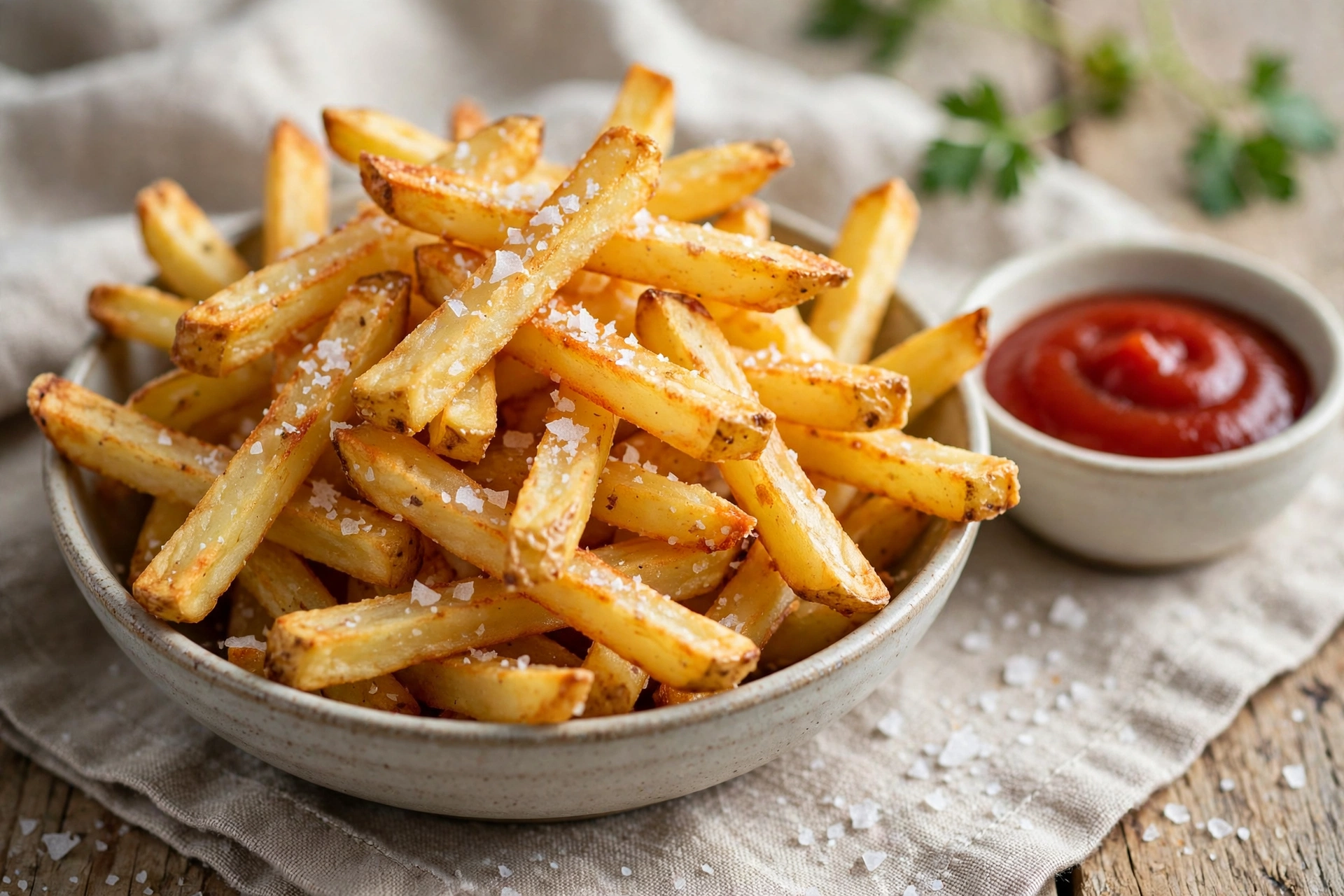
Homemade French Fries (Crispy Outside, Fluffy Inside) are the side dish that every cook thinks they can make until they try. The first batch comes out limp, or brown on the outside and raw in the middle, or crisp for thirty seconds and then soft. It feels like fries should be simple. Potatoes, oil, salt. But the gap between a decent fry and a great one is a real technique, and it is not hard once you know it.
The secret is the double fry. You cook the potatoes once at a lower temperature to cook them through, then again at a higher temperature to crisp the outside. Restaurants have done it this way for decades, and it works because each fry has a different job. The first one cooks the inside. The second one builds the crust.
This recipe uses Russet potatoes, a soak to wash away extra starch, and two quick fries that take about 20 minutes total. The result is a fry that is golden and shattering on the outside, soft and fluffy in the middle, and salty all the way through.
Ingredients
For the fries
- 4 large Russet potatoes, about 2 pounds
- Vegetable oil or peanut oil, for frying
- 1 tablespoon white vinegar, for the soak
- 1 teaspoon kosher salt, plus more to taste
Seasoning ideas
- 1/2 teaspoon garlic powder
- 1/2 teaspoon smoked paprika
- 1/4 teaspoon black pepper
- Flaky sea salt, for finishing
- Ketchup, mayo, or your favourite dipping sauce
Russet potatoes are the right choice for fries. They are high in starch and low in moisture, which is exactly what you want. The starch puffs up inside when it cooks, giving you that fluffy centre, and the low moisture means the outside crisps instead of steaming. Waxy potatoes like red or new potatoes stay dense and never get properly fluffy, so save those for roasting or salads.
Peanut oil is the classic frying oil for fries because it has a high smoke point and a clean, neutral flavour. Vegetable oil works just as well and is easier to find. Avoid olive oil for deep frying. Its smoke point is too low for the high heat you need, and its flavour is too strong for fries.
Step-by-Step Method
Step 1: Cut the potatoes into even sticks
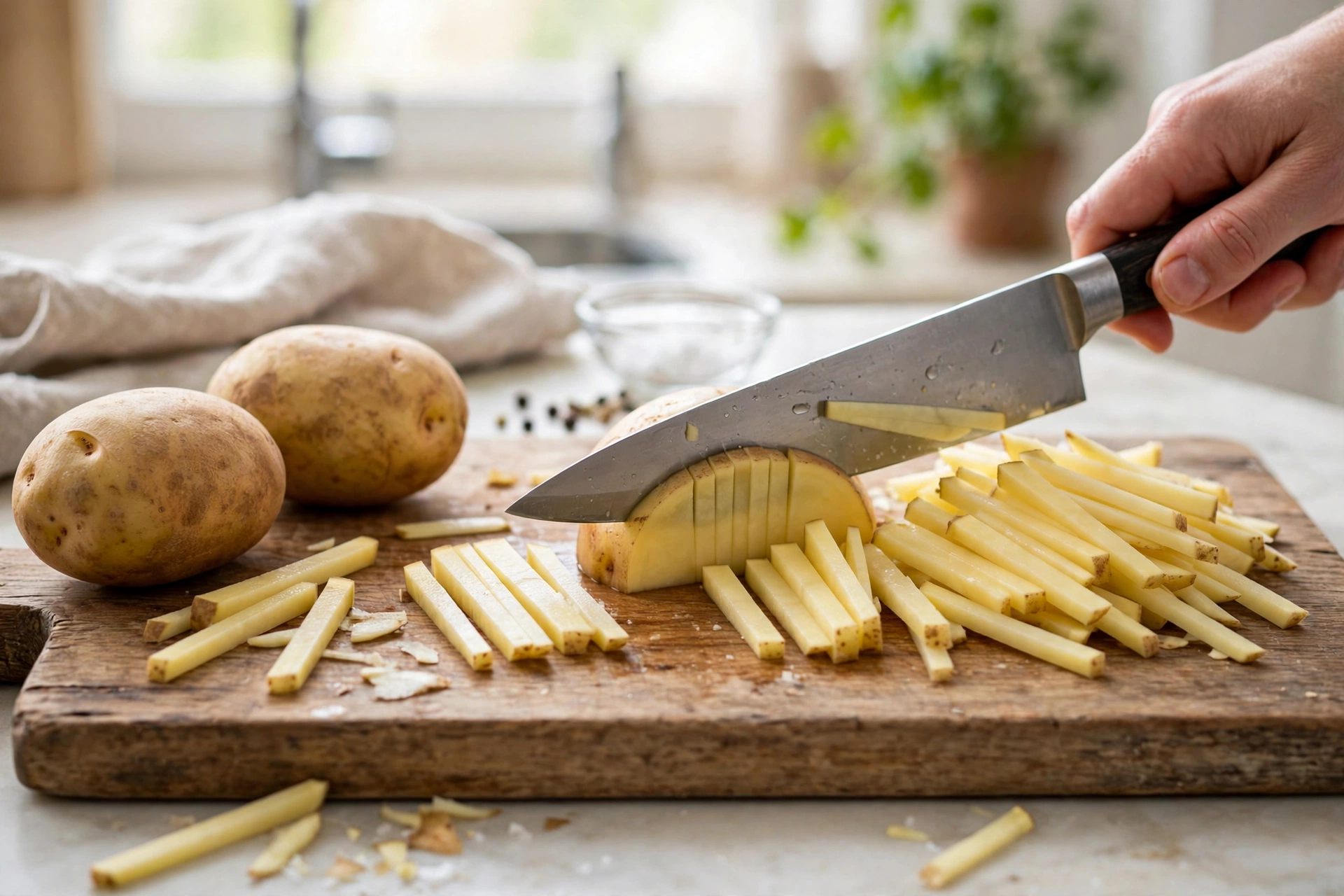
Peel the potatoes and cut them into sticks about 1/4 inch thick and 3 to 4 inches long. Even thickness is the whole game here. If some sticks are thick and some are thin, they will cook at different speeds and you will get a mix of burnt and raw fries. Take your time with the knife, and save the odd-shaped end pieces for another use.
Step 2: Soak the cut potatoes
Put the cut potatoes in a large bowl of cold water with the vinegar and let them soak for at least 30 minutes, or up to 2 hours in the fridge. The soak washes away surface starch, which is what makes fries stick together and turn gummy. You will see the water turn cloudy. That is the starch coming off, and it is a good sign. Drain the potatoes and dry them thoroughly with clean towels or paper towels before frying. Wet potatoes in hot oil splatter badly.
Step 3: First fry at 325°F
Pour about 2 inches of oil into a deep, heavy pot and heat it to 325°F. Fry the potatoes in small batches for 4 to 5 minutes. They should be soft and pale, not brown. This first fry cooks the inside through. Lift the fries out with a slotted spoon and drain them on a wire rack. Let them cool for at least 10 minutes while you finish the rest. They will look unfinished, and that is exactly right.
Step 4: Second fry at 375°F
Raise the oil temperature to 375°F. Fry the potatoes again in small batches, this time for 2 to 3 minutes, until they are deep golden brown and crisp. This second fry is where the magic happens. The outside dries out and crisps while the inside stays soft and fluffy. Work in small batches so the oil temperature stays high.
Step 5: Salt immediately and serve
Drain the fries on the wire rack for a few seconds, then toss them in a large bowl with kosher salt while they are still hot. Salt sticks best to a hot, glistening fry. Add garlic powder or smoked paprika if you like. Serve right away, while the crust is at its crispiest, with ketchup or your favourite sauce on the side.
Tips for Perfect Results
Dry the potatoes completely before they hit the oil. Water and hot oil do not mix, and wet fries splatter and cool the oil down. After soaking, spread the potatoes on clean kitchen towels and pat them dry on all sides. It takes a minute, and it is worth it for safety and for crispness.
Do not skip the soak. It is tempting to cut the potatoes and fry them straight away, but the surface starch is what makes fries stick together in clumps and turn soft. A 30-minute soak is the minimum. An hour is better. If you are planning ahead, you can soak the cut potatoes in the fridge overnight and fry them the next day.
Keep the oil temperature steady. This is the single biggest factor in good fries. Too cool and the fries absorb oil and go greasy. Too hot and they burn before the inside cooks. A thermometer takes the guesswork out of it. Between batches, let the oil climb back up to temperature before you add the next handful.
Fry in small batches. Crowding the pot drops the oil temperature fast, and a pot full of fries steams instead of frying. Five or six handfuls at a time is about right for a standard pot. It takes a little longer, but every batch comes out golden and crisp instead of pale and soggy.
Salt while hot, season after. Salt needs heat and a little oil on the surface to stick. Seasonings like garlic powder and paprika can go on with the salt, but delicate herbs should go on last so they do not burn on the hot fries. And always serve the sauce on the side, never poured over the fries.
The cut of the fry changes the eating experience more than you might expect. Thin shoestring fries cook fast and turn very crisp, but they cool quickly and can taste dry. Thick steak fries stay fluffy inside for longer, but they need a longer first fry to cook through. The quarter-inch stick in this recipe is the middle ground, and it is the size most restaurants use. Whatever size you cut, keep every stick the same thickness, because a mixed batch is impossible to cook evenly. If you like your fries extra thick, cut them a full half inch wide and add two minutes to the first fry.
The oil you fry in can be reused if you treat it right. Let it cool completely, strain it through a fine sieve lined with a coffee filter, and store it in a clean jar in a cool, dark place. It will be good for one or two more rounds of frying. If it smells off, looks very dark, or foams when it heats, throw it out. Fresh oil is cheap, and it makes noticeably better fries. Never pour used oil down the drain. Let it cool, pour it into a sealed container, and throw it in the bin.
Seasoning sticks best when the fries are hot and still glistening with oil. Toss them in a large bowl with the salt and seasonings, rather than sprinkling from above, so every fry gets an even coating. If you wait until the fries cool, the salt bounces off and lands in the bottom of the bowl. A big bowl and a quick toss is the restaurant method, and it works because the fries tumble against each other and pick up seasoning on every side.
If you want to check whether your oil is ready without a thermometer, drop one fry into the oil. If it sizzles hard right away and floats within a few seconds, the oil is hot enough. If it sinks and bubbles lazily, wait a little longer. This little test saves a whole batch from going greasy.
Serving and Storage
Fries belong next to almost everything. They are the classic partner for a burger, and if you want the full fast-food night at home, pair them with Juicy Homemade American Cheeseburger (Better Than Any Fast Food Joint) and a pile of these fries. They are also the natural side for Traditional British Fish and Chips (Crispy Batter, Flaky Fish, Chunky Chips), where the fries are half the dish.
If you want to turn fries into a meal, load them up. Cheese sauce, bacon bits, jalapeños, and sour cream turn a side into loaded fries, and a plate of them with Canadian Poutine with Homemade Gravy (Crispy Fries, Cheese Curds, Rich Gravy) on the side is a comfort-food feast. Or keep it simple: a bowl of hot fries, flaky salt, and good ketchup is hard to beat.
Leftover fries keep in the fridge for up to 2 days, but they will lose their crunch. To bring them back, spread them on a baking sheet and reheat in a 425°F oven for 5 to 7 minutes, or in an air fryer at 400°F for 3 to 4 minutes. They will not be quite as good as fresh, but they will be crisp again. Never reheat fries in the microwave. It turns them soft and limp in seconds.
Easy Variations
For garlic Parmesan fries, toss the hot fries with a tablespoon of melted butter, a clove of minced garlic, and a handful of finely grated Parmesan, then sprinkle with chopped parsley. The butter helps the cheese and garlic stick, and the result tastes like the fries from a good gastropub.
For spicy fries, toss the hot fries with a teaspoon of chili powder, half a teaspoon of cumin, and a pinch of cayenne, then serve with a chipotle mayo. The heat is gentle and builds slowly, and the cool sauce balances it. A squeeze of lime over the top brightens the whole thing.
For sweet potato fries, cut sweet potatoes the same way and follow the same method, but shorten the first fry to 3 minutes since sweet potatoes cook faster. They will be a little softer than Russet fries, but the sweet flavour with a pinch of smoked paprika and salt is worth it.
For oven fries, toss the soaked and dried potato sticks with 2 tablespoons of oil and a teaspoon of salt, spread them on a baking sheet in a single layer, and bake at 425°F for 25 to 30 minutes, flipping halfway. They will not be as crisp as the fried version, but they are still golden and fluffy, and you skip the pot of oil.

Frequently Asked Questions
Why are my homemade fries soggy?
Soggy fries usually come from one of three things: not soaking the potatoes, oil that is too cool, or crowding the pot. Soak for at least 30 minutes to remove surface starch, keep the oil at temperature with a thermometer, and fry in small batches. The double fry is what builds the crust, so do not skip the second fry.
What potatoes are best for french fries?
Russet potatoes are the best choice. They are high in starch and low in moisture, which gives you a fluffy inside and a crisp outside. Waxy potatoes like red or new potatoes stay dense and never get properly fluffy, so they are not ideal for fries.
Do I have to soak the potatoes?
Yes, if you want crisp fries. The soak washes away surface starch that makes fries stick together and turn gummy. Thirty minutes is the minimum and an hour is better. You can soak cut potatoes in the fridge overnight if you are planning ahead.
Can I make french fries in an air fryer?
Yes. Toss the soaked and dried potato sticks with a tablespoon of oil and cook them in a single layer at 400°F for 15 to 18 minutes, shaking the basket halfway. They will be crisp and golden, though a little less rich than deep-fried fries. Work in batches so the basket is not crowded.
How do I keep fries crispy after frying?
Drain them on a wire rack, not on paper towels, so air can circulate underneath. Salt them while hot and serve them within 10 minutes. If you need to hold them, keep the rack in a 200°F oven for up to 15 minutes. They also sit well next to a plate of fried chicken as part of a fried-food spread, as long as everything is served hot and fresh.
Final Thoughts
Great fries are not about a secret ingredient. They are about a good potato, a proper soak, and two fries at two temperatures. The first fry cooks the inside. The second builds the crust. That is the whole method, and it has worked in restaurants for decades.
Make a batch this weekend and pay attention to the details. Cut them even, soak them well, dry them properly, and keep the oil hot. The first time you bite into a fry that shatters outside and melts fluffy inside, you will understand why the extra steps are worth it.