
Some dishes smell like a holiday before you even taste them, and spanakopita is one of them. The moment that tray comes out of the oven, all golden and crackling, the whole kitchen smells of butter, dill, and warm feta. You hear the phyllo snap as you cut into it, and then you get that first bite: crisp pastry on the outside, soft spinach and salty cheese on the inside. It is the kind of food that makes people go quiet, then reach for another piece.
Spanakopita is a Greek spinach pie, and it has been on family tables in Greece for a very long time. Every home cook has their own way of making it. Some roll it into little triangles you can eat with your hands, some bake it as one big tray pie and cut it into squares. This recipe is the tray version, which is the easiest way to make it at home and the best way to feed a crowd. It uses shop-bought phyllo, a filling of spinach, feta, spring onions, dill, and eggs, and a good amount of butter brushed between the layers. That is really all there is to it.
If phyllo has ever put you off, do not let it. It looks delicate and it tears, but a tray pie hides every mistake. The layers stack up, the butter glues them together, and once it bakes, nobody can tell where a sheet tore. Give yourself an hour, and you will have a pie that looks like it came from a bakery in Athens.

Why You Will Love This Spanakopita
First, it is honest food. There is nothing fancy in the filling, just spinach, cheese, eggs, and herbs, yet the result tastes far more special than the sum of its parts. The feta brings salt and tang, the spinach an earthy softness, and the dill and spring onions lift the whole thing so it never feels heavy.
Second, it works for almost any occasion. Serve it warm as a main dish with a simple salad, cut it into small squares for a party, or pack a cold slice for lunch the next day. It tastes just as good at room temperature as it does fresh from the oven.
Third, it is a great make-ahead dish. You can put the whole pie together in the morning, keep it in the fridge, and bake it when you are ready. You can also freeze it before baking and pull it out on a day when you need dinner in a hurry. Few recipes give you that much freedom and still taste this good.
Ingredients
This recipe fills a 9 by 13 inch baking dish and serves about 8 as a main dish, or 12 as a side. Everything here is easy to find in a normal supermarket.

For the spinach filling
- 2 pounds fresh spinach, washed well
- 1 bunch spring onions, finely sliced (about 6 onions)
- 1/2 cup fresh dill, chopped
- 1/4 cup fresh parsley, chopped
- 14 ounces feta cheese, crumbled
- 3 large eggs, lightly beaten
- 1/2 teaspoon black pepper
- 1/4 teaspoon ground nutmeg
- 1 pinch of salt (go easy, the feta is already salty)
- 2 tablespoons olive oil
For the phyllo layers
- 1 pound phyllo pastry sheets, thawed overnight in the fridge
- 1 cup unsalted butter, melted (about 2 sticks)
- 2 tablespoons olive oil, for brushing the dish
Buy your phyllo from the freezer aisle and let it thaw in the fridge the night before you cook. Phyllo that is still half frozen will crack, and phyllo left out on the counter too long will dry out and turn brittle. Keep the stack covered with a clean, slightly damp tea towel while you work.
Step-by-Step Method
Step 1: Cook the spinach down
Put the spinach in a large pot with just the water clinging to its leaves and cook it over medium heat for 3 to 4 minutes, turning it with tongs, until it has completely wilted. Tip it into a colander and press it hard with the back of a spoon to squeeze out as much water as you can. Then let it cool for a few minutes and squeeze it again with your hands. This step matters more than any other. Wet spinach is the one thing that will make your pie soggy, so take your time here and get it as dry as you can. Roughly chop the squeezed spinach and set it aside.
Step 2: Mix the filling
Heat the olive oil in a pan and soften the spring onions for 2 to 3 minutes until they are tender but still bright green. Take the pan off the heat and stir in the spinach, dill, and parsley. Let the mix cool for about 10 minutes, then add the crumbled feta, the beaten eggs, the black pepper, and the nutmeg. Stir it gently so the feta stays in soft chunks rather than turning into a paste. Taste it and add a small pinch of salt only if it needs it. Feta varies a lot in saltiness, so always taste before you season.
Step 3: Prepare the dish and the phyllo
Heat your oven to 350°F (175°C). Brush the baking dish with olive oil. Unroll the phyllo and lay the stack on your work surface, covered with a damp tea towel. Melt the butter and keep it warm in a small pan beside you with a pastry brush. Working quickly but calmly is the trick here. Phyllo dries out in minutes once it is exposed to air, so keep the towel over the stack between layers.
Step 4: Build the base layers
Lay one sheet of phyllo in the dish, letting the edges hang over the sides, and brush it lightly with melted butter. Repeat with 7 more sheets, brushing each one, so you have 8 layers on the bottom. The sheets do not need to be neat. Overhanging edges are fine, and small tears are fine. The butter and the weight of the layers above will hold everything together. If a sheet tears badly, just lay the pieces in and carry on.
Step 5: Add the filling
Spoon the spinach and feta filling over the base and spread it out evenly, right into the corners. Press it down gently with the back of the spoon so there are no air pockets. You want a filling layer about an inch thick, even all the way across, so every slice has the same balance of pastry and filling.
Step 6: Add the top layers and score the pie
Lay 8 more buttered phyllo sheets over the filling, brushing each one. Fold the overhanging edges in over the top and brush them with butter too, so the pie is sealed all the way around. Brush the top generously with the remaining butter. Then score the top layers into squares with a sharp knife, cutting just through the top sheets and not all the way to the filling. This lets steam escape and gives you clean lines to cut along later. Sprinkle a few drops of cold water over the top. It sounds odd, but it helps the phyllo crisp up in the oven instead of curling.
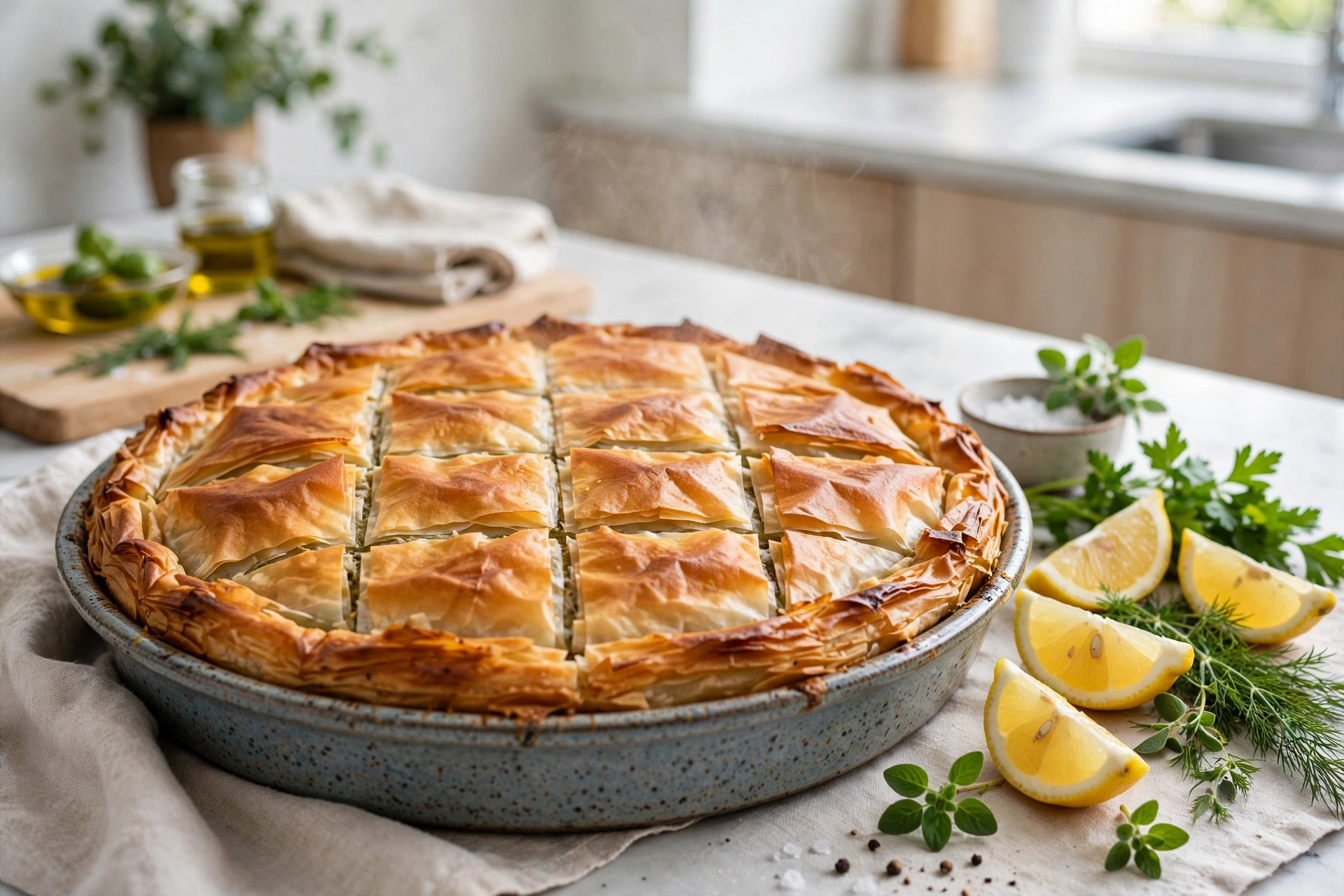
Step 7: Bake until golden and crisp
Bake for 45 to 50 minutes, until the top is deep golden brown and you can hear the pastry crackling when you tap it. If the top is browning too fast, lay a loose sheet of foil over it for the last 10 minutes. Let the pie rest for at least 15 minutes before you cut it. This is the hardest part, because it smells wonderful, but cutting too soon will make the filling spill out. Resting lets the eggs set and the slices hold their shape.
Tips for Perfect Results
The single biggest difference between a good spanakopita and a great one is dry spinach. Squeeze it twice, once in the colander and once by hand, and do not skip this. If you are using frozen spinach, thaw it fully and squeeze it the same way. You should end up with a small, dense ball of spinach, much smaller than what you started with.
Butter generously but do not drown the sheets. A light brush on each layer is enough. Too much butter pools in the dish and makes the base greasy, while too little leaves dry patches. Keep the brush moving and use a light hand.
Keep the phyllo covered at all times when you are not holding a sheet. A damp tea towel is the classic trick, and it works. If the sheets do start to crack at the edges, do not panic. Cracked phyllo still bakes into crisp layers, and the middle layers never show anyway.
Let the feta do the seasoning. Most feta is salty enough that the filling needs little or no extra salt. Taste the filling before you add any, and remember that the saltiness will taste stronger once the pie is baked and the flavors have settled.
Serving and Storage
Spanakopita is best served warm, about 15 to 20 minutes after it comes out of the oven, when the pastry is still crisp and the filling soft and warm. A simple Greek salad with tomatoes, cucumber, red onion, and olives sits nicely beside it, and a spoonful of thick yogurt or tzatziki works well too. If you want to turn it into a fuller meal, add a bowl of lentil soup or a plate of roasted vegetables.
For a party, bake it in the morning, let it cool, and cut it into small squares. It holds its shape at room temperature for a few hours and people will keep coming back to the tray. It is the kind of dish that disappears fast, so make more than you think you need.
Leftovers keep in the fridge for up to 4 days in an airtight container. To bring back the crunch, warm slices in the oven at 350°F for about 10 minutes. The microwave will heat it through but the pastry will go soft, so save that for days when you are in a real hurry. You can also freeze baked slices for up to a month, wrapped well in foil and stored in a freezer bag. Warm them from frozen in the oven at 350°F for about 20 minutes.
If you love baking tray pastries like this one, you will enjoy our Turkish Baklava too. It uses the same phyllo skills in a sweet, honey-soaked form, and it is just as good for feeding a crowd.
Easy Variations
Once you are comfortable with the basic recipe, there are plenty of ways to make it your own. Try swapping half the spinach for Swiss chard or kale, both of which hold up well in the filling. Add a handful of toasted pine nuts or chopped walnuts for crunch, or stir in some crumbled goat cheese alongside the feta for a softer tang.
For a richer filling, mix in a cup of ricotta with the feta. It makes the inside creamier and a little milder, which children tend to like. If you want a bit of warmth, a pinch of red pepper flakes in the filling gives a gentle heat without changing the character of the dish.
Little triangles are the classic Greek way to serve spanakopita as a snack. Cut the phyllo into strips, spoon a little filling at one end, and fold the strip over itself in triangles, brushing with butter as you go. They take a little more time to shape, but they bake in about 20 minutes and are perfect for parties.
For more ideas in the same spirit, our Spanish Churros with Chocolate makes a fun sweet finish after a savory pie like this one, and the Italian Panna Cotta is a light, creamy dessert that rounds off a Greek-style dinner beautifully.
Frequently Asked Questions
Can I use frozen spinach instead of fresh?
Yes, and many Greek cooks do. Use two 10-ounce bags of frozen chopped spinach, thaw them fully, and squeeze out every bit of water you can. Frozen spinach is actually easier to dry out well than fresh, because you can press it hard in a clean tea towel. Just make sure it is fully thawed before you mix the filling.
Why did my phyllo tear while I was layering it?
Phyllo tears. It is thin by design, and even careful cooks tear sheets. In a tray pie it does not matter at all, because the layers overlap and the butter seals them. The only sheets anyone sees are the top two, so keep those intact if you can and do not worry about the rest. If your phyllo is tearing a lot, it may be too dry. Make sure the stack stays covered with a damp towel while you work.
Can I make spanakopita ahead of time?
Yes, in two ways. You can put the whole unbaked pie together, cover it tightly, and keep it in the fridge for up to a day before baking. Add 5 to 10 minutes to the baking time if it goes into the oven cold. You can also freeze the unbaked pie for up to a month. Bake it straight from frozen at 350°F for about an hour, covering the top with foil if it browns too early.
How do I keep the bottom from going soggy?
Three things keep the base crisp: dry spinach, a hot oven, and not overdoing the butter on the bottom layers. Squeeze the spinach until almost no water comes out, preheat the oven fully before the pie goes in, and place the dish on the lowest oven rack so the base gets the most heat. A metal baking dish also gives a crisper base than a glass one.
What can I serve with spanakopita?
A Greek salad is the natural partner, and a bowl of lemony lentil soup turns it into a full meal. For a lighter lunch, serve a slice with sliced tomatoes, cucumber, and olives. For drinks, a glass of white wine or a cold beer suits it well, and sparkling water with lemon is a good alcohol-free choice. It also works as part of a bigger spread with dips like tzatziki and hummus.
Final Thoughts
Spanakopita looks impressive, tastes like a holiday, and asks very little of the cook. The filling is simple, the method is forgiving, and the result is a golden, crackling pie that suits a quiet weeknight dinner just as well as a crowded table. Once you have made it a few times, layering the phyllo becomes second nature, and you will start finding your own little twists.
Buy the spinach and the feta, thaw the phyllo the night before, and give yourself an unhurried hour in the kitchen. The first slice, still warm, with the pastry shattering under your fork, will tell you why this pie has lasted so long.