
Lemon Drizzle Cake (Bright, Moist, and Wonderfully Zesty) is the cake that everyone loves and nobody finds intimidating. It is soft, buttery, and bursting with lemon, with a syrup that soaks into the sponge and a glaze that crackles when you cut into it. It is the cake you make for afternoon tea, for a neighbour, for a bake sale, or for no reason at all on a Tuesday.
The magic of a lemon drizzle cake is the drizzle itself. You poke holes in the warm cake and pour lemon syrup over it, and the syrup sinks into the sponge and makes it moist all the way through. The cake stays fresh for days because of that syrup, and the flavour gets better as it sits.
This recipe uses the all-in-one method, where everything goes into the bowl at once and gets beaten together. It takes about 10 minutes to mix and 40 minutes to bake, and it is one of the easiest cakes you will ever make. The result is a bright, zesty loaf that disappears fast.

Ingredients
For the cake
- 1 cup unsalted butter, softened
- 1 cup granulated sugar
- 4 large eggs, at room temperature
- 1 3/4 cups self-raising flour
- 1 teaspoon baking powder
- 1/4 teaspoon kosher salt
- Zest of 2 lemons, finely grated
- 2 tablespoons lemon juice
- 2 tablespoons whole milk
For the lemon drizzle
- Juice of 2 lemons, about 1/3 cup
- 1/2 cup granulated sugar
For the glaze
- 1 cup powdered sugar, sifted
- 2 to 3 tablespoons lemon juice
- Extra lemon zest, for sprinkling, optional
Self-raising flour is the traditional choice for this cake, and it gives you a light, even rise. If you only have plain flour, add 2 teaspoons of baking powder for every cup of flour and the result will be the same. Make sure your baking powder is fresh, since old baking powder loses its lift and the cake will be dense.
Room temperature eggs and softened butter are important here. Cold eggs do not mix smoothly into the batter, and cold butter will not cream properly with the sugar. Take the eggs and butter out of the fridge 30 minutes before you start. The batter should be smooth and creamy, with no lumps of butter visible.
Step-by-Step Method
Step 1: Prepare the tin and heat the oven
Heat the oven to 350°F. Grease a 9 by 5 inch loaf tin with butter and line it with parchment paper, leaving a little overhang on the long sides so you can lift the cake out later. The parchment is what lets you get a perfect loaf out of the tin without any sticking, and it is worth the extra minute.
Step 2: Beat the cake batter
Put the softened butter, sugar, eggs, self-raising flour, baking powder, salt, lemon zest, lemon juice, and milk into a large bowl. Beat everything together with an electric mixer on medium speed for 2 minutes, until the batter is smooth, pale, and creamy. Scrape down the sides of the bowl once or twice to make sure everything is mixed evenly. The batter should drop off the spoon in a thick ribbon.
Step 3: Bake the loaf
Scrape the batter into the prepared tin and smooth the top with a spatula. Bake for 40 to 45 minutes, until the cake is golden brown and a skewer inserted into the middle comes out clean. The cake should spring back when you press the top gently. If the top browns too fast, cover it loosely with foil for the last 10 minutes.
Step 4: Poke holes and pour the drizzle
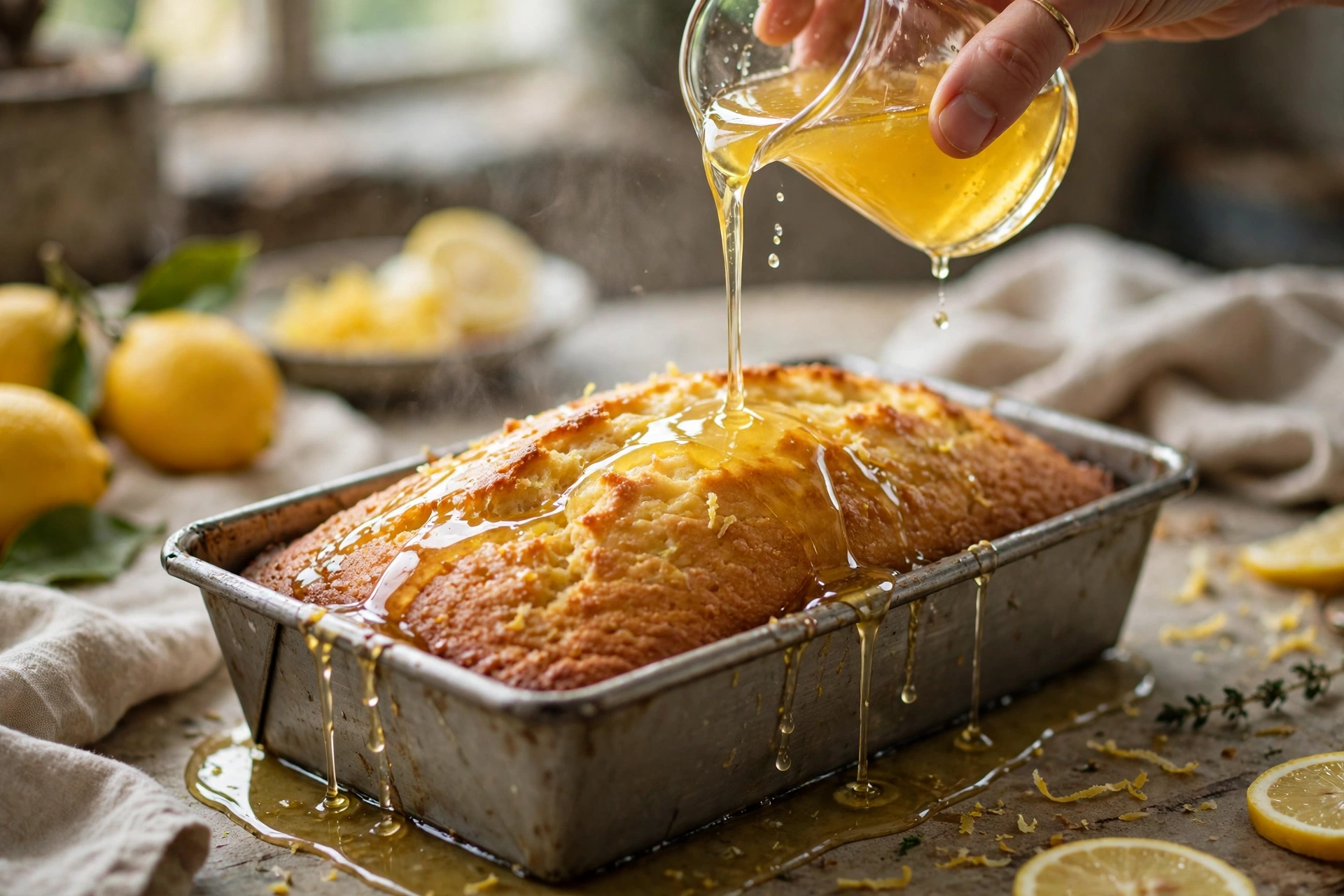
While the cake is still warm in the tin, mix the lemon juice and sugar for the drizzle together in a small bowl. Poke holes all over the top of the cake with a skewer or a fork, going about halfway down. Pour the drizzle slowly over the cake, letting it sink into the holes. The sugar will crunch a little on top and the lemon juice will soak into the sponge. Leave the cake in the tin for 15 minutes, then lift it out onto a wire rack to cool completely.
Step 5: Make the glaze and finish
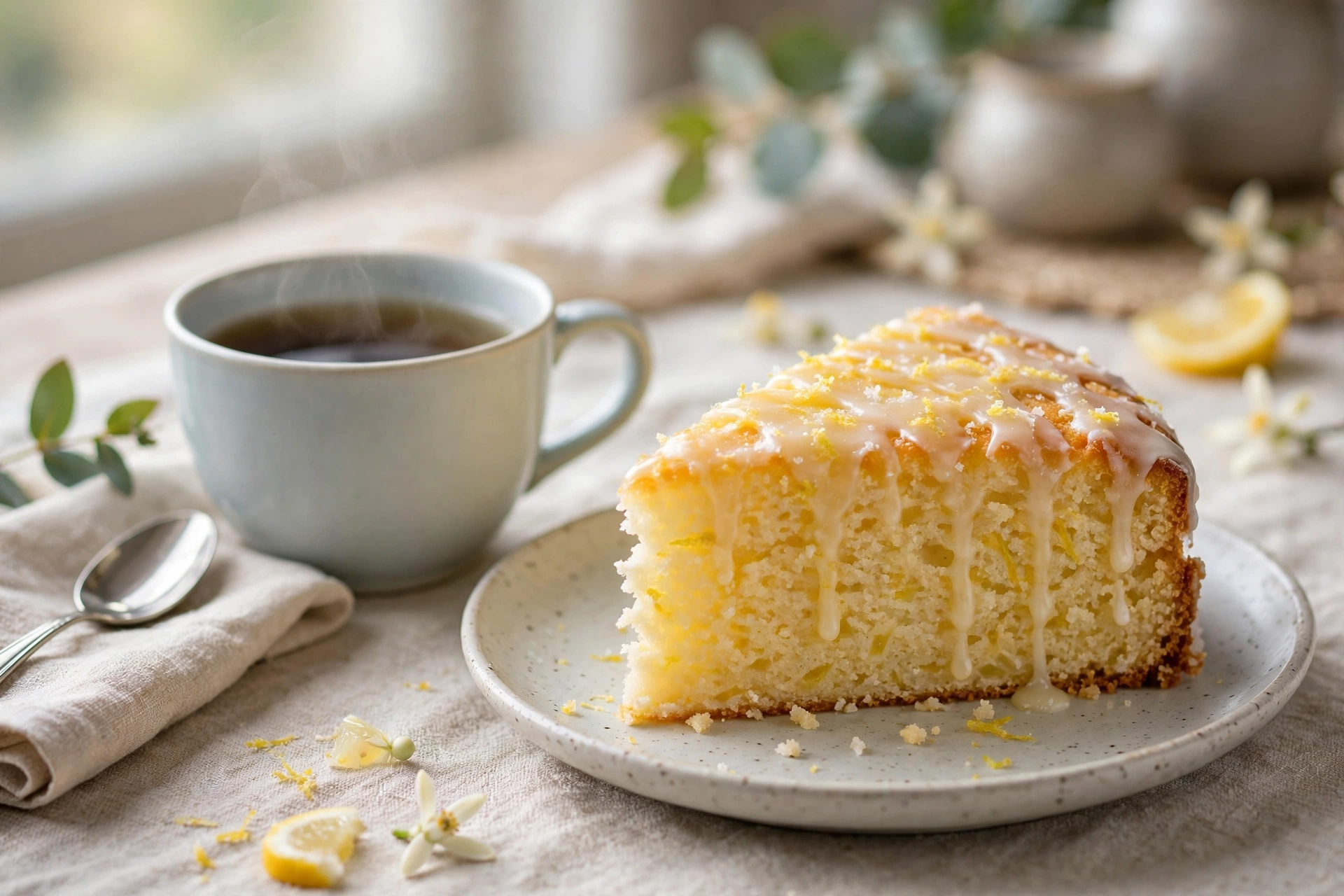
Once the cake is completely cool, whisk the powdered sugar with 2 tablespoons of lemon juice until you have a thick, smooth glaze that drips slowly off the spoon. If it is too thick, add a little more lemon juice, a teaspoon at a time. Pour the glaze over the top of the cake and let it run down the sides. Sprinkle with extra lemon zest if you like. Let the glaze set for 20 minutes before slicing.
Tips for Perfect Results
Use fresh lemons, not bottled juice. The flavour of fresh lemon juice and zest is bright and sharp, while bottled juice tastes flat and dull. You need the zest as well as the juice, and you can only get zest from a fresh lemon. Roll the lemons on the counter before you juice them to get more juice out of each one.
Do not overmix the batter. Once the flour is in, beat just until everything is combined and smooth. Overbeating develops gluten in the flour, and gluten is what makes a cake tough and dense instead of soft and tender. Two minutes with an electric mixer is enough. If you are mixing by hand, beat until the batter is smooth and stop.
Pour the drizzle while the cake is warm. Warm cake absorbs the syrup much better than cold cake. The holes you poke give the syrup a path into the middle of the loaf, and the warm sponge drinks it up. If you wait until the cake is cold, the syrup sits on top and makes the surface sticky instead of soaking in.
Let the cake cool completely before glazing. The glaze is meant to set into a crackly white coating, and it will only do that on a cool cake. If the cake is still warm, the glaze melts and slides off, and you end up with a sticky mess instead of a pretty top. Patience is the hardest part of this cake, but it is worth it.
Measure the flour correctly. Too much flour makes a dry, dense cake, and too little makes one that sinks in the middle. Spoon the flour into the measuring cup and level it off with a knife, rather than scooping the cup into the flour bag. Scooping packs the flour down and can add a quarter cup more than you need.
The lemons you choose change the cake. Thin-skinned lemons have more juice and less bitter pith, and they zest more easily. Meyer lemons are sweeter and less sharp, and they make a gentler cake, but they are hard to find in many places. Ordinary lemons work beautifully. Roll each lemon firmly on the counter before you cut it, pressing down with your palm. It breaks down the membranes inside and you will get noticeably more juice from each fruit.
The tin you bake in affects the result. A dark metal loaf tin browns the crust faster and gives you a deeper golden top, while a light tin bakes more gently. A glass loaf dish works too, but it bakes more slowly, so add five minutes and check with a skewer. Whatever tin you use, line it with parchment. The syrup makes the cake sticky, and without parchment it can weld itself to the tin. The overhang on the long sides lets you lift the whole loaf out cleanly.
The glaze is a matter of thickness. Too thin and it slides off the cake and pools on the plate. Too thick and it sits on top in a white blanket that cracks off when you slice. The right glaze is thick enough to coat the back of a spoon and slow enough to drip off it in a lazy ribbon. Add the lemon juice a teaspoon at a time, whisking between each addition, until it looks right. Pour it over the centre of the cake and let it find its own way down the sides.
If your cake cracks on top, do not worry. A crack down the middle is normal for a loaf cake, and the glaze covers it completely. In fact, a crack is a good sign. It means the cake rose well and the crumb is light. The glaze fills the crack and makes it look deliberate.
Serving and Storage
Serve lemon drizzle cake in thick slices with a cup of tea or coffee. It is the classic afternoon tea cake, and it needs nothing else. A dollop of whipped cream or a spoonful of clotted cream on the side is a nice touch, and fresh berries add colour to the plate. The cake is also lovely as a light dessert after a rich meal, since the lemon cleanses the palate.
It sits well on a dessert table next to Easy Banana Bread (Moist, Sweet, and Foolproof), giving guests a choice between a zesty citrus cake and a warm, spiced banana bread. And if you are building a British-inspired tea spread, serve it after Classic British Shepherd’s Pie (Hearty, Creamy, and Comforting) for a meal that moves from hearty and savoury to bright and sweet.
Lemon drizzle cake keeps at room temperature, in an airtight container, for up to 4 days. The syrup keeps it moist, and the flavour actually improves after the first day as the lemon soaks deeper into the sponge. It also freezes well for up to 3 months. Wrap the unglazed loaf tightly in plastic wrap and foil, thaw it overnight, and add the glaze fresh before serving.
Easy Variations
For a lime drizzle cake, use limes instead of lemons throughout the recipe. The flavour is a little more tropical and a little less sharp, and it pairs beautifully with a coconut glaze made from powdered sugar and coconut milk. A sprinkle of toasted coconut on top finishes it nicely.
For a lemon and poppy seed version, add 2 tablespoons of poppy seeds to the batter. The seeds add a gentle crunch and a nutty flavour that works wonderfully with lemon. This is the version you will find in most cafés, and it is a small change that makes a big difference.
For a blueberry lemon cake, fold a cup of fresh blueberries into the batter before baking. Toss the blueberries in a spoonful of flour first so they do not sink to the bottom. The berries burst as the cake bakes and create little pockets of jammy sweetness against the zesty sponge.
For a lemon and elderflower version, add a tablespoon of elderflower cordial to the drizzle. The floral note is subtle and elegant, and it makes the cake taste like spring. This version is lovely for a celebration or a garden party, with a few edible flowers on top if you can find them.
Frequently Asked Questions
Why did my lemon drizzle cake sink in the middle?
A sunken middle usually means the cake was underbaked, the oven door was opened too early, or there was too much liquid in the batter. Bake until a skewer comes out clean, avoid opening the oven for the first 30 minutes, and measure the flour and milk carefully. An oven thermometer helps, since many ovens run cooler than the dial says.
Can I use bottled lemon juice?
You can, but fresh lemons taste much better. Bottled juice is flat and dull compared to fresh, and you need the zest from fresh lemons anyway. If you must use bottled juice, add an extra teaspoon of zest from a fresh lemon to lift the flavour back up.
How do I keep the cake moist?
The drizzle is what keeps it moist. Pour it over the warm cake and let it soak in through the holes you poke. The syrup keeps the sponge moist for days. Store the cake in an airtight container at room temperature, and do not refrigerate it, since the cold dries out the sponge.
Can I make lemon drizzle cake in a round tin?
Yes. Use an 8 inch round tin and bake for 35 to 40 minutes. The loaf tin is traditional, but a round cake works just as well and looks lovely with the glaze dripping down the sides. Adjust the baking time slightly, since a round cake is shallower and bakes faster.
Can I freeze lemon drizzle cake?
Yes. Freeze the unglazed loaf, wrapped tightly, for up to 3 months. Thaw it overnight at room temperature, then add the fresh glaze before serving. The cake also sits well next to Classic Chocolate Cake (Rich, Moist, and Perfect Every Time) on a dessert table, giving guests a bright citrus option next to the rich chocolate.
Final Thoughts
Lemon drizzle cake is the easiest cake that still feels special. Everything in one bowl, forty minutes in the oven, a syrup poured over the warm sponge, and a glaze that crackles when you cut into it. There is no fiddling, no layering, and no decorating skill needed.
Make it for afternoon tea, for a friend who needs cheering up, or for yourself on a quiet weekend. It keeps for days, it travels well, and it tastes even better on the second day. Keep the lemons fresh, pour the drizzle while the cake is warm, and let the glaze set before you slice. That is all there is to it.