
Italian Panna Cotta (Silky, Creamy, and Effortlessly Elegant) is the dessert you make when you want something beautiful with almost no effort. The name means cooked cream, and that is exactly what it is. Cream, sugar, and vanilla, warmed gently and set with a little gelatin. Ten minutes on the stove, a few hours in the fridge, and you have a dessert that wobbles on the plate like something from a restaurant.
Panna cotta has a reputation for being fussy, but the truth is the opposite. It is one of the most forgiving desserts you can make. There is no baking, no water bath, no tempering eggs. The only thing you need to get right is the gelatin, and that comes down to blooming it properly and never letting the cream boil.
This recipe makes four servings, and it is easy to double for a crowd. Serve it in the glass for a casual dinner, or turn it out onto a plate for something more elegant. Either way, a spoonful of fresh berries or a drizzle of fruit sauce is all it needs.

Ingredients
For the panna cotta
- 2 cups heavy cream
- 1/2 cup whole milk
- 1/2 cup granulated sugar
- 1 vanilla bean, split and scraped, or 1 1/2 teaspoons vanilla extract
- 1 1/2 teaspoons powdered gelatin
- 3 tablespoons cold water
- 1 pinch of kosher salt
For serving
- 1 cup fresh berries, such as raspberries, strawberries, or blueberries
- 2 tablespoons sugar, for macerating the berries, optional
- Fresh mint leaves, optional
The mix of cream and milk matters. All cream makes a panna cotta that is very rich and almost too firm. All milk makes one that is too soft and milky. Two parts cream to one part milk gives you the classic texture: rich but light, firm enough to hold its shape, soft enough to wobble when you touch the plate.
Powdered gelatin is the easiest to work with, and it is available in most supermarkets. Sheet gelatin works too, but the amounts are different, so stick with powdered gelatin unless you are used to sheets. The key step is blooming, which means sprinkling the gelatin over cold water and letting it sit until it turns spongy. Skip this step and the gelatin clumps instead of dissolving.
Step-by-Step Method
Step 1: Bloom the gelatin
Sprinkle the powdered gelatin evenly over the cold water in a small bowl. Do not dump it in a pile, or the middle will stay dry. Let it sit for 5 minutes without stirring. It will swell up and turn into a spongy, almost solid mass. This is blooming, and it is what lets the gelatin dissolve smoothly into the warm cream later.
Step 2: Warm the cream, milk, and sugar
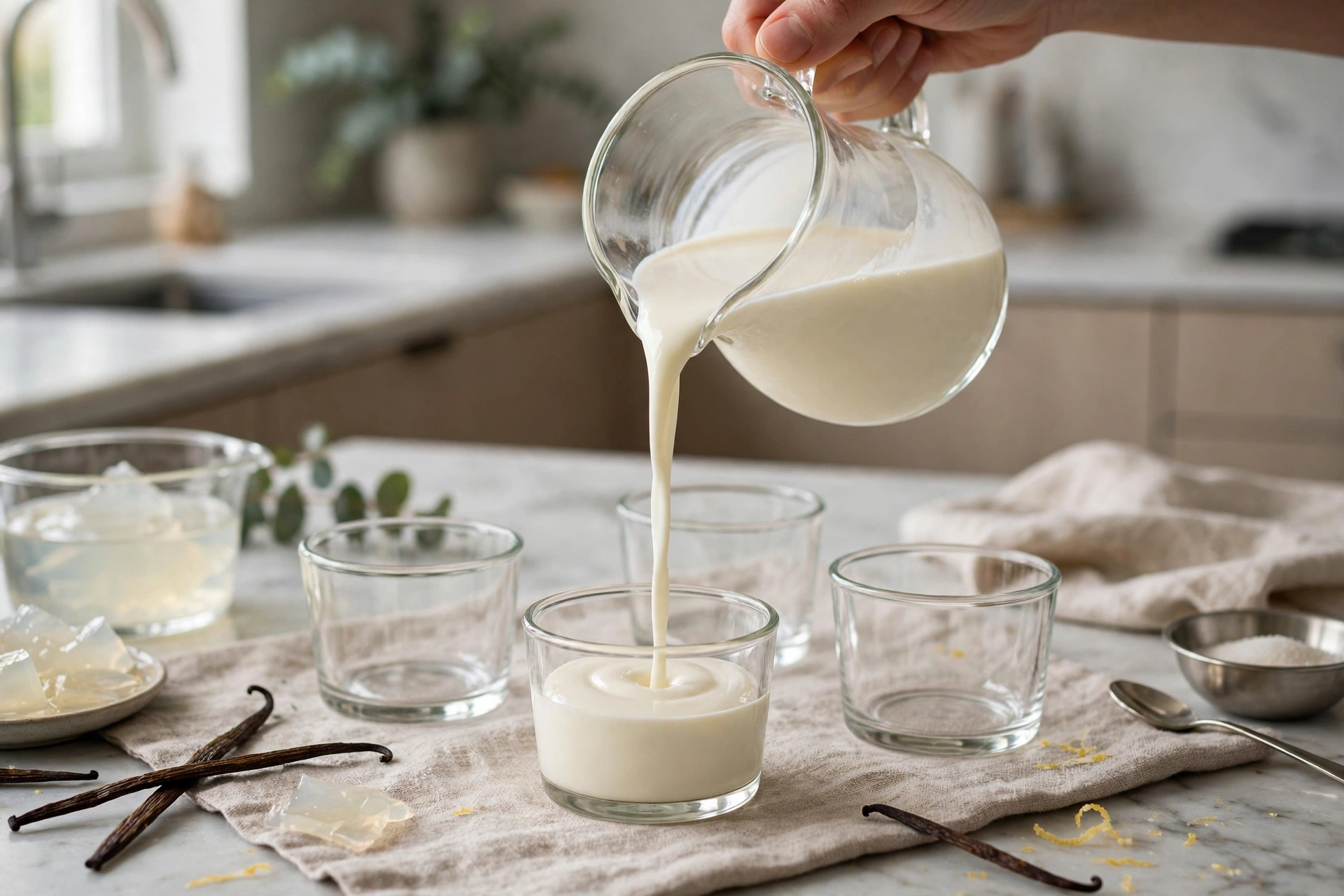
Put the cream, milk, sugar, and salt in a medium saucepan. If you are using a vanilla bean, scrape the seeds into the cream and drop the pod in. Heat the mixture over medium heat, stirring now and then, until the sugar dissolves and the cream is steaming. Do not let it boil. Boiling can make the cream taste cooked and it can weaken the gelatin later. Take the pan off the heat as soon as you see steam and small bubbles at the edges.
Step 3: Dissolve the gelatin into the warm cream
Add the bloomed gelatin to the warm cream and stir gently until it dissolves completely, about 1 minute. If you are using vanilla extract instead of a bean, stir it in now. Run your finger around the pan to check for any undissolved bits. The mixture should feel completely smooth. If you see any lumps, warm the pan very gently for another minute, stirring, until they disappear.
Step 4: Strain and pour into moulds
Strain the mixture through a fine sieve into a jug to catch any bits of vanilla pod or undissolved gelatin. Pour it into four ramekins, small glasses, or dariole moulds. If you plan to turn the panna cotta out onto plates, lightly oil the moulds with a flavourless oil first. It makes unmoulding much easier. If you plan to serve in the glass, skip the oil.
Step 5: Chill until set
Let the panna cotta cool to room temperature, then cover each mould with plastic wrap and chill in the fridge for at least 4 hours, or overnight. The panna cotta is set when it holds its shape but still wobbles gently when you shake the mould. It should feel like set jelly, not like a firm custard. Do not rush the chill. A panna cotta that is only partly set will collapse when you turn it out.
Step 6: Unmould and serve
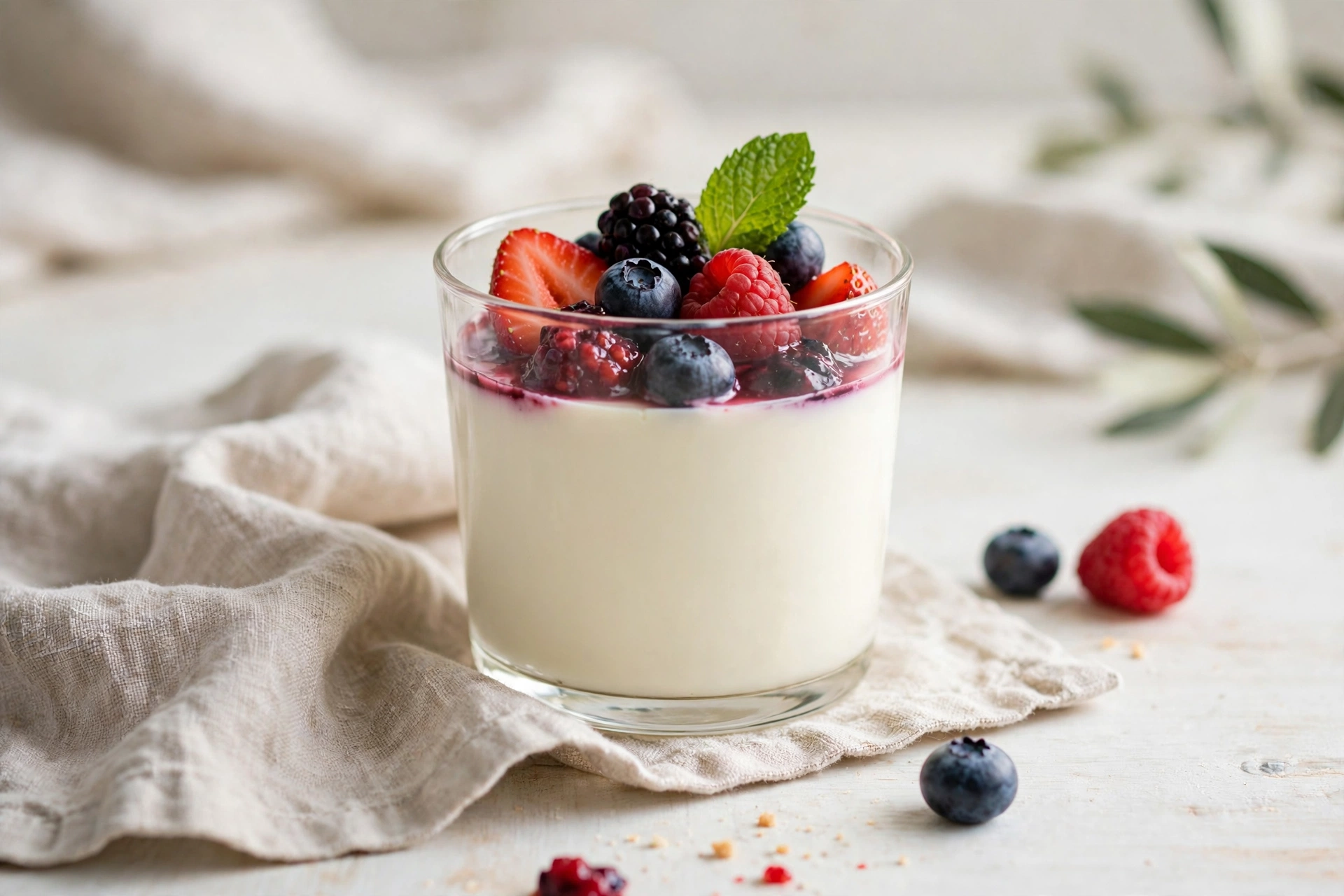
To unmould, dip the bottom of each mould in hot water for 5 to 10 seconds, run a thin knife around the edge, and turn it out onto a plate. If it does not come out, dip it again for a few more seconds. The hot water melts just the outer layer and lets the panna cotta slide out cleanly. Top with fresh berries, a drizzle of fruit sauce, or a few mint leaves, and serve cold.
Tips for Perfect Results
Never boil the cream. This is the one rule that matters most. Boiling changes the flavour of the cream and can weaken the gelatin, leaving you with a panna cotta that never sets properly. Heat the cream until it steams and the sugar dissolves, then take it off the heat. That is hot enough.
Bloom the gelatin properly. Sprinkle it evenly over cold water and leave it alone for 5 minutes. If you stir it while it blooms, it clumps. If you add it to the cream without blooming, it forms lumps that never dissolve. The bloomed gelatin should look like a spongy disc, and it should melt into the warm cream in under a minute.
Strain the mixture before pouring. It takes ten seconds and it catches any undissolved gelatin, vanilla pod bits, or skin from the cream. A strained panna cotta is perfectly smooth, and an unstrained one has tiny lumps that you notice on the first spoonful.
Give it enough time in the fridge. Four hours is the minimum, and overnight is better. The gelatin needs time to set fully and evenly. A panna cotta that has only chilled for two hours will look set in the mould and then slump on the plate. If you are in a hurry, use smaller moulds, since they set faster than large ones.
Oil the moulds lightly if you plan to unmould. A thin wipe of flavourless oil makes the difference between a clean release and a torn edge. Use a paper towel to wipe the oil in a very thin layer. Too much oil leaves a greasy film on the panna cotta, so less is more.
The moulds you use change how the panna cotta looks on the plate. Tall, narrow moulds give you an elegant tower that wobbles dramatically, while wide, shallow ones give you a low, soft dome. Both are lovely, but the wide ones are easier to unmould, since there is less surface clinging to the sides. Small glasses and jam jars work well too, and they skip the unmoulding entirely. Serve the panna cotta in the glass with berries on top, and nobody will miss the turned-out version.
Gelatin strength varies by brand, and that is why some panna cotta sets firmer than others. If your panna cotta comes out too soft, add an extra half teaspoon of gelatin next time. If it comes out rubbery, use a little less. Write down what you used, because the difference between silky and rubbery is small. The goal is a panna cotta that holds its shape on the plate but trembles when you nudge it, and melts on the tongue almost immediately.
The cream you buy matters. Heavy cream with a higher fat content sets more firmly and tastes richer, while lighter cream gives you a softer, more delicate result. Both work, but the texture changes. If your cream is very rich, the extra milk in this recipe keeps the panna cotta from feeling too heavy. Taste the mixture before you pour it. It should taste a little sweeter than you want the finished dessert to be, since cold dulls sweetness.
Serving and Storage
Panna cotta is a cool, light dessert, so it works beautifully after a rich Italian main course. Serve it after Authentic Italian Spaghetti Carbonara (No Cream, Just the Real Thing) and the meal feels complete, with the rich pasta followed by something cool and silky. It also follows Classic Italian Lasagna with Meat Sauce (Cheesy, Hearty, and Baked to Perfection) perfectly, since the lightness of the panna cotta balances the richness of the lasagna.
For toppings, fresh berries are the classic choice. Macerate them with a spoonful of sugar for 15 minutes so they release their juices, then spoon them over the panna cotta. A berry coulis, a drizzle of honey, or a spoonful of lemon curd all work too. Keep the topping simple. The panna cotta itself is the star, and the topping is there to add colour and a little tartness.
Panna cotta keeps in the fridge, covered, for up to 3 days. It actually improves after the first day, since the vanilla flavour deepens. Do not freeze it. Freezing changes the texture of the gelatin and the panna cotta turns grainy when it thaws. If you want to make it ahead for a party, make it the day before and add the toppings just before serving.
Easy Variations
For a chocolate version, add 3 ounces of finely chopped dark chocolate to the warm cream and stir until it melts before you add the gelatin. The result is a rich chocolate panna cotta that sets just as well. A spoonful of whipped cream and some chocolate shavings on top finish it nicely.
For a coffee version, add a tablespoon of instant espresso powder to the warm cream. The coffee flavour is gentle and sophisticated, and it pairs well with a drizzle of chocolate sauce. This is the version to make when you want a dessert that tastes like a café.
For a coconut version, replace the milk with coconut milk and add a teaspoon of rum or a little lime zest. The coconut flavour is subtle and tropical, and it works beautifully with mango or passion fruit on top. Use full-fat coconut milk, not the light kind, or the panna cotta will be too soft.
For a citrus version, add the finely grated zest of a lemon or an orange to the warm cream. The zest adds brightness without changing the texture. Serve it with a spoonful of lemon curd or some candied citrus peel, and you have a dessert that tastes like sunshine.
Frequently Asked Questions
Why is my panna cotta too soft?
The usual cause is too little gelatin, gelatin that was not bloomed properly, or cream that was boiled. Bloom the gelatin in cold water for 5 minutes, dissolve it fully in warm cream, and never let the cream boil. Also give the panna cotta at least 4 hours in the fridge, since a short chill leaves it soft.
Can I use sheet gelatin instead of powdered?
Yes. Use 2 sheets of gelatin, soaked in cold water for 5 minutes until soft, then squeezed dry and stirred into the warm cream. Sheet gelatin dissolves cleanly and gives a very smooth texture, but the amounts differ from powdered, so do not swap them one for one.
How do I unmould panna cotta without breaking it?
Lightly oil the moulds before pouring, chill the panna cotta fully, then dip the mould in hot water for 5 to 10 seconds and run a thin knife around the edge. Turn it out onto a cold plate. If it sticks, dip it in hot water again for a few more seconds. Patience is better than force.
Can I make panna cotta without gelatin?
Yes, but the texture changes. Agar agar is the usual substitute, though it sets firmer and less creamy than gelatin. Use about 1 teaspoon of agar powder for this recipe, and boil the cream mixture for 1 minute after adding it, since agar needs heat to activate. The result is still lovely, just a little firmer.
What should I serve with panna cotta?
Fresh berries are the classic topping, and a berry coulis or a drizzle of honey works well too. For a fuller dessert table, serve it next to Classic Chocolate Cake (Rich, Moist, and Perfect Every Time). The cool, silky panna cotta and the rich chocolate cake give guests two very different desserts to choose from.
Final Thoughts
Panna cotta is proof that the simplest desserts are often the best. Cream, sugar, vanilla, and a little gelatin. Warm it gently, strain it, chill it well, and you have a dessert that looks like it came from a restaurant kitchen.
Make it the day before a dinner, keep it chilled, and add the berries at the last minute. It is the kind of dessert that lets you enjoy your own party, because all the work is done hours before anyone arrives.