
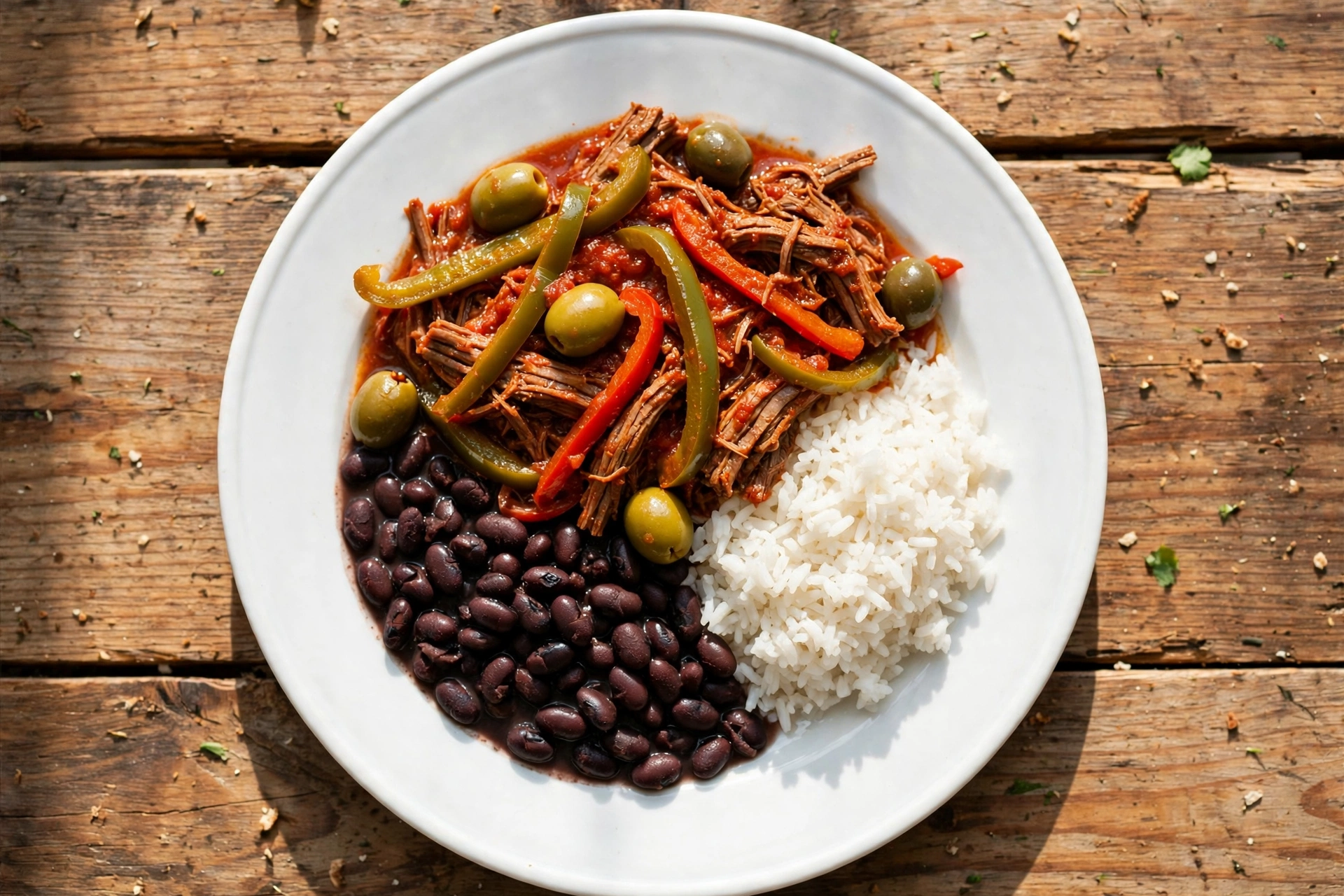
Cuban Ropa Vieja (Slow-Cooked Shredded Beef in Tomato Sauce) is the kind of dish that fills the whole house with a smell you can recognise from the front door. The name means “old clothes” in Spanish, and it comes from the way the shredded beef falls apart into long, soft strands that look a little like torn fabric. Don’t let the funny name put you off. This is one of the most comforting plates of food Cuba has ever shared with the world, and once you have made it at home, you will understand why families there cook it for birthdays, Sundays, and any day that needs something special.
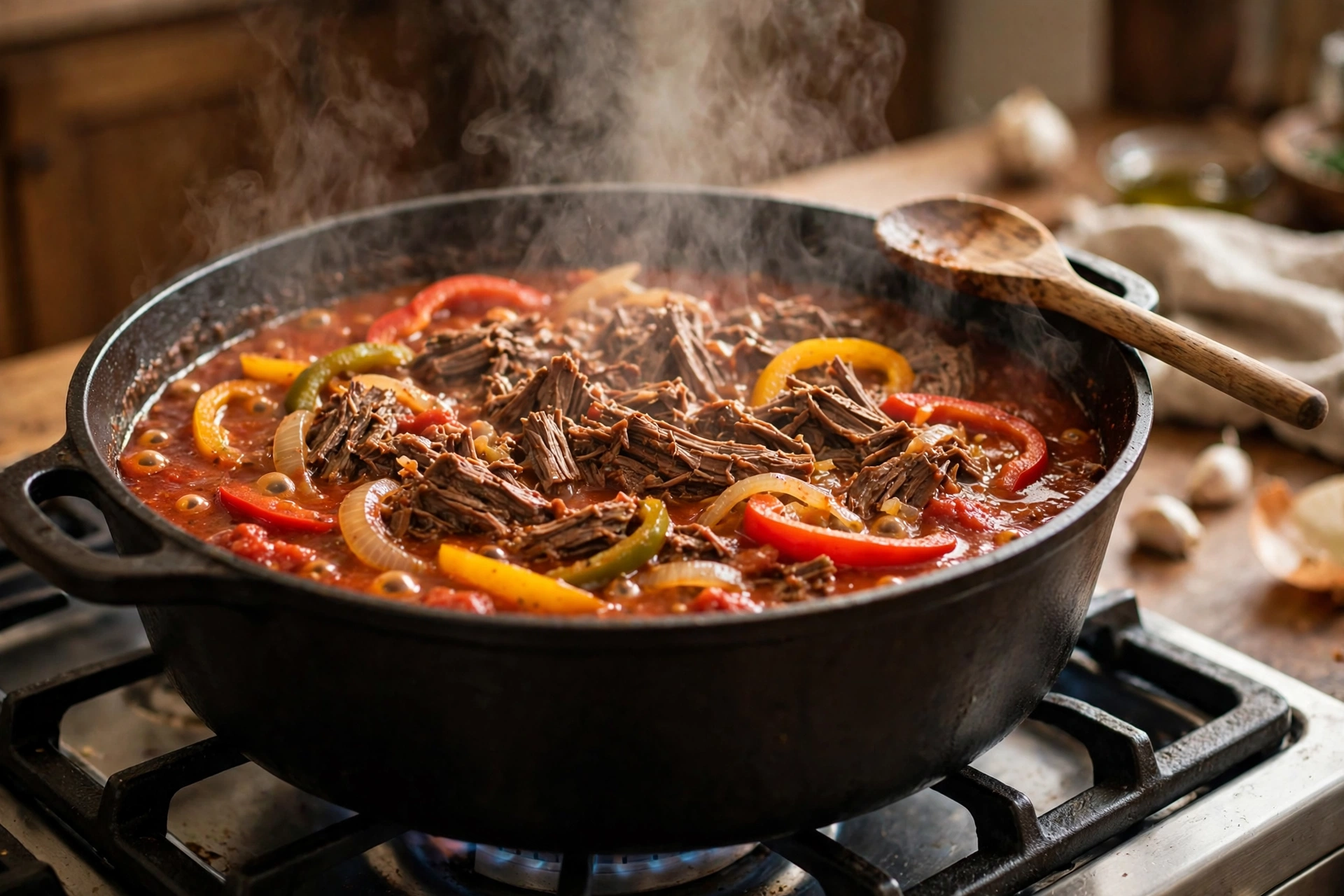
The magic of ropa vieja is time. A tough, cheap cut of beef goes into a pot with tomatoes, peppers, onions, garlic, and warm spices, then simmers for a couple of hours until the meat gives up completely. When you lift the lid, the sauce is deep red and glossy, and the beef shreds with the lightest pull of a fork. It tastes rich without being heavy, and the peppers and olives keep every bite bright.
What I love most about this recipe is how forgiving it is. You don’t need fancy equipment or hard-to-find ingredients. A heavy pot, a decent piece of flank steak, and a free afternoon are enough. The recipe below walks you through it step by step, from browning the beef to shredding it into the sauce, with the small details that make the difference.
Ingredients
For the Beef
- 2 pounds flank steak, cut into 2 large pieces
- 1 tablespoon olive oil
- 1 teaspoon kosher salt
- 1/2 teaspoon black pepper
- 1 teaspoon ground cumin
- 1 teaspoon dried oregano
- 4 cups water or low-sodium beef stock
- 2 bay leaves
For the Sauce
- 1 large onion, thinly sliced
- 1 green bell pepper, thinly sliced
- 1 red bell pepper, thinly sliced
- 4 cloves garlic, minced
- 1 can (14 ounces) crushed tomatoes
- 2 tablespoons tomato paste
- 1/2 cup dry white wine or extra beef stock
- 1/2 cup pimento-stuffed green olives, halved
- 1 tablespoon capers, drained
- 1 teaspoon smoked paprika
- 1/2 teaspoon ground cumin
- 1 tablespoon apple cider vinegar
- 1 teaspoon sugar
- Salt and black pepper, to taste
- Fresh cilantro or flat-leaf parsley, chopped, for serving
Flank steak is the classic choice here because its long muscle fibres shred into beautiful strands after a long, slow cook. Skirt steak works too, and it is often a little cheaper. What you want to avoid is a lean, tender cut like sirloin. It sounds like an upgrade, but it dries out and turns stringy instead of melting. The tougher cuts have more connective tissue, and that tissue is what turns into silky, tender meat after two hours in the pot.
The olives and capers are not optional extras. They give the sauce its salty, briny backbone, and they cut through the richness of the beef in a way that makes you want another spoonful. If you don’t like olives, you can use half the amount and add a little extra vinegar instead. The white wine adds depth, but if you would rather skip it, beef stock does the job. Just hold back a splash of the stock and add it with the tomatoes so the sauce doesn’t end up too thin.
Step-by-Step Method
Step 1: Season and Brown the Beef
Pat the flank steak dry with paper towels. Dry meat browns properly, and wet meat just steams. Rub the salt, pepper, cumin, and oregano all over both pieces. Heat the olive oil in a large, heavy pot or Dutch oven over medium-high heat until it shimmers. Lay the beef in the pot and leave it alone for 4 to 5 minutes. You want a deep brown crust on the first side before you touch it. Flip and brown the other side for another 4 minutes. That crust is flavour, so don’t rush this step. Move the beef to a plate and keep the pot on the heat.
Step 2: Soften the Peppers and Onions
Turn the heat down to medium and add the sliced onion and both peppers to the same pot. There will be browned bits stuck to the bottom, and that is exactly what you want. Cook the vegetables for 6 to 8 minutes, stirring now and then, until the onion turns soft and sweet and the peppers start to wilt at the edges. Add the garlic and cook for one more minute, just until you can smell it. Garlic burns fast, so keep the heat gentle here and stir constantly.
Step 3: Build the Sauce
Stir in the tomato paste and let it cook for 2 minutes. It will darken a shade and smell a little sweet, which means the raw edge is gone. Pour in the white wine and scrape the bottom of the pot with a wooden spoon to lift up all the browned bits. Those bits dissolve into the sauce and give it a deep, meaty flavour you can’t get any other way. Add the crushed tomatoes, smoked paprika, cumin, sugar, and bay leaves. Stir everything together and bring it to a gentle simmer.
Step 4: Simmer the Beef Until Tender
Return the beef to the pot, along with any juices on the plate. Pour in the water or beef stock until the meat is just covered. Bring the pot back to a simmer, then turn the heat down to low, put the lid on slightly ajar, and let it cook for 2 to 2 and a half hours. Check now and then to make sure the liquid is barely bubbling. You are looking for the moment when a fork slides into the thickest part of the beef and twists with almost no resistance. If the meat still fights back, give it another 20 minutes and check again. Patience is the whole recipe at this point.
Step 5: Shred the Beef
Lift the beef out of the pot onto a cutting board and let it rest for 5 minutes. Fish out the bay leaves and throw them away. Use two forks to pull the beef apart along the grain into long, thin strands. It should shred easily. If you find a stubborn piece, let it go back into the pot for a few more minutes while you shred the rest. Put all the shredded beef back into the sauce and stir it through so every strand gets coated.
Step 6: Finish with Olives, Capers, and Vinegar
Stir in the olives, capers, and apple cider vinegar. Let the pot simmer uncovered for 10 to 15 minutes so the sauce thickens a little and clings to the beef instead of pooling underneath it. Taste and adjust the salt and pepper. The sauce should taste rich, a little tangy, and gently salty from the olives. If it tastes flat, add another splash of vinegar. If it tastes too sharp, a pinch more sugar rounds it out. Serve hot, scattered with chopped cilantro or parsley.
Tips for Perfect Results
The single biggest tip is to keep the heat low during the long simmer. A hard boil makes the meat tough, even after two hours, because the muscle fibres tighten up and squeeze out their moisture. A lazy bubble, where you see a blip break the surface every few seconds, is the right pace. If your stove runs hot, use a flame tamer or move the pot to the smallest burner. You can also finish the simmer in a 325°F oven with the lid on, which gives you a much steadier heat.
Shred the beef while it is still warm. Cold beef resists shredding and tears into chunks instead of strands. If you need to make the dish ahead, shred it while it is warm, cool it in the sauce, and reheat gently the next day. The flavour actually gets better overnight, because the beef soaks up the sauce as it sits. That makes ropa vieja a great dish to cook on a Saturday for a Sunday dinner.
Don’t skip the vinegar at the end. After two hours of cooking, the sauce can taste one-note and heavy, and a spoonful of vinegar wakes the whole pot up. Add it a little at a time and taste as you go. The same goes for salt. The olives and capers bring their own salt, so season lightly at the start and adjust at the end. You can always add more salt, but you can’t take it back out.
If the sauce ends up too thin, take the lid off for the last 20 minutes and let it reduce. Too thick? Stir in a splash of stock. The sauce should coat a spoon and cling to the beef, not run off it like soup.
Serving and Storage
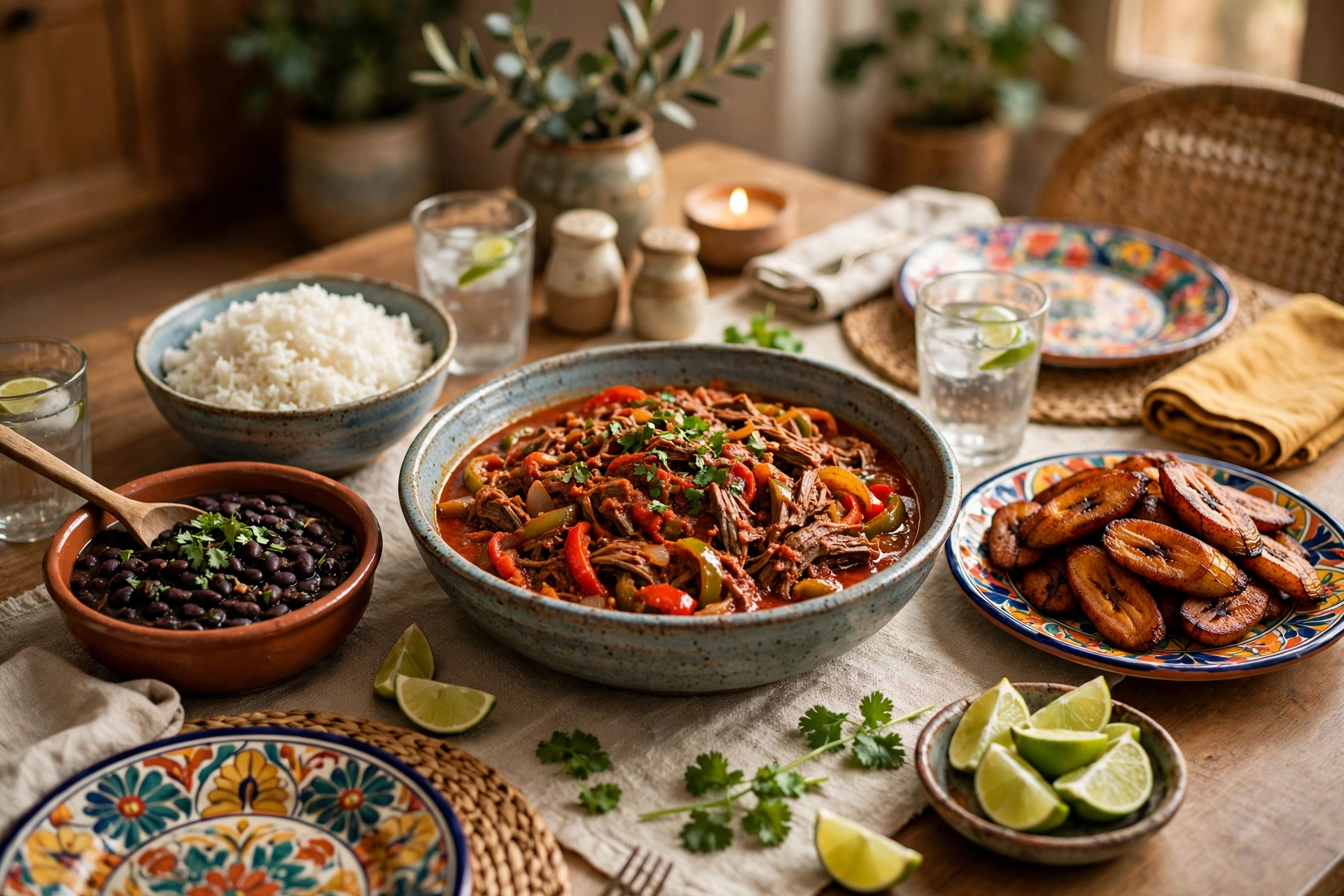
Ropa vieja is almost always served with white rice and black beans, and that trio is hard to beat. The rice soaks up the sauce, the beans add something creamy and earthy, and a few slices of fried sweet plantain on the side bring a gentle sweetness that plays beautifully against the briny olives. A simple salad of sliced avocado, red onion, and lime adds freshness. Put the pot in the middle of the table and let people serve themselves, the way most Cuban families do.
Leftovers keep in the fridge for up to 4 days in a sealed container. Store the beef in its sauce, because the sauce keeps the meat moist. Reheat it gently in a covered pan over low heat with a splash of water or stock, stirring now and then until it is hot all the way through. The microwave works in a pinch, but use short bursts and stir between them so the beef doesn’t dry out at the edges.
This dish also freezes well. Let it cool completely, then pack it into freezer bags or containers in meal-size portions. Squeeze out as much air as you can before sealing. It keeps for up to 3 months. Thaw it overnight in the fridge and reheat it low and slow. The shredded beef holds its texture surprisingly well, and a fresh scattering of herbs on top makes it taste like you cooked it that day. For another slow-cooked beef dish that rewards a long, patient simmer, try the Traditional Hungarian Beef Goulash (Rich, Slow-Cooked, and Hearty), which uses paprika and root vegetables in a very different but equally comforting way.
Easy Variations
A pressure cooker version cuts the cooking time right down. Brown the beef and vegetables the same way, then cook everything on high pressure for 45 minutes. Let the pressure release naturally for 15 minutes before opening the lid. Shred the beef, stir it back into the sauce, and simmer uncovered for 10 minutes to thicken. The result is very close to the slow-cooked version, and it turns a weekend dish into a weeknight one.
For a spicier version, add a diced jalapeño with the peppers and a pinch of red pepper flakes to the sauce. The heat stays in the background and warms the dish up without taking over. If you like it hotter still, serve the finished ropa vieja with a bottle of hot sauce on the table so everyone can season their own plate. Cuban food is not usually fiery, so a little goes a long way here.
You can also turn leftovers into something new. Spoon the shredded beef into warm tortillas with rice and beans for a Cuban-style burrito, or pile it onto a toasted roll with melted Swiss cheese and pickles for a sandwich that tastes like a Havana street stall. The beef also works beautifully over baked potatoes or stirred into scrambled eggs the next morning. If you enjoy beef wrapped in pastry, the Argentine Beef Empanadas (Flaky Pastry, Juicy Filling) are a natural next cook, and the same kind of slow-cooked beef makes a wonderful filling for them.
For a lighter plate, serve the ropa vieja over cauliflower rice or with a big green salad instead of white rice and beans. The sauce is rich enough that you won’t miss the starch, and the peppers and olives keep the plate colourful.
Frequently Asked Questions
What cut of beef is best for ropa vieja?
Flank steak is the classic choice because it shreds into long, clean strands after a long simmer. Skirt steak and chuck roast also work well. Avoid lean, tender cuts like sirloin or tenderloin, because they dry out during the long cook and never get that soft, pull-apart texture.
Can I make ropa vieja in a slow cooker?
Yes. Brown the beef and vegetables first, then transfer everything to the slow cooker and cook on low for 7 to 8 hours or on high for 4 to 5 hours. Shred the beef, stir it back into the sauce, and cook uncovered on high for 20 minutes to thicken the sauce before serving.
Why is my ropa vieja tough?
Tough ropa vieja almost always means the beef didn’t cook long enough, or the heat was too high. Tough cuts need a long, gentle simmer to break down their connective tissue. If the meat resists the fork, put it back in the pot and give it another 30 minutes on low heat. A hard boil tightens the meat, so keep the liquid at a lazy simmer.
What do you serve with ropa vieja?
White rice and black beans are the classic partners, with fried sweet plantains on the side. A simple avocado salad with lime adds freshness. If you want a full Cuban-style spread, add a basket of warm crusty bread for mopping up the sauce and a cold drink to go with it.
Can I make ropa vieja ahead of time?
Yes, and it tastes even better the next day. Cook it fully, let it cool in its sauce, and refrigerate it for up to 4 days. The beef absorbs more flavour as it sits. Reheat it gently on the stove with a splash of water or stock, and add the fresh herbs just before serving.
Final Thoughts
Cuban ropa vieja is proof that a humble cut of beef and a few hours of patience can turn into a meal people remember. The sauce is rich and tangy, the beef falls apart into soft strands, and the peppers and olives keep every bite lively. It is the kind of cooking that asks very little of you and gives a lot back, which is why it has lasted for generations.
Make it on a slow weekend afternoon, serve it with rice and beans, and put the pot in the middle of the table. That is how this dish is meant to be eaten, shared and unhurried. And if you are in the mood for more Latin flavour after this one, the Authentic Mexican Beef Tacos (Juicy Beef, Fresh Salsa, Warm Tortillas) are a great next stop, with the same love of slow-cooked beef in a completely different form.