
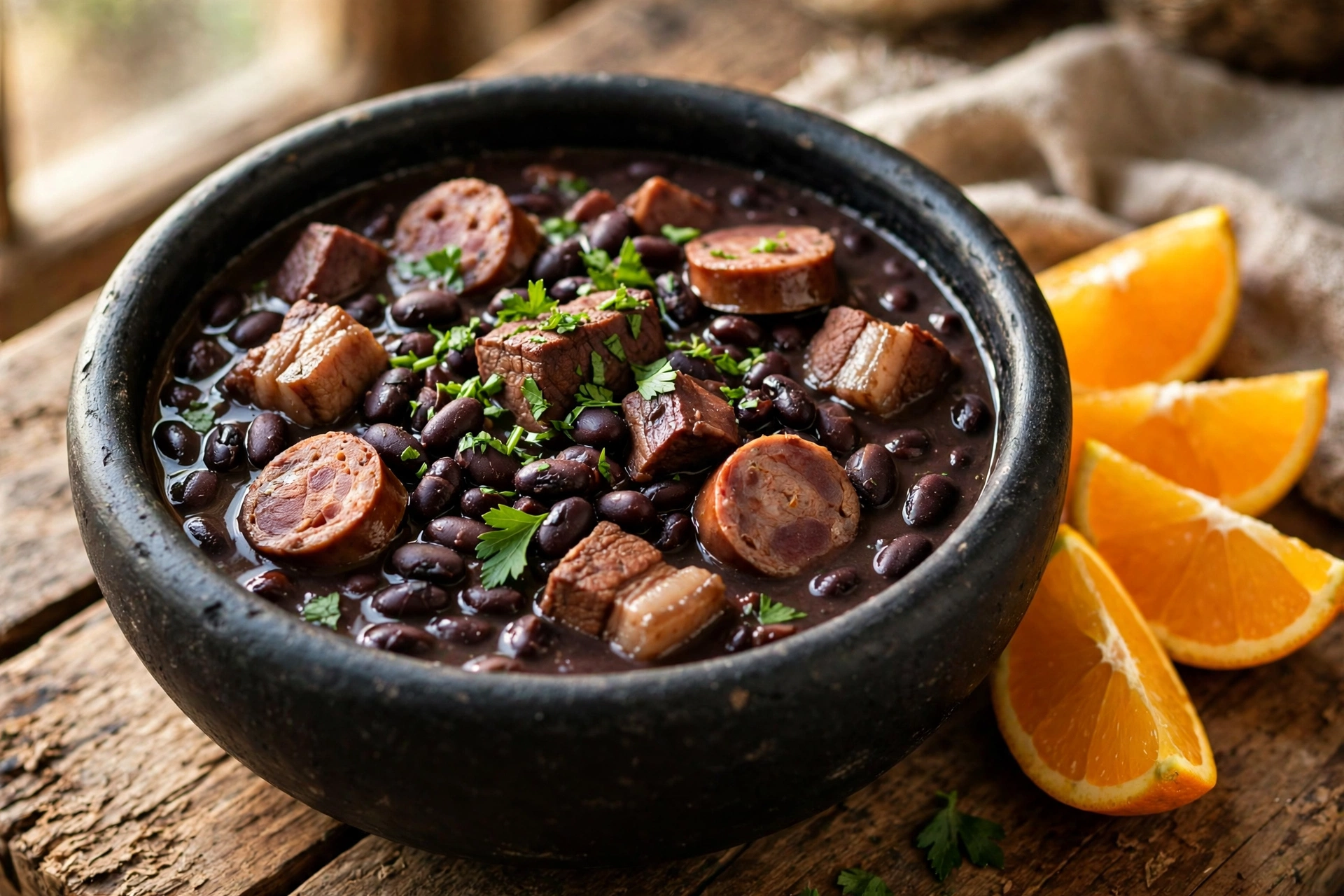
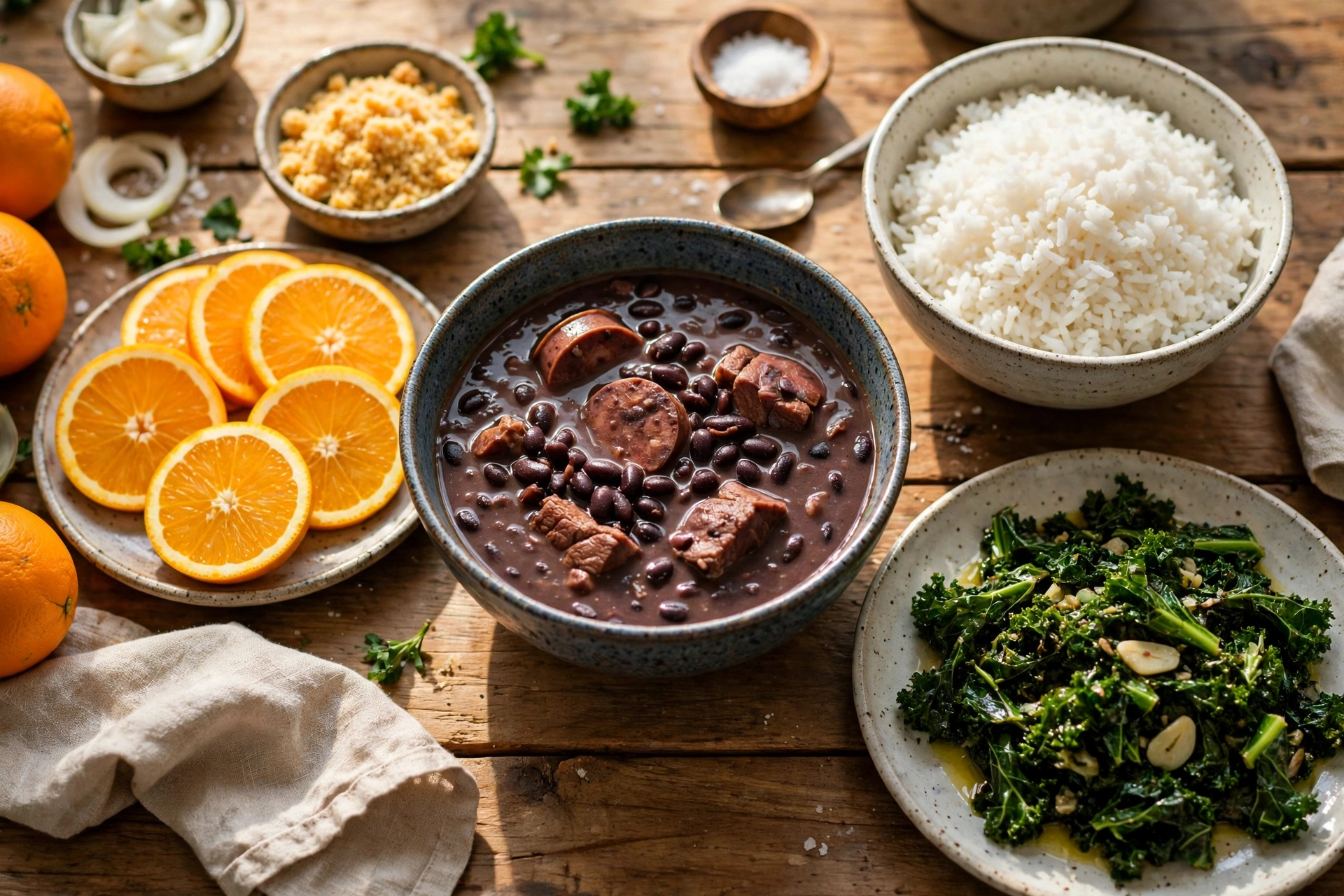
Brazilian Feijoada (Hearty Black Bean Stew with Pork) is the national dish of Brazil, and it is a meal that turns an ordinary Saturday into a celebration. It is a rich, dark, slow-cooked stew of black beans and pork, served with white rice, sautéed greens, and slices of fresh orange. It sounds like a lot of food, and it is, because feijoada is meant to be shared, eaten slowly, and enjoyed with people you love.
I first ate feijoada at a friend’s house on a rainy Saturday, and I remember the pot coming to the table still bubbling, the smell of smoked sausage and garlic filling the room. We ate for hours, going back for more rice, more beans, more greens, and more of those bright orange slices that cut through the richness. Nobody was in a hurry. That is the whole point of feijoada. It is not fast food. It is slow food, in every sense.
The traditional version uses several cuts of pork, including some that are hard to find outside Brazil, but this recipe uses ingredients you can buy anywhere: pork shoulder, smoked sausage, and bacon. The result is just as rich and satisfying. It takes a few hours, but most of that time the pot just simmers away on its own while you get on with your day.
Ingredients
For the Stew
- 500 g dried black beans, soaked overnight
- 500 g pork shoulder, cut into large chunks
- 300 g smoked sausage, sliced into thick rounds
- 150 g smoked bacon or pancetta, diced
- 1 large onion, finely chopped
- 5 garlic cloves, minced
- 2 bay leaves
- 1 teaspoon ground cumin
- 1 tablespoon olive oil
- 1 teaspoon salt, plus more to taste
- 1/2 teaspoon black pepper
- 8 cups water
To Serve
- White rice, cooked
- 1 bunch of spring greens or kale, finely shredded
- 2 oranges, peeled and sliced into rounds
- Farofa (toasted cassava flour), optional
- Hot sauce, for the table
- Fresh parsley, chopped
Dried black beans are essential here. Tinned beans will not give you the same thick, creamy broth, because the magic of feijoada comes from the beans breaking down slowly as they cook. Soak the dried beans overnight in plenty of cold water, then drain and rinse them before you start. This shortens the cooking time and makes the beans easier to digest.
For the pork, a mix of cuts gives the best result. Pork shoulder adds meaty chunks, smoked sausage adds a smoky depth, and bacon adds salt and richness. If you can find Brazilian linguiça sausage, use it. If not, a good smoked pork sausage or chorizo works well. Avoid fresh, unseasoned sausage, because it will not add the smoky flavour the dish needs.
Step-by-Step Method
Step 1: Soak the Beans
The night before, put the dried black beans in a large bowl, cover them with plenty of cold water, and leave them to soak for at least 8 hours or overnight. The beans will swell to nearly double their size. In the morning, drain them and rinse them well under cold water. Pick out any beans that look damaged or any small stones.
Step 2: Brown the Pork
Heat the olive oil in a large, heavy pot over medium-high heat. Add the pork shoulder chunks in batches and brown them on all sides, about 4 to 5 minutes per batch. Do not crowd the pot, because the meat will steam instead of browning. Set the browned pork aside on a plate. The browning builds flavour in the pot, so take your time with this step.
Step 3: Cook the Bacon and Sausage
In the same pot, cook the diced bacon over medium heat for 4 to 5 minutes until it crisps and releases its fat. Add the sliced sausage and cook for another 3 minutes until the edges brown. The fat in the pot is now full of smoky flavour, and it will carry through the whole stew. Lift the bacon and sausage out and set them aside with the pork.
Step 4: Soften the Onion and Garlic
Lower the heat to medium and add the chopped onion to the pot. Cook for 5 minutes until it turns soft and golden, scraping up the browned bits from the bottom as you stir. Add the garlic and cumin and cook for 1 minute more until fragrant. The onion and garlic form the savoury base of the stew, so let them cook properly.
Step 5: Add the Beans and Meat
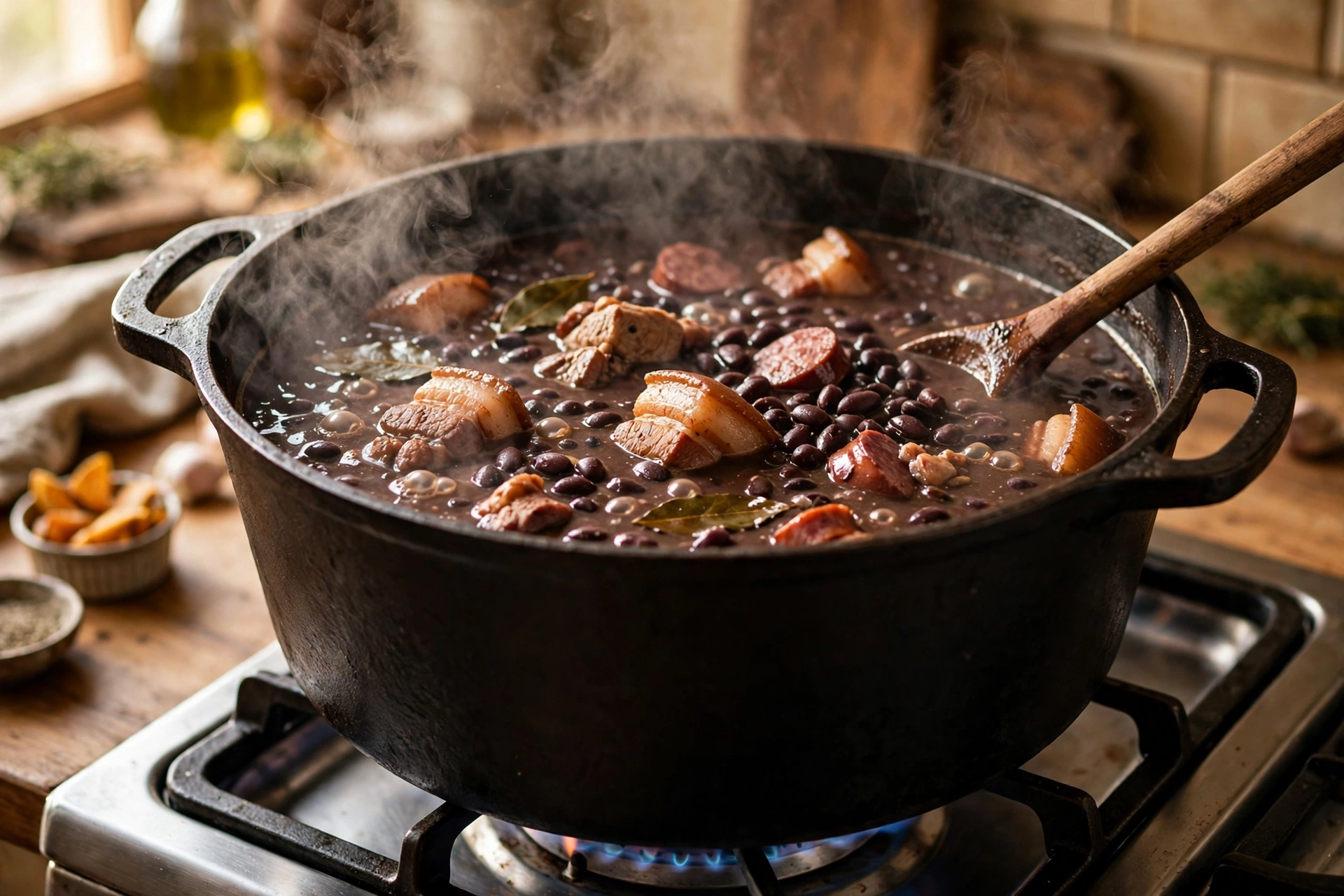
Return the pork, bacon, and sausage to the pot. Add the soaked black beans, the bay leaves, and 8 cups of water. The water should cover everything by a few centimetres. Bring the pot to a gentle boil, then skim off any foam that rises to the surface. This keeps the broth clean and the beans tender.
Step 6: Simmer Slowly
Turn the heat down low, put the lid on, leaving it slightly ajar, and simmer for 2 to 2 1/2 hours. Stir now and then and check the water level, adding a little hot water if the beans start to look dry. The stew is ready when the beans are completely soft and creamy, the pork is tender enough to pull apart with a fork, and the broth has thickened into a rich, dark sauce. Season with salt and pepper at the end.
Step 7: Thicken and Rest
For a thicker broth, take a ladle of beans out of the pot, mash them with a fork, and stir them back in. Let the stew simmer for another 10 minutes. Take the pot off the heat, fish out the bay leaves, and let the feijoada rest for 15 minutes before serving. The rest lets the flavours settle and the broth thicken a little more.
Tips for Perfect Results
The long, slow simmer is what makes feijoada special, so do not rush it. The beans need time to break down and thicken the broth, and the pork needs time to become tender. If you try to cook it fast, you will end up with firm beans and tough meat. Give it the full two hours and you will be rewarded with a stew that tastes like it has been cooking all day.
Salt at the end, not the beginning. Salt added too early can toughen dried beans and slow down their cooking. The bacon and sausage also add salt as they cook, so the stew may need less salt than you expect. Taste it at the end and adjust. The broth should taste rich and savoury, not salty.
Do not skip the soaking step. Soaking the beans overnight shortens the cooking time by a good hour and helps them cook evenly. Unsoaked beans can take much longer and may cook unevenly, with some beans soft and others still firm. If you forgot to soak them, use the quick-soak method: boil the beans for 2 minutes, turn off the heat, cover, and leave them for an hour before draining.
The orange slices are not a garnish. They are an essential part of the meal. The bright, acidic orange cuts through the richness of the beans and pork and refreshes your palate between bites. Serve a few slices on every plate and eat them alongside the stew, not after it. The combination is one of the great pairings in world food.
Make the rice fresh and the greens at the last minute. The rice should be hot and fluffy, and the greens should be quickly sautéed with garlic and olive oil until they just wilt. The contrast between the hot, soft rice, the garlicky greens, and the rich, dark stew is what makes the plate work. If you want farofa, toast cassava flour in a dry pan with a little butter until it turns golden and nutty, then sprinkle it over the top.
Serving and Storage
Feijoada is a feast, so serve it family-style at the table. Put the big pot of stew in the centre, with bowls of white rice, sautéed greens, orange slices, and farofa around it. Let everyone build their own plate. A typical serving is a generous ladle of beans and meat over rice, a pile of greens on the side, and a couple of orange slices. Hot sauce on the table is a must.
A caipirinha, the Brazilian cocktail made with lime, sugar, and cachaça, is the traditional drink with feijoada, but a cold beer or sparkling water with lime works just as well. The meal is heavy, so keep the drinks light and refreshing. A simple salad of sliced tomatoes and onions with olive oil makes a fresh starter.
Leftovers keep in the fridge for up to 4 days, and feijoada tastes even better the next day. Store the stew, rice, and greens separately. Reheat the stew gently in a pan over low heat, adding a splash of water if it has thickened too much. Cook fresh rice and greens when you serve it again, because they do not reheat well.
For longer storage, freeze the stew for up to 3 months. Cool it completely, portion it into freezer containers, and thaw overnight in the fridge. The beans and pork freeze beautifully. If you are planning a Brazilian-themed weekend, the Argentine Beef Empanadas (Flaky Pastry, Juicy Filling) make a wonderful starter, and the Authentic Mexican Beef Tacos (Juicy Beef, Fresh Salsa, Warm Tortillas) share the same generous, shareable spirit.
Easy Variations
Traditional feijoada uses a wider range of pork cuts, including ribs, pork belly, and smoked ham hock. If you can find them, add pork ribs or a ham hock to the pot at the start. They add a wonderful richness and fall-off-the-bone meat. Just increase the cooking time slightly and remove the bones before serving.
For a lighter version, use chicken thighs and turkey sausage instead of pork, and add a tin of black beans alongside the dried ones for extra creaminess. It will not be traditional feijoada, but it will be delicious, and it cooks a little faster. A vegetarian version with mushrooms, smoked paprika, and extra beans works well too.
You can also cook feijoada in a pressure cooker, which cuts the time to about 45 minutes. Brown the meat and soften the onion as above, then add everything to the pressure cooker and cook on high pressure for 40 minutes. Let the pressure release naturally, then check the beans and mash a ladleful to thicken the broth.
For a spicier stew, add a chopped fresh chilli with the onion, or stir in a spoonful of hot sauce at the end. A pinch of smoked paprika adds a deeper smoky note. And if you like the greens, try collard greens cooked with garlic and a splash of vinegar instead of spring greens. The slight bitterness of collards is perfect against the rich beans.
Frequently Asked Questions
Do I have to soak the black beans overnight?
Overnight soaking is best, but you can use the quick-soak method if you forgot. Boil the beans in plenty of water for 2 minutes, turn off the heat, cover the pot, and leave them for an hour. Drain, rinse, and carry on with the recipe. The beans will cook a little more slowly, so allow an extra 20 minutes of simmering.
Can I use tinned black beans for feijoada?
You can in a pinch, but the result will not be the same. Tinned beans do not break down and thicken the broth the way dried beans do. If you use tinned beans, add them in the last 30 minutes of cooking and mash a tinful into the broth to thicken it. The stew will still taste good, just lighter.
What is farofa, and do I need it?
Farofa is toasted cassava flour, often cooked with butter and onion until golden and nutty. It is sprinkled over the stew to add crunch and soak up the broth. It is traditional, but the meal is complete without it. If you cannot find cassava flour, toasted breadcrumbs make a decent substitute.
Why is my feijoada broth thin?
Thin broth usually means the beans have not cooked long enough, or there is too much water. Mash a ladle of beans and stir them back in, then simmer the stew uncovered for 15 to 20 minutes. The starch from the mashed beans will thicken the broth beautifully. Make sure the beans are fully soft before you stop cooking.
Can I freeze feijoada?
Yes, feijoada freezes very well for up to 3 months. Cool it completely and portion it into freezer containers. Thaw overnight in the fridge and reheat gently on the stove. Cook fresh rice and greens when you serve it, because they do not freeze well. The stew itself will taste just as good, if not better, after freezing.
Final Thoughts
Feijoada is more than a stew. It is a slow, generous, joyful meal that turns a Saturday into an occasion. It asks for a few hours of your time and gives back a pot of rich, smoky comfort that feeds a crowd and tastes even better the next day. It is the kind of cooking that reminds you why we gather around a table in the first place.
Make it when you have friends coming over, or when you just want a pot of something wonderful simmering on the stove. And if you enjoy the hearty, shareable spirit of this dish, the Venezuelan Cheese Arepas (Crispy Outside, Gooey Inside) make a lovely side, and the Traditional Hungarian Beef Goulash (Rich, Slow-Cooked, and Hearty) is another slow-cooked classic worth trying next.