
Moroccan Chicken Tagine (Fragrant, Tender, and One-Pot) is the kind of dinner that makes the whole house smell incredible before you have even sat down. The spices bloom in the oil, the lemon and olives add their salty, bright notes, and the chicken turns so tender it falls off the bone. It is a dish built for slow evenings, for tearing bread and scooping up sauce, and for going back for seconds.
I first tasted a proper tagine in a small riad in Marrakech, where the cook brought it to the table still bubbling in its clay pot. She lifted the cone-shaped lid and a cloud of steam came out smelling of ginger, cumin, and saffron. The chicken was golden and soft, the sauce was rich and glossy, and there were preserved lemons and green olives scattered through it. I have been chasing that flavour ever since, and this recipe is the closest I have come in my own kitchen.
You do not need a clay tagine pot to make this dish. A heavy casserole or a deep frying pan with a tight lid works perfectly. The trick is the same either way: brown the chicken well, cook the spices gently so they do not burn, and then let everything simmer slowly until the sauce thickens and the chicken is falling apart. One pot, very little washing up, and a dinner that tastes like a holiday.
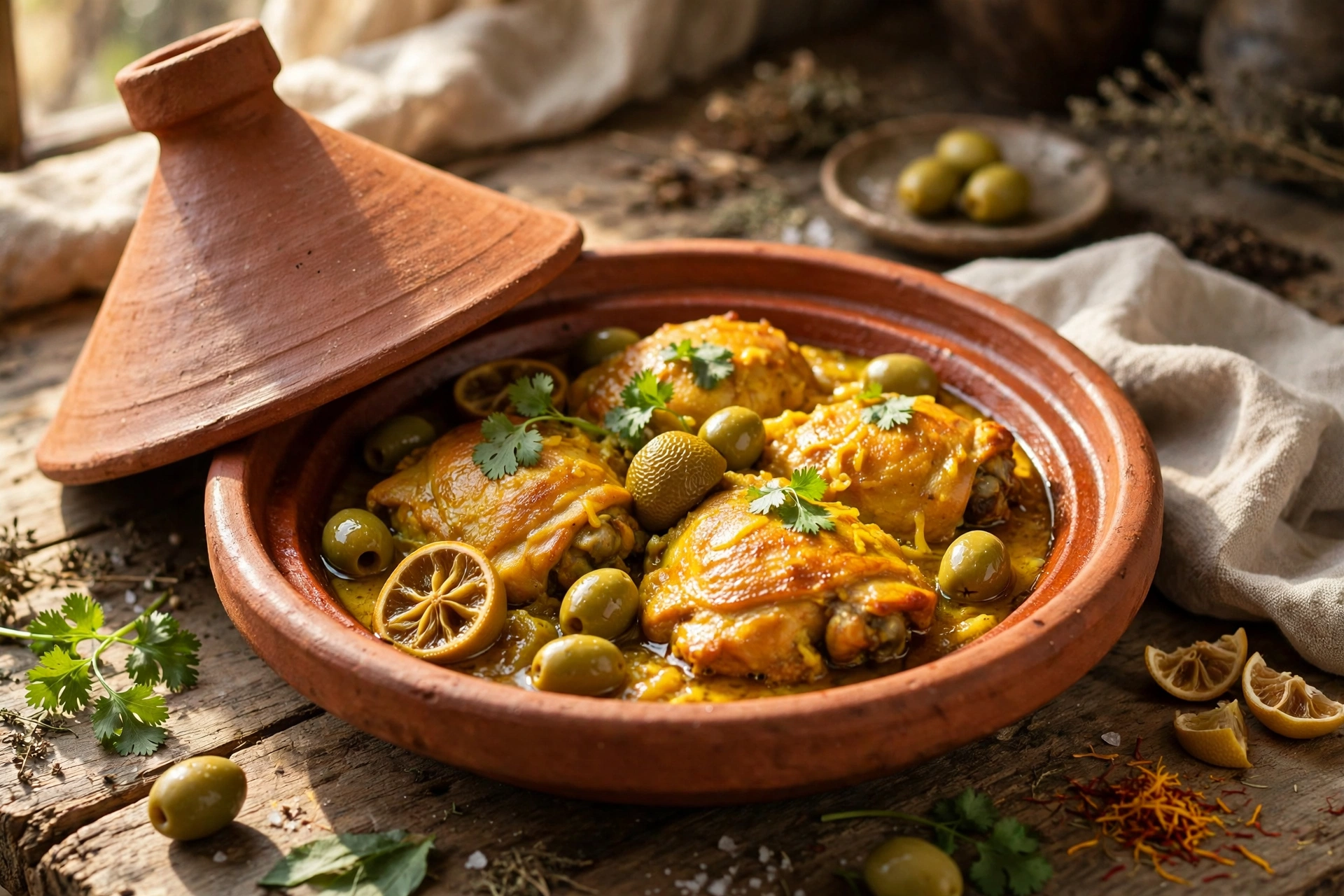
Ingredients
For the Chicken
- 8 bone-in, skin-on chicken thighs (about 1 kg)
- 1 teaspoon salt
- 1/2 teaspoon black pepper
- 2 tablespoons olive oil
For the Sauce
- 1 large onion, finely chopped
- 4 garlic cloves, minced
- 1 tablespoon fresh ginger, grated
- 1 teaspoon ground cumin
- 1 teaspoon ground turmeric
- 1 teaspoon ground coriander
- 1/2 teaspoon ground cinnamon
- 1/4 teaspoon cayenne pepper
- A pinch of saffron threads, soaked in 2 tablespoons warm water
- 1 tablespoon honey
- 1 preserved lemon, flesh removed, rind finely chopped
- 1 cup green olives, pitted
- 1 cup chicken stock
- 1 tin (400 g) chopped tomatoes or 3 fresh tomatoes, chopped
To Finish
- A small handful of fresh coriander, chopped
- A small handful of fresh parsley, chopped
- Toasted flaked almonds, optional
Bone-in chicken thighs are the right cut here. They stay juicy through a long, slow cook, and the bones add flavour to the sauce. Skin-on thighs also brown beautifully, which gives the sauce its rich colour. If you only have boneless thighs, they work too, just reduce the cooking time by about 10 minutes and check them sooner.
Preserved lemons are the secret ingredient, and they are worth finding. They are lemons pickled in salt until the rind turns soft and intensely lemony without any sharpness. You can find them in Middle Eastern shops or larger supermarkets. If you cannot find them, use the finely grated zest of 2 fresh lemons plus a tablespoon of lemon juice, and add it at the end of cooking. It is not quite the same, but it gets you close.
Step-by-Step Method
Step 1: Season and Brown the Chicken
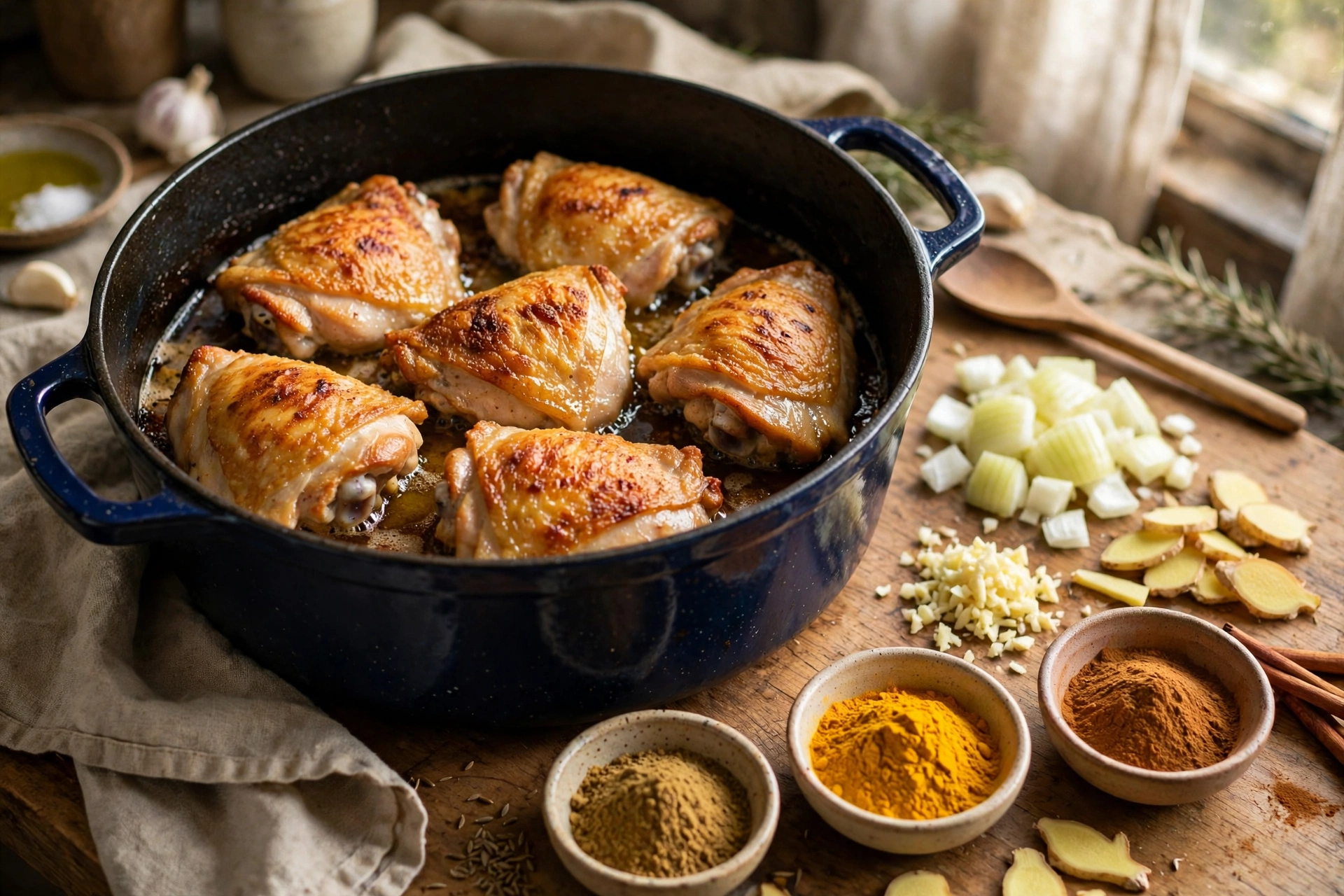
Pat the chicken thighs dry with kitchen paper and season them well with salt and pepper. Heat the olive oil in a large, heavy casserole over medium-high heat. Lay the thighs skin-side down and cook for 5 to 6 minutes without moving them, until the skin is deep golden brown and crisp. Turn them over and cook the other side for 3 minutes. Lift the thighs out and set them aside on a plate. Do not worry if they are not cooked through yet. They will finish in the sauce.
Step 2: Soften the Onion
Lower the heat to medium and add the chopped onion to the same pot, using the fat left behind from the chicken. Cook for 5 to 6 minutes, stirring now and then, until the onion turns soft and golden. Scrape up the browned bits stuck to the bottom of the pot as you stir, because those bits are full of flavour and they will dissolve into the sauce.
Step 3: Add Garlic, Ginger, and Spices
Stir in the garlic and ginger and cook for 1 minute until fragrant. Add the cumin, turmeric, coriander, cinnamon, and cayenne, and stir for 30 seconds. The spices will smell warm and heady. Pour in the saffron water and stir, scraping the bottom of the pot. This step builds the whole flavour of the dish, so do not rush it, but do not let the spices burn either.
Step 4: Build the Sauce
Add the chopped tomatoes and the chicken stock, and stir in the honey. Bring the sauce to a gentle simmer and let it bubble for 5 minutes. The sauce should look rich and slightly thick, with a deep golden colour from the turmeric and saffron. Taste it and add a pinch more salt if it needs it, keeping in mind that the olives and preserved lemon will add salt later.
Step 5: Return the Chicken and Simmer
Nestle the browned chicken thighs back into the sauce, skin-side up, and spoon a little sauce over the top. Turn the heat down to low, put the lid on, and let the tagine simmer gently for 35 to 40 minutes. The chicken should be completely tender and the sauce should have thickened into a glossy coating. Check halfway through and give the pot a gentle stir, but try not to break the chicken apart.
Step 6: Add the Lemons and Olives
Stir in the chopped preserved lemon rind and the green olives. Let the tagine simmer uncovered for another 10 minutes so the sauce thickens a little more and the lemon and olives warm through. The sauce should be rich enough to coat a spoon, not watery. If it is too thin, turn the heat up slightly and reduce it for a few more minutes.
Step 7: Rest and Garnish
Take the pot off the heat and let it rest for 10 minutes with the lid on. Stir in the chopped coriander and parsley just before serving, and scatter over toasted almonds if you like. The rest lets the chicken relax and the flavours settle together, and the fresh herbs add a bright green finish that looks beautiful at the table.
Tips for Perfect Results
Browning the chicken properly is the foundation of the whole dish. If you rush this step, the sauce will taste flat and the chicken will look pale. Take the full 5 to 6 minutes on the skin side, and do not move the thighs around while they cook. Let them sit still and develop that deep golden crust. It is worth the patience.
Keep the heat low once the lid goes on. A tagine should simmer gently, with small bubbles breaking the surface now and then, not boil hard. A fierce boil will toughen the chicken and reduce the sauce too fast. If your stove runs hot, use a heat diffuser or set the pot slightly off-centre on the burner.
Taste before you add more salt. Preserved lemons and olives are both salty, and the sauce concentrates as it cooks. It is easy to over-salt this dish if you season aggressively at the start. Add salt to the chicken and a little to the sauce, then taste again at the end and adjust.
The honey might seem odd in a savoury stew, but it is traditional and it matters. It rounds out the spices and balances the salty, sour notes from the lemons and olives. One tablespoon is enough. You will not taste sweetness in the finished dish, just a rounder, warmer flavour that holds everything together.
Make it ahead if you can. Like most slow-cooked dishes, a tagine tastes even better the next day. Cook it, cool it, and store it in the fridge overnight. Reheat it gently on the stove and stir in the fresh herbs just before serving. The flavours deepen, the sauce thickens, and the chicken gets even more tender.
Serving and Storage
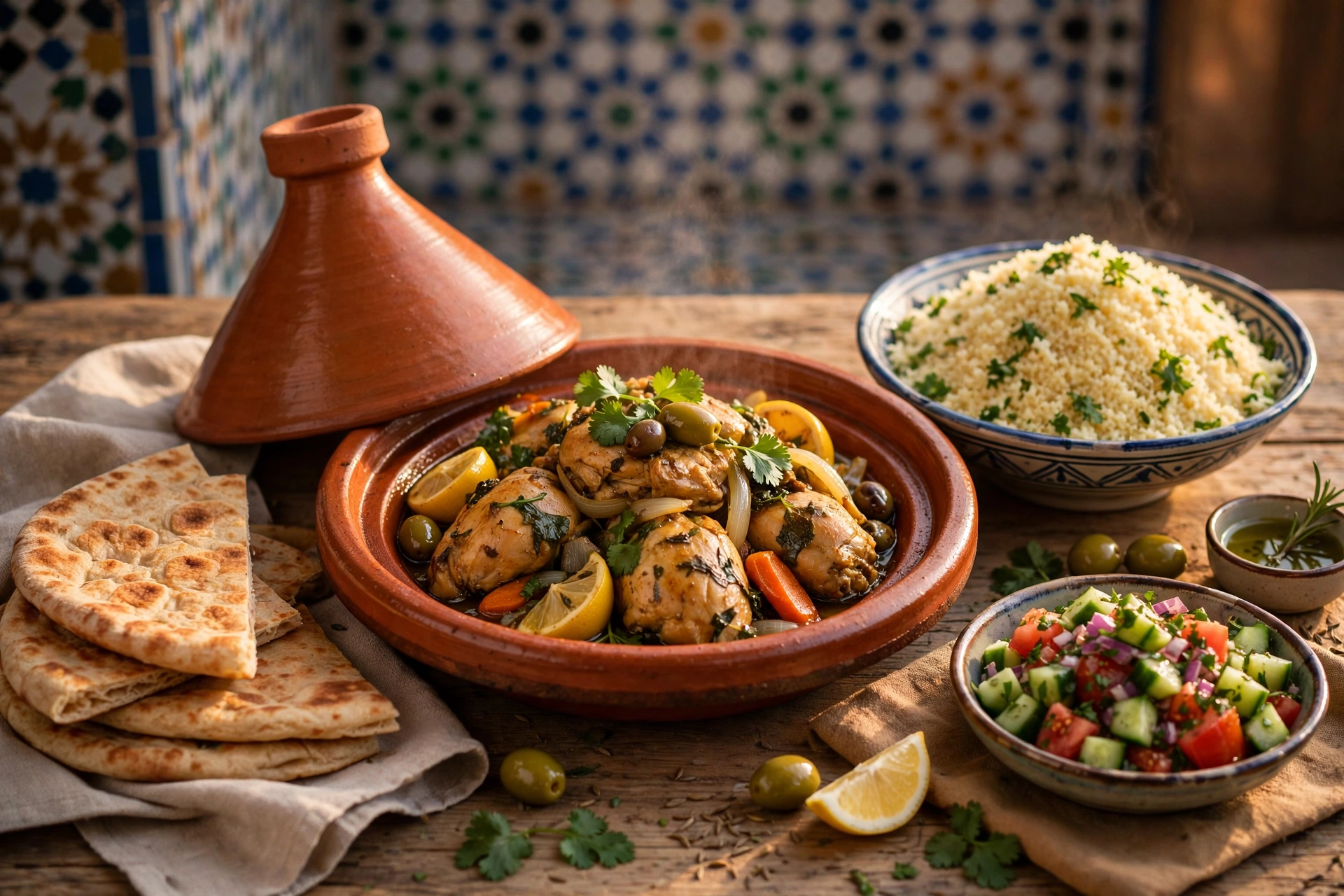
Serve the tagine straight from the pot at the table, with a big pile of couscous or flatbread alongside. Couscous is the classic partner, and it soaks up the sauce beautifully. To make it, pour boiling stock over fine couscous, cover for 5 minutes, then fluff with a fork and stir in a knob of butter and some chopped parsley. Warm flatbread is just as good for scooping.
A simple salad of sliced cucumber, tomato, and red onion with lemon juice and olive oil makes a fresh, cool contrast to the warm spices. A spoonful of plain yoghurt on the side is lovely too, especially if you have added a little extra cayenne. For a full Moroccan spread, serve the tagine with a pot of mint tea afterwards.
Leftovers keep in the fridge for up to 3 days in a sealed container. Reheat gently in a covered pan over low heat, adding a splash of water or stock if the sauce has thickened too much. The chicken will be even more tender the next day, so be gentle when you stir it or it will fall apart completely.
For longer storage, the tagine freezes well for up to 3 months, though the olives soften a little after freezing. Cool it completely, portion it into freezer containers, and thaw overnight in the fridge before reheating. If you are planning a Moroccan-themed dinner, the Nigerian Jollof Rice with Chicken (Smoky, Spicy, and Full of Flavour) makes a great companion dish, and the Authentic Chicken Tikka Masala (Creamy, Spiced, and Better Than Takeout) shares the same warm, slow-cooked spirit.
Easy Variations
This recipe works beautifully with other proteins. Try it with lamb shoulder cut into large chunks, which needs about an hour of simmering until it is meltingly tender. A whole small chicken, jointed into pieces, is traditional and feeds a crowd. For a vegetarian version, use chickpeas and chunks of butternut squash instead of chicken, and use vegetable stock.
Dried fruit adds a lovely sweet note that is very Moroccan. Stir in a handful of dried apricots or prunes with the olives, and let them plump up in the sauce. The sweetness plays against the salty lemon and olives in a way that feels luxurious. A few dates, pitted and halved, work well too.
If you like heat, add a whole dried chilli or a chopped fresh red chilli with the onion. For a milder, more aromatic version, leave out the cayenne and add an extra pinch of cinnamon and a little grated orange zest at the end. The orange adds a gentle sweetness that suits the preserved lemon.
You can also finish the tagine with a scattering of pomegranate seeds for colour and a burst of tart juice. They look beautiful against the golden sauce and the green herbs. A spoonful of harissa stirred into the sauce gives it a smoky kick, if that is your style. The base recipe is forgiving, so make it your own.
Frequently Asked Questions
Do I need a tagine pot to make this?
No, a heavy casserole or a deep pan with a tight-fitting lid works perfectly. The cone-shaped lid of a clay tagine helps moisture drip back into the dish, but a regular lid does the same job well enough. The important thing is a heavy pot that holds heat evenly and a lid that fits snugly.
What can I use instead of preserved lemons?
Use the finely grated zest of 2 fresh lemons plus a tablespoon of lemon juice, added at the end of cooking. It will not have quite the same mellow, salty depth as a preserved lemon, but it gives you the bright citrus note the dish needs. Add a pinch more salt to compensate.
Can I use chicken breast in a tagine?
You can, but thighs are much better for slow cooking. Breast meat dries out over a long simmer. If you use breast, add it in the last 20 minutes of cooking and check it early. Bone-in, skin-on thighs stay juicy and give the sauce far more flavour.
Why is my tagine sauce too thin?
The lid may have been too tight, trapping too much steam, or the heat may have been too low. Simmer the tagine uncovered for the last 10 to 15 minutes to let the sauce reduce. The sauce should be thick enough to coat a spoon and cling to the chicken, not runny.
What do I serve with chicken tagine?
Couscous is the classic partner, along with warm flatbread for scooping. A simple cucumber and tomato salad adds freshness, and plain yoghurt cools the spices. For drinks, mint tea is traditional, but a cold glass of sparkling water with lemon works just as well.
Final Thoughts
A chicken tagine is one of those dishes that feels like an occasion every time you make it. The spices, the lemon, the olives, the tender chicken falling off the bone, it all adds up to something far greater than the sum of its parts. And it is all done in one pot, with ingredients you can find in any good supermarket.
Make it on a slow weekend, eat it with people you like, and save the leftovers for lunch the next day, when it will taste even better. If you enjoy the warm spices here, the Creamy Indian Butter Chicken with Rice (Rich, Buttery, and Mildly Spiced) is a natural next cook, with the same slow, spiced comfort in a different style.