
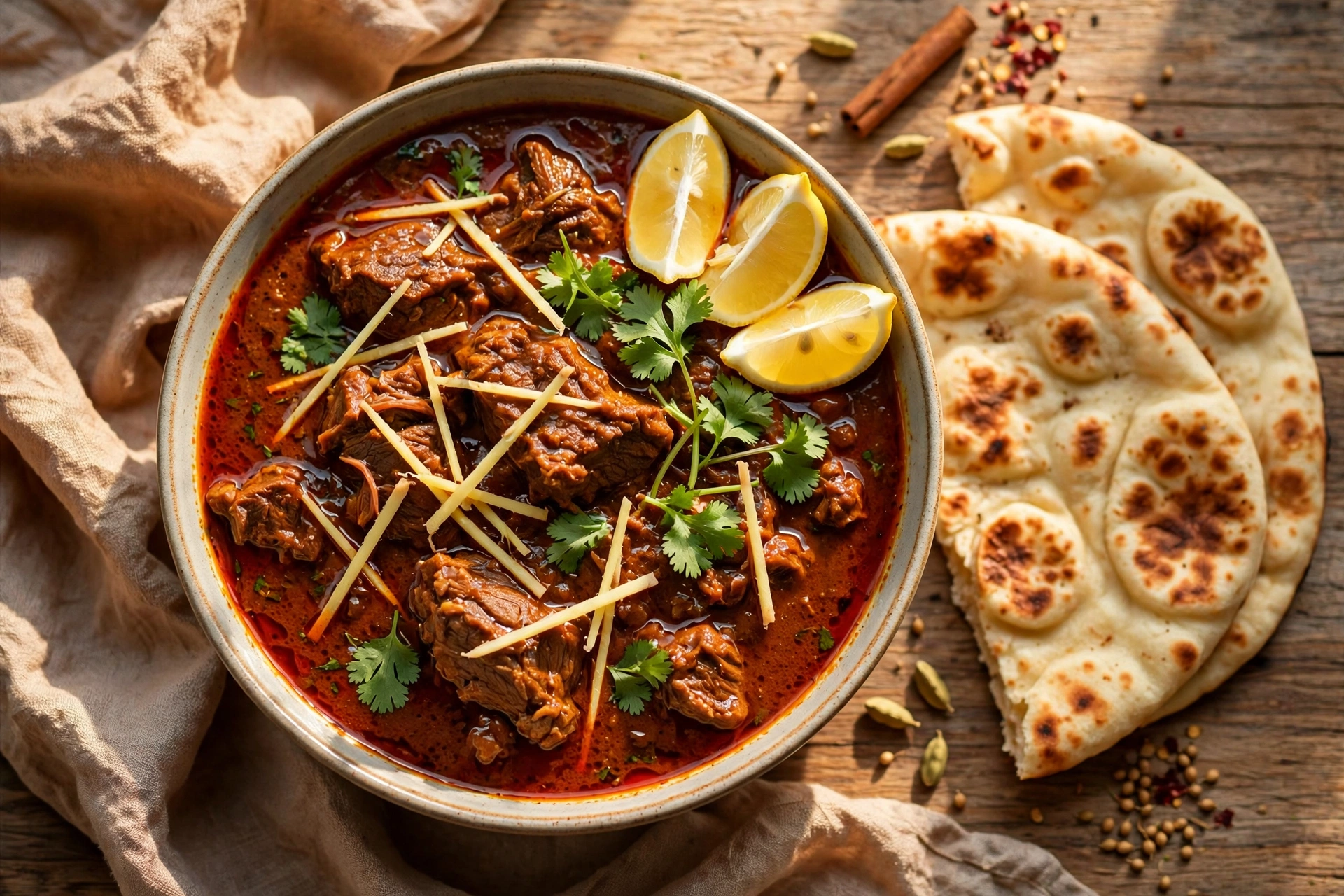
Pakistani Nihari (Slow-Cooked Beef Stew, Rich and Tender) is the dish that wakes up whole neighbourhoods in Lahore and Karachi before the sun is even up. The name comes from the Arabic word nahar, meaning morning, because nihari was traditionally cooked overnight and eaten for breakfast after the morning prayers. A pot of beef, slow-cooked for hours with ginger, garlic, and a dozen warm spices, turns into something extraordinary. The meat falls apart at the touch of a spoon, and the gravy is thick, glossy, and rich enough to coat the back of a spoon.
Nihari has a royal history. It was born in the kitchens of the Mughal emperors in Delhi, where cooks slow-cooked meat overnight for the nobility, and it travelled to Pakistan after Partition, where it became a national treasure. In Lahore, the old city’s nihari shops open before dawn, and people queue up with their own pots to take the stew home for breakfast.
The version below is the classic beef nihari, cooked the slow way, on the stove, for several hours. You can make it faster in a pressure cooker, and I will tell you how, but the slow version is worth the wait. The spices need time to bloom, the meat needs time to give up, and the gravy needs time to thicken into silk. This guide walks you through each step, including the spice mix, the slow cook, and the garnishes that make the dish complete.
Ingredients
For the Stew
- 2 pounds beef shank or stewing beef, bone-in if possible, cut into large chunks
- 1 large onion, thinly sliced
- 1/2 cup vegetable oil or ghee
- 2 tablespoons fresh ginger, grated, plus more for garnish
- 2 tablespoons fresh garlic, minced
- 2 tablespoons nihari spice mix, shop-bought or homemade
- 1 teaspoon red chilli powder
- 1/2 teaspoon ground turmeric
- 1 tablespoon ground coriander
- 1 teaspoon kosher salt
- 6 cups water or beef stock
For the Gravy and Garnish
- 3 tablespoons whole wheat flour, mixed with 1/2 cup water into a smooth paste
- 1 tablespoon lemon juice
- 2 green chillies, sliced
- Fresh cilantro, chopped
- Fresh ginger, cut into thin matchsticks
- 1 lemon, cut into wedges
- Hot naan bread, for serving
Beef shank is the classic cut for nihari, because the bone and the marrow add incredible richness to the gravy as it cooks. If you can’t find shank, use any stewing beef with some bone in it, or ask your butcher for a piece with the marrow bone attached. Boneless beef works too, but the gravy won’t be quite as deep. Cut the meat into large chunks, because small pieces overcook and fall apart too soon. Big pieces hold their shape through the long cook and then surrender beautifully at the end.
Nihari spice mix is sold in small packets at any Pakistani or Indian grocery store, and it is the easiest way to get the flavour right. The mix usually contains fennel, cardamom, cloves, cinnamon, bay leaf, nutmeg, and dried ginger, ground together. If you want to make your own, grind together 2 teaspoons fennel seeds, 4 green cardamom pods, 2 black cardamom pods, 4 cloves, a 1-inch piece of cinnamon, 1 bay leaf, and a pinch of nutmeg. It won’t be exactly the same as the shop mix, but it will be close and wonderfully fragrant.
Step-by-Step Method
Step 1: Fry the Onions Until Golden
Heat the oil or ghee in a large, heavy pot over medium heat. Add the sliced onion and cook for 10 to 12 minutes, stirring often, until it turns deep golden brown. The onion needs to go further than golden here. It should be a rich, even brown, almost the colour of caramel. This deep colour is what gives nihari its dark, glossy gravy. Take care not to burn it, though. Stir constantly in the last few minutes, and pull the pot off the heat for a moment if the onion starts to darken too fast.
Step 2: Add the Ginger, Garlic, and Meat
Add the grated ginger and minced garlic to the pot and cook for 1 minute, stirring constantly. Add the beef chunks and cook for 8 to 10 minutes, turning them now and then, until the meat is browned on all sides and the raw smell is gone. The meat will release some liquid at first. Let that cook off, and keep stirring until the meat starts to fry in the oil and the onions again. This browning step builds the deep flavour that the long simmer will develop further.
Step 3: Add the Spices and Water
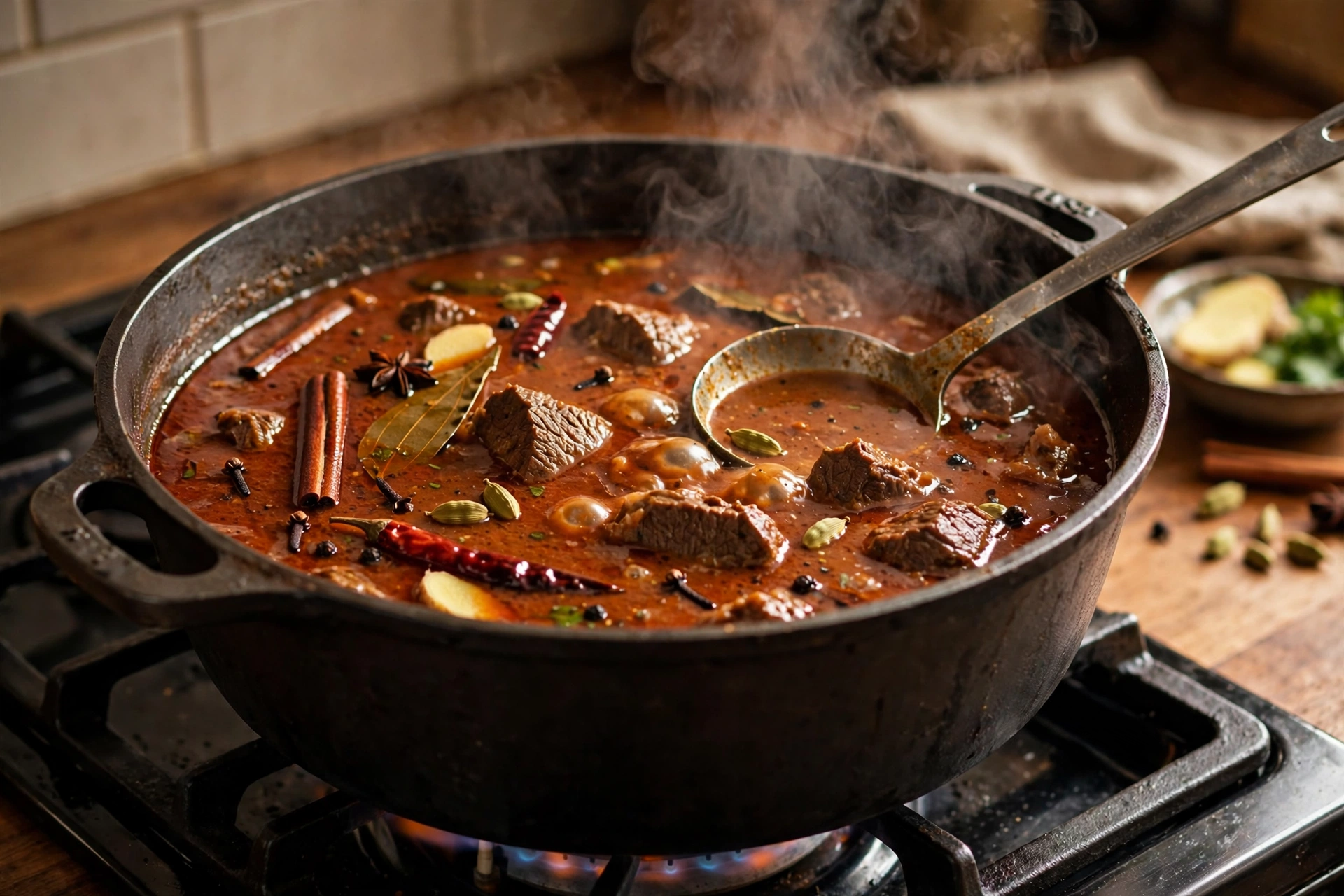
Stir in the nihari spice mix, red chilli powder, turmeric, ground coriander, and salt. Cook for 2 minutes, stirring constantly, until the spices smell fragrant and coat the meat. Pour in the water or beef stock and stir, scraping the bottom of the pot to lift up any browned bits. Bring the pot to a boil, then turn the heat down to the lowest setting. The liquid should barely tremble, with a bubble breaking the surface every few seconds.
Step 4: Simmer Low and Slow
Put the lid on the pot and let it cook for 4 to 5 hours on the lowest heat. Yes, hours. Nihari is not a dish you rush. Check every hour, stir gently, and add a splash of hot water if the liquid drops too low. The meat is done when it falls apart with the lightest pressure from a spoon and the marrow has melted into the gravy. If you are using a pressure cooker, cook on high pressure for 45 minutes, let the pressure release naturally, and then continue with the next step. The result is very close to the slow version.
Step 5: Thicken the Gravy
When the meat is tender, stir the flour paste well and pour it into the pot in a thin stream, stirring constantly so it doesn’t clump. The flour is what gives nihari its silky, clinging gravy. Let the pot simmer gently for 20 to 30 minutes more, stirring now and then, until the gravy thickens enough to coat a spoon. It should be glossy and smooth, not thin like soup and not stiff like porridge. If it gets too thick, stir in a splash of hot water. Taste and adjust the salt.
Step 6: Rest, Garnish, and Serve
Turn off the heat and stir in the lemon juice. Let the nihari rest for 10 minutes with the lid on. The flavours settle and the gravy thickens a little more as it cools. Ladle the stew into deep bowls, making sure each serving gets a good piece of meat and plenty of gravy. Scatter the ginger matchsticks, chopped cilantro, and sliced green chillies over the top. Serve with lemon wedges and hot naan bread on the side, and let everyone tear off pieces of naan to scoop up the stew.
Tips for Perfect Results
Keep the heat as low as it will go. Nihari cooked at a rolling boil turns tough, because the meat fibres tighten up and squeeze out their moisture. The gentlest simmer, where the surface barely moves, is the right pace. If your stove’s lowest setting is still too hot, use a flame tamer or move the pot to the smallest burner. An oven also works well. Cook the pot at 300°F with the lid on for 4 to 5 hours, and the heat will be perfectly even.
Don’t add the flour paste too early. It goes in only when the meat is fully tender. If you add it at the start, the gravy thickens too soon and the meat cooks in a thick sauce that can catch and burn on the bottom of the pot. The flour is a finishing step, and it needs just 20 to 30 minutes to do its job. Stir it in slowly and keep stirring until it is fully mixed in, or you will get lumps.
Taste the gravy before you serve it. Nihari should taste rich, warmly spiced, and gently tangy from the lemon. If it tastes flat, add a pinch more salt. If it tastes too rich, a little more lemon juice cuts through it. The garnishes are part of the seasoning too. The raw ginger, the fresh cilantro, and the green chillies add brightness that the long-cooked stew needs. Don’t serve nihari without them.
Make the spice mix fresh if you can. Whole spices, toasted lightly in a dry pan and ground just before cooking, taste far more alive than a packet that has sat on a shelf for a year. It takes five extra minutes, and the difference is real. Toast the spices until they smell fragrant, let them cool, then grind them in a spice grinder or a clean coffee grinder. Store any extra in a small sealed jar.
Serving and Storage
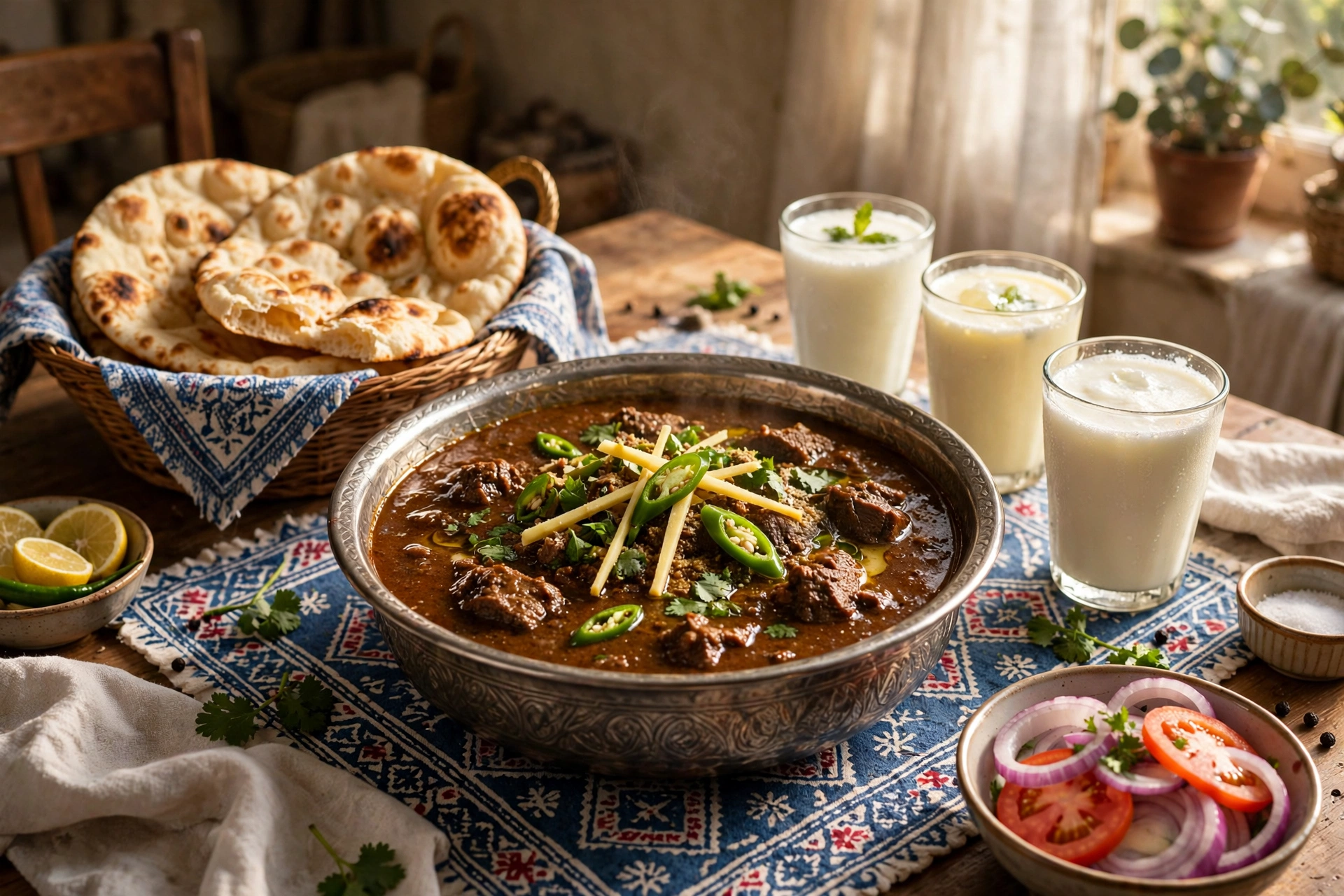
Nihari is traditionally eaten for breakfast, with hot naan bread and a glass of lassi, the salted yoghurt drink. The naan is torn into pieces and used to scoop up the meat and gravy, and a little of the gravy always ends up on your fingers, which is part of the pleasure. For dinner, serve it the same way, with a simple salad of sliced onion, tomato, and cucumber on the side. The fresh salad cuts through the richness and cleans the palate between bites.
Leftovers keep in the fridge for 4 to 5 days, and nihari is one of those dishes that genuinely tastes better the next day. The gravy thickens as it sits, and the spices deepen. Reheat it gently in a covered pot over low heat, adding a splash of water to loosen the gravy. Stir now and then and don’t let it boil hard. Add the fresh garnishes after reheating, so the ginger and cilantro are bright and crisp.
Nihari freezes beautifully for up to 3 months. Let it cool completely, then pack it into containers in meal-size portions, making sure each one has meat and gravy. Thaw overnight in the fridge and reheat slowly. The meat holds up well, and the gravy stays silky. If you love slow-cooked beef, the Traditional Hungarian Beef Goulash (Rich, Slow-Cooked, and Hearty) is another stew built on the same idea of patience and time, with paprika and root vegetables instead of garam masala and ginger.
Easy Variations
Chicken nihari is a popular variation that cooks much faster. Use bone-in chicken pieces, cut the simmering time to 45 minutes, and follow the same steps for the gravy. The result is lighter than beef nihari but still rich and comforting. Mutton nihari is another classic, and it is made exactly the same way as the beef version, with the same long, slow cook. The mutton has a deeper, gamier flavour that many people prefer.
For a special occasion version, add a spoonful of bone marrow to the pot during the last hour of cooking. It melts into the gravy and makes it unbelievably rich. Some cooks also add a few tablespoons of cream at the end for extra silkiness, though purists would say the flour-thickened gravy is enough on its own. Try it both ways and decide for yourself.
You can also make nihari in a slow cooker. Brown the meat and onions first, then transfer everything to the slow cooker and cook on low for 8 hours or on high for 5 hours. Stir in the flour paste at the end and cook on high for 30 minutes to thicken. The slow cooker is a natural fit for this dish, and it lets you start it in the morning and come home to a finished pot. And if you want another Pakistani classic for the table, the Authentic Pakistani Chicken Biryani (Fragrant, Spicy, and Made for Sharing) is the perfect partner for a celebratory meal, fragrant and festive where nihari is deep and slow.
For a lighter plate, serve the nihari with a smaller portion of naan and a bigger salad. The stew itself is rich, and a generous salad of greens, cucumber, and tomato with a lemon dressing balances it well. You can also spoon the meat and gravy over a bowl of steamed rice instead of bread, which is how some families serve it for dinner. The rice soaks up the gravy beautifully.
Frequently Asked Questions
How long does nihari take to cook?
Beef nihari takes 4 to 5 hours on the stove at the lowest heat, or 8 hours on low in a slow cooker. A pressure cooker cuts the time to about 45 minutes at high pressure, plus 30 minutes to thicken the gravy. The long cook is what makes the meat fall apart and the gravy turn silky, so don’t rush it.
What cut of beef is best for nihari?
Beef shank is the classic choice, because the bone and marrow add richness to the gravy. Stewing beef with bone in it is a good second choice. Boneless stewing beef also works, but the gravy won’t be quite as deep. Cut the meat into large chunks so it holds its shape through the long cook.
Why is my nihari gravy thin?
Thin gravy usually means the flour paste was skipped or added too early. The flour goes in only when the meat is fully tender, and it needs 20 to 30 minutes of gentle simmering to thicken. Make sure the flour is mixed into a smooth paste with water before adding it, and stir constantly so it doesn’t clump.
Can I make nihari ahead of time?
Yes, and it tastes better the next day. Cook it fully, let it cool, and refrigerate it for up to 5 days. The gravy thickens as it sits and the flavours deepen. Reheat it gently with a splash of water, and add the fresh garnishes just before serving.
What do you serve with nihari?
Hot naan bread is the classic partner, torn into pieces and used to scoop up the meat and gravy. A glass of lassi, the salted yoghurt drink, is the traditional accompaniment. A simple salad of onion, tomato, and cucumber adds freshness and cuts through the richness.
Final Thoughts
Nihari is more than a stew. It is a piece of history, cooked slowly in a pot, and it carries the flavours of Mughal kitchens, Lahore mornings, and family breakfasts all at once. The meat is tender, the gravy is silky, and the garnishes bring it to life. It asks for your time, and it pays you back with a meal that feels important.
Make it on a weekend when you have the hours to spare, and serve it the way it deserves to be served, with hot naan, fresh garnishes, and people you love around the table. That is how nihari has been eaten for centuries, and it is how it tastes best. And if you want another slow-cooked beef classic after this one, the Russian Beef Stroganoff with Mushrooms (Creamy, Tender, and Classic) is a fine next cook, creamy and comforting in a completely different tradition.