
There is a particular joy to a proper New York slice: a crust that is crisp on the bottom, chewy in the middle, and bendy enough to fold in half without cracking, topped with bright tomato sauce and mozzarella that bubbles and browns in spots. It is the pizza of corner shops and late-night counters — and you can make a great version in a home oven.
The secret is not fancy equipment. It is a simple, well-made dough, a hot oven, and a barely cooked sauce that stays fresh and tangy. Rest the dough (overnight if you can), heat your oven as hot as it will go, and a New Yorker would nod at the result.
Makes: 2 large pizzas (about 35 cm / 14 inches each), serving 4–6 | Prep time: 30 minutes, plus 1½ hours rising (or overnight) | Cook time: 7–10 minutes per pizza
Ingredients
For the dough
- 4 cups (500 g) bread flour (strong flour), plus extra for dusting
- 1½ cups (355 ml) warm water, about 40°C / 105°F — warm, not hot
- 2¼ teaspoons (7 g, 1 standard packet) instant yeast
- 2 teaspoons (10 g) fine sea salt
- 1 tablespoon (12 g) sugar
- 2 tablespoons (30 ml) olive oil, plus a little extra for the bowl
For the sauce
- 1 can (400 g) crushed tomatoes (or whole peeled tomatoes, hand-crushed)
- 1 tablespoon olive oil
- 1 small garlic clove, finely grated, or ½ teaspoon garlic powder
- 1 teaspoon dried oregano
- ½ teaspoon fine salt
- ½ teaspoon sugar
- Pinch of red pepper flakes (optional)
For the topping
- 450 g (1 lb, about 4 packed cups) grated low-moisture mozzarella (whole-milk if possible)
- 1 tablespoon olive oil, for drizzling
- Small handful of fresh basil leaves (optional)
- Flour or fine cornmeal, for dusting the peel or tray
Step-by-Step Method
- Mix the dough. Put the warm water in a large bowl, sprinkle over the yeast and sugar, and leave for 5 minutes until slightly foamy. Add the flour, salt, and olive oil, and mix until a shaggy dough forms.
- Knead until smooth. Knead on a lightly floured surface for 8–10 minutes, until smooth, elastic, and only slightly tacky. A stand mixer with a dough hook takes 6–7 minutes on medium-low.
- Let it rise. Leave the dough in a lightly oiled, covered bowl in a warm spot for 1–1½ hours, until doubled. For the best flavour, then refrigerate the 2 divided balls in oiled, covered containers for 24 hours (up to 3 days). Bring to room temperature 1 hour before baking.
- Make the sauce. Stir all the sauce ingredients together. Do not cook it — the sauce cooks on the pizza, which keeps it bright. It should be fairly thin; if your tomatoes are very thick, add a spoon or two of water.
- Heat the oven — properly hot. Put a pizza stone or steel (or upside-down heavy tray) on the top shelf and preheat at the highest setting, ideally 290°C / 550°F (260°C / 500°F if that is your maximum). Heat for a full 45–60 minutes — this gives you a crisp base.
- Shape the pizzas. On a floured surface, press one dough ball from the centre outward with your fingertips, keeping a 2 cm (¾ inch) rim untouched for the crust edge. Stretch the dough over your knuckles, turning as you go, until it reaches about 35 cm (14 inches). If it keeps springing back, rest it for 10 minutes and try again.
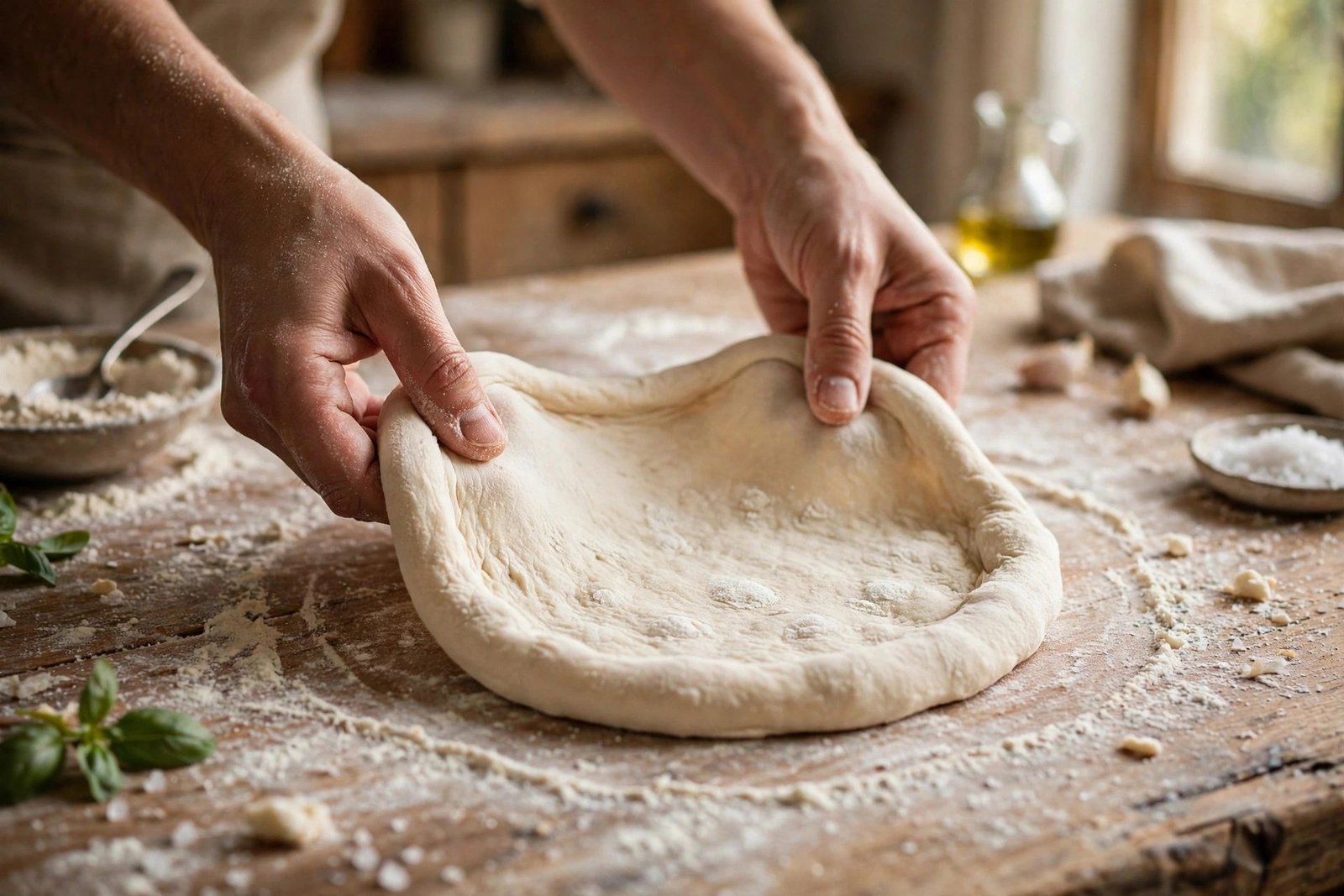
- Top the pizza. Place the dough on a peel or tray dusted with flour or cornmeal. Spread over about ⅓ cup (80 ml) of sauce, leaving the rim bare, and scatter over half the mozzarella. Less sauce than you think is the rule — soggy centres mean too much sauce.
- Bake. Slide the pizza onto the hot stone or steel and bake for 7–9 minutes at 290°C / 550°F (8–11 minutes at 260°C / 500°F), until the crust is deep golden and the cheese is bubbling and lightly browned.
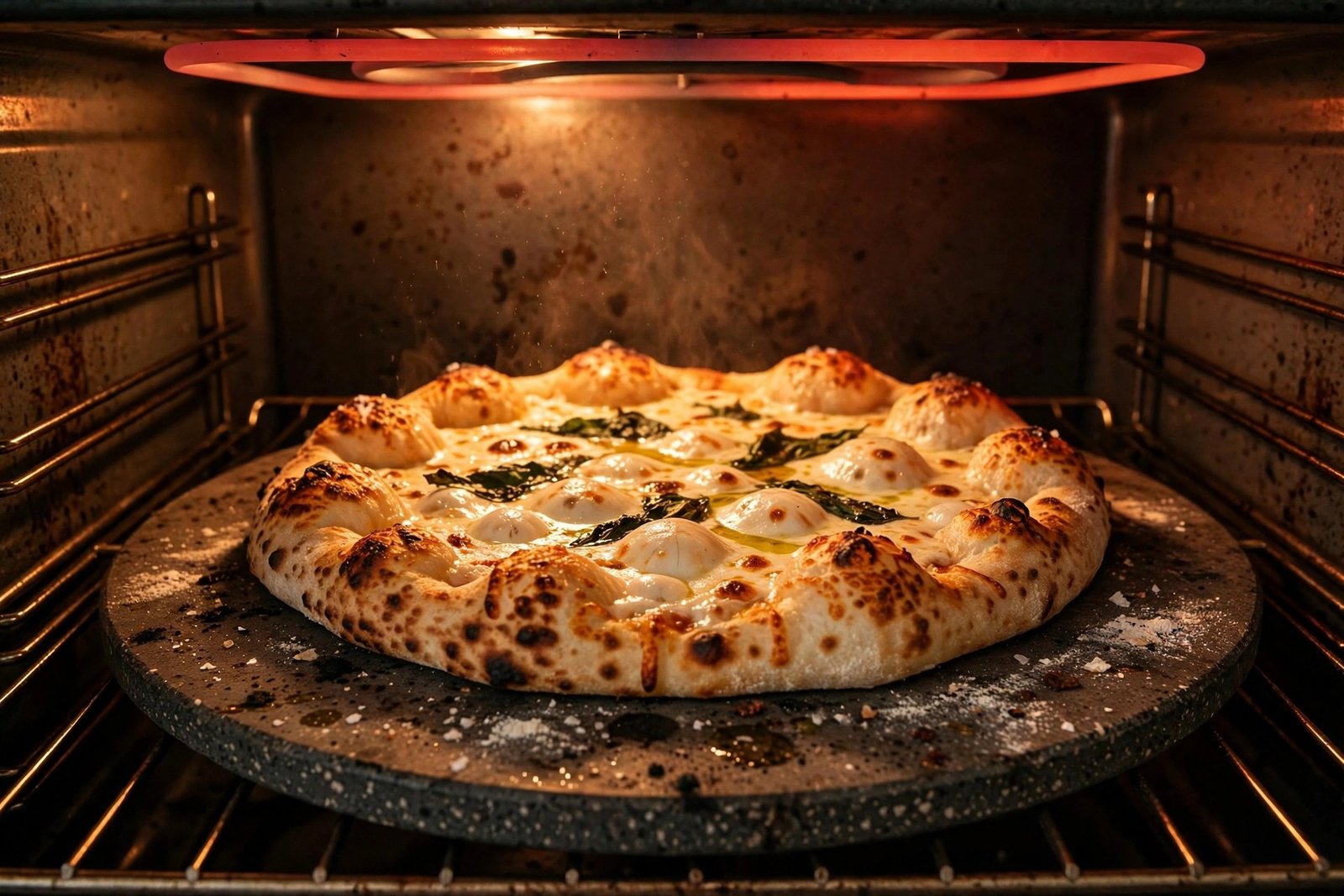
- Rest, slice, repeat. Move to a board, drizzle with olive oil, add basil if using, and rest 2 minutes so the cheese settles. Slice into 6–8 wedges and repeat with the second dough ball.
Tips for Perfect Results
- Bread flour matters. Its higher protein gives the famous chew. Plain flour works, but the crust will be softer.
- Weigh your flour if you can. A scale makes your dough consistent every time — the free cups-to-grams converter on FoodoraNest saves the guesswork here.
- Cold dough, hot oven, better pizza. An overnight fridge rest builds flavour and makes stretching easier. Never rush the preheat.
- Dry mozzarella is essential. Fresh mozzarella in water releases liquid and makes a soupy pizza. If fresh is all you have, tear it, salt lightly, and drain on paper towels for 30 minutes.
- Don’t overload the toppings. New York pizza is about balance; heavy, wet toppings stop the slice crisping.
- Common mistakes to avoid: a rolling pin (it crushes the rim), hot water that kills the yeast, and removing the pizza while the base is still pale.
Serving and Storage
Serve the pizza hot on its board, with a simple green salad. Encourage the fold: pick up a slice, fold it lengthways, and eat it point-first, New York style.
Leftover slices keep in the fridge for up to 3 days in an airtight container. Reheat in a dry frying pan over medium heat for 2–3 minutes until the base crisps, then add a lid for the last minute to melt the cheese — or in a 190°C / 375°F oven for 5–7 minutes. Avoid the microwave unless you enjoy rubbery crusts. Unbaked dough balls freeze for up to 3 months; thaw in the fridge, then bring to room temperature before shaping. Baked pizza freezes for up to 2 months; reheat from frozen at 200°C / 400°F for about 10 minutes.
Frequently Asked Questions
Can I make this without a pizza stone or steel?
Yes. Preheat a heavy upside-down tray exactly like a stone, or use a large cast-iron skillet for an extra-crisp base.
Why did my dough tear while stretching?
It was probably too cold, or the gluten needed a rest. Cover and rest it for 10–15 minutes, then stretch again gently, working from the centre outward.
Can I use active dry yeast instead of instant?
Yes. Use the same amount, but dissolve it in the warm water with the sugar and wait 10 minutes until foamy before adding the flour. Rising may take a little longer.
How do I get those dark spots on the crust?
High heat and a fully preheated stone do most of the work; the sugar and oil in the dough help the crust colour too. Make sure the oven has heated for at least 45 minutes.
Can I make the dough the same day?
Absolutely — the 1½-hour version is still very good; the overnight one just has deeper flavour and texture.