
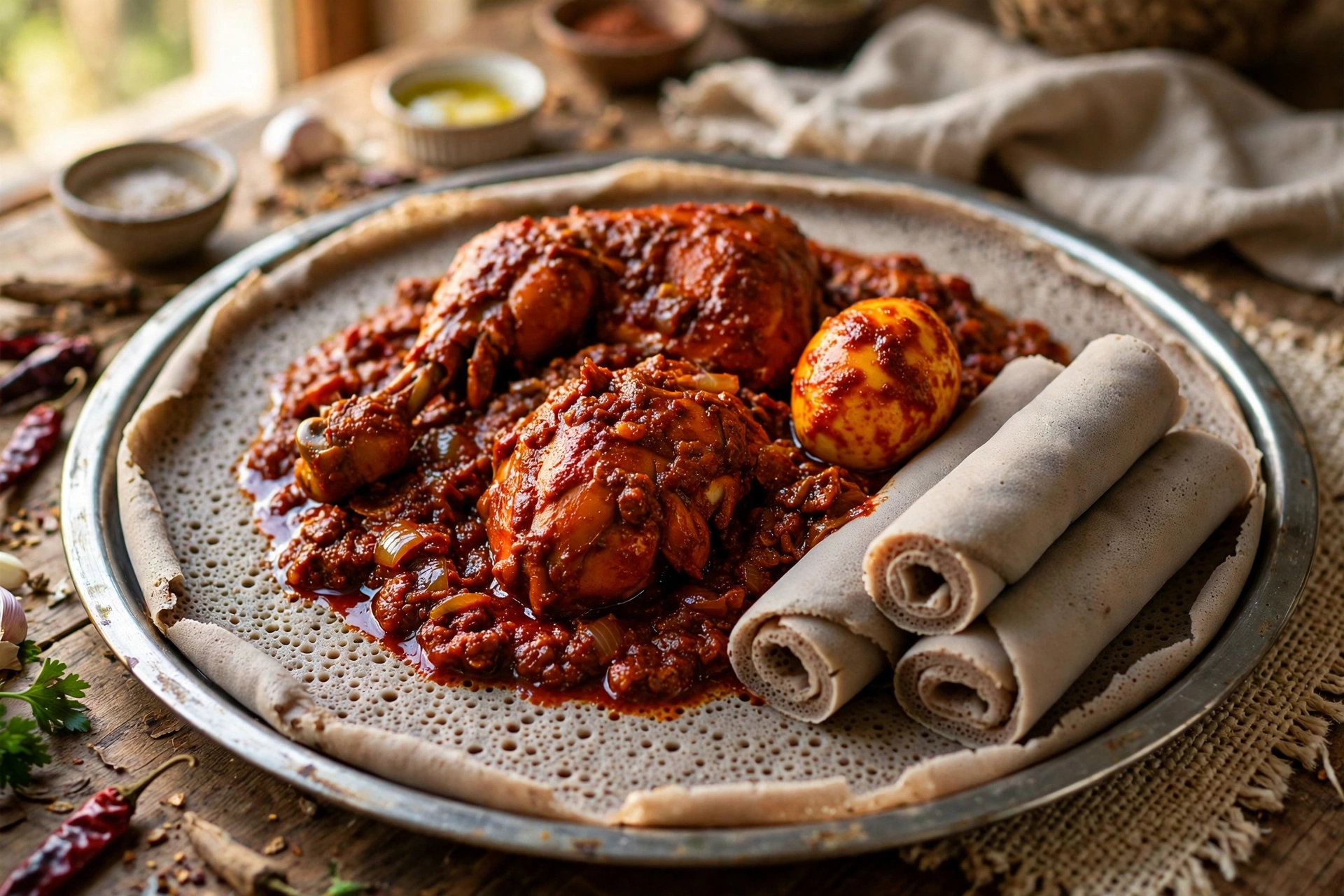
Ethiopian Doro Wat with Injera (Spicy, Rich, and Comforting) is the national dish of Ethiopia, and it is a meal that means celebration. It is a deep red, slow-cooked chicken stew, made with berbere spice, onions, and niter kibbeh, the spiced clarified butter that gives Ethiopian cooking its distinctive richness. It is traditionally served on a big round of injera, the soft, spongy flatbread that you tear and use to scoop up the stew. There are no plates, no cutlery, just hands, bread, and good food shared from a common platter.
I first ate doro wat at an Ethiopian restaurant in London, where the waitress brought out a huge metal tray lined with injera, the stew piled in the middle, and extra rolls of bread on the side. She showed us how to tear a piece of injera, pinch up some chicken and sauce, and eat it with our hands. It felt strange for about thirty seconds, and then it felt like the most natural way to eat in the world. The stew was spicy, rich, and deeply comforting, and the sour tang of the injera cut through the heat perfectly.
This recipe takes time, mostly because the onions need to cook down slowly until they melt into a thick, sweet base. That is the heart of the dish, and it cannot be rushed. But the rest is simple, and the result is a stew that tastes like nothing else you have ever made. If you can find berbere spice and injera, you are halfway there.
Ingredients
For the Stew
- 8 bone-in chicken thighs or drumsticks, skin removed
- 4 large onions, very finely chopped
- 4 tablespoons niter kibbeh or ghee
- 4 garlic cloves, minced
- 1 tablespoon fresh ginger, grated
- 3 tablespoons berbere spice mix
- 1 teaspoon ground cardamom
- 1/2 teaspoon ground fenugreek
- 2 tablespoons tomato paste
- 1 cup chicken stock
- 4 hard-boiled eggs, peeled
- 1 teaspoon salt, plus more to taste
- 1 tablespoon lemon juice
To Serve
- Injera flatbread, store-bought or homemade
- A simple green salad, optional
- Extra berbere, for sprinkling
Berbere is the soul of this dish. It is a complex Ethiopian spice blend made from chilli, fenugreek, cardamom, coriander, cumin, and other warm spices. It is hot, earthy, and fragrant all at once. You can find it in African or Middle Eastern shops, or order it online. If you cannot find it, you can make a simple version from chilli powder, paprika, cumin, cardamom, and fenugreek, but the real thing is worth seeking out.
Niter kibbeh is spiced clarified butter, made by simmering butter with garlic, ginger, cardamom, and other spices, then straining it. It keeps for weeks in the fridge and adds a wonderful richness to the stew. If you cannot find it, use plain ghee or unsalted butter with a pinch of cardamom. The onions are just as important. They need to be chopped very finely, almost minced, because they cook down into the sauce and disappear, leaving behind sweetness and body.
Step-by-Step Method
Step 1: Boil the Eggs
Put the eggs in a pan, cover them with cold water, and bring to a boil. Once the water boils, turn off the heat, cover the pan, and leave the eggs for 10 minutes. Drain them, run them under cold water, and peel them carefully. Set them aside. The eggs go into the stew at the end, where they soak up the sauce and turn a beautiful deep red colour.
Step 2: Cook the Onions Down
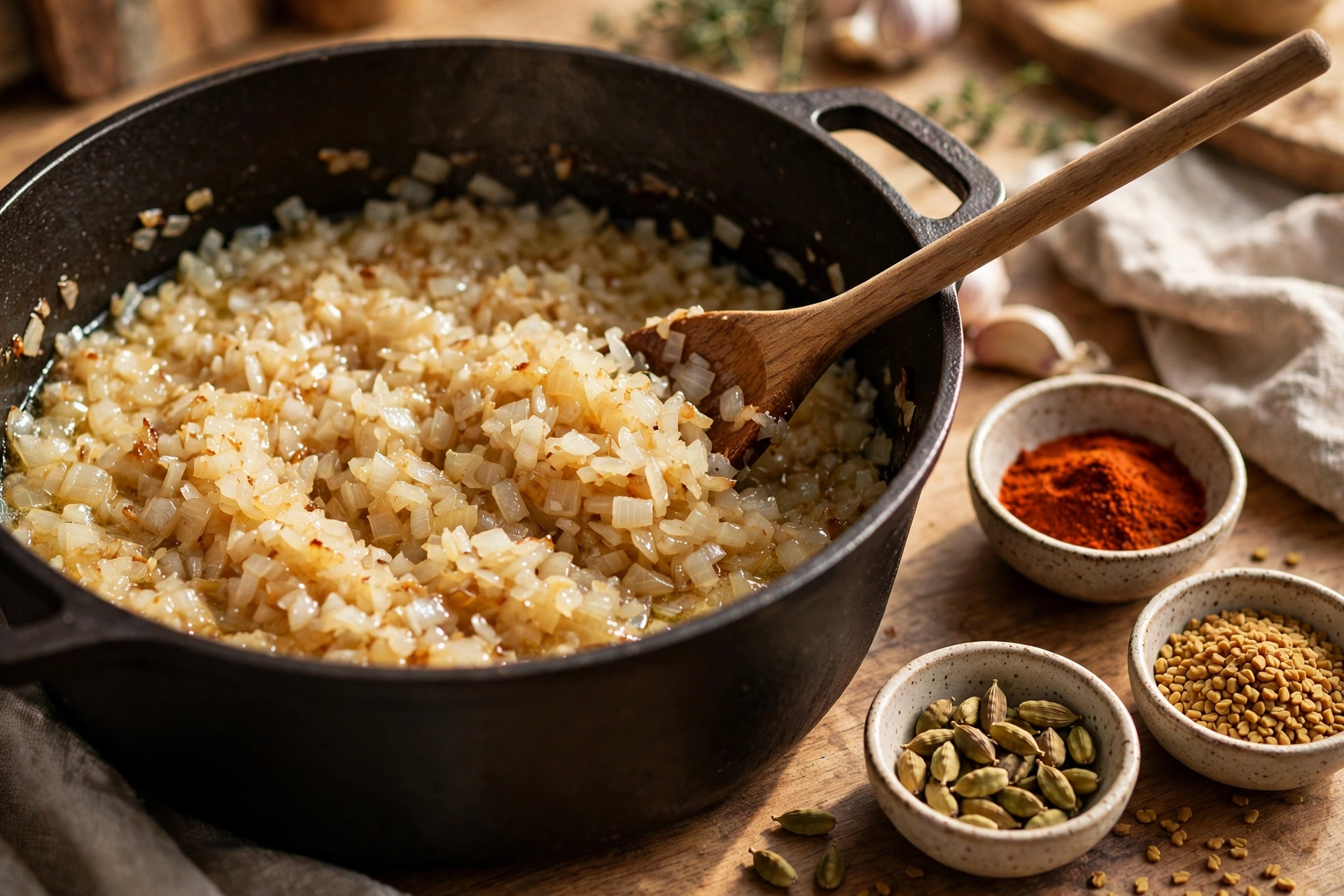
Put the finely chopped onions in a large, dry pot over medium heat. Cook them, stirring often, for 15 to 20 minutes. They will release their moisture, then start to soften and turn golden. This is the most important step in the whole recipe. The onions need to cook down until they are soft, sweet, and almost paste-like. Do not add oil yet. The dry cooking concentrates their flavour. If they start to stick, add a splash of water.
Step 3: Add the Niter Kibbeh
Once the onions have cooked down and turned a deep golden colour, add the niter kibbeh or ghee. Stir it in and let it melt into the onions. Cook for another 5 minutes, stirring often. The onions should now be a thick, glossy, golden paste. This is the base of your stew, and it should smell sweet and rich.
Step 4: Add Garlic, Ginger, and Berbere
Stir in the garlic and ginger and cook for 1 minute. Add the berbere, cardamom, and fenugreek, and stir for 30 seconds. The spices will bloom in the hot butter and the kitchen will fill with a warm, spicy smell. Add the tomato paste and cook for another minute. The paste should darken and smell rich. Be careful not to let the spices burn, because burnt berbere turns bitter.
Step 5: Add the Chicken and Stock
Add the chicken pieces to the pot and turn them in the spicy onion base so they are coated on all sides. Pour in the chicken stock and stir. The sauce should be thick and deep red. Bring it to a gentle simmer, then turn the heat down low and put the lid on.
Step 6: Simmer Until Tender
Let the stew simmer gently for 45 to 50 minutes, stirring now and then. The chicken should be completely tender and falling off the bone, and the sauce should have thickened into a rich, glossy coating. If the sauce gets too thick, add a splash of hot water. If it is too thin, simmer it uncovered for the last 10 minutes. Taste and adjust the salt.
Step 7: Add the Eggs and Finish
Stir in the lemon juice, then add the peeled hard-boiled eggs to the pot. Spoon sauce over them and let them warm through for 5 minutes. The eggs will soak up the sauce and turn a deep, beautiful red. Take the pot off the heat and let it rest for 10 minutes before serving. The rest lets the flavours settle and the sauce thicken slightly.
Tips for Perfect Results
The onions make or break this dish. They need to cook down slowly until they are completely soft and sweet, which takes at least 15 to 20 minutes. If you rush this step, the sauce will taste raw and sharp instead of rich and mellow. Chop the onions as finely as you can, and cook them in a dry pot first, which concentrates their sweetness in a way that oil cannot.
Be generous with the berbere, but taste as you go. Berbere varies a lot in heat, depending on where it comes from. Some blends are fiery, others are mild and aromatic. Start with the amount in the recipe, then taste the sauce and add more if you want it hotter. The heat should warm you up without overwhelming the other flavours. If you go too far, a spoonful of yoghurt on the side will cool things down.
Use bone-in chicken for the best result. The bones add flavour to the sauce and keep the meat moist through a long simmer. Skinless thighs or drumsticks are ideal, because the skin would turn soft and greasy in the stew. If you use boneless chicken, reduce the cooking time to 30 minutes and check it early.
Do not skip the eggs. They might seem odd in a chicken stew, but they are traditional and they are wonderful. They soak up the spicy sauce and turn a deep red colour, and their mild, creamy yolk balances the heat of the berbere. In Ethiopia, the eggs are often the most fought-over part of the dish. Make a few extra if you are feeding a crowd.
Let the stew rest before serving. Ten minutes off the heat makes a real difference. The chicken relaxes, the sauce thickens, and the flavours settle together. If you are making it ahead, cook it the day before and reheat it gently. Doro wat tastes even better on day two, when the spices have had time to deepen.
Serving and Storage
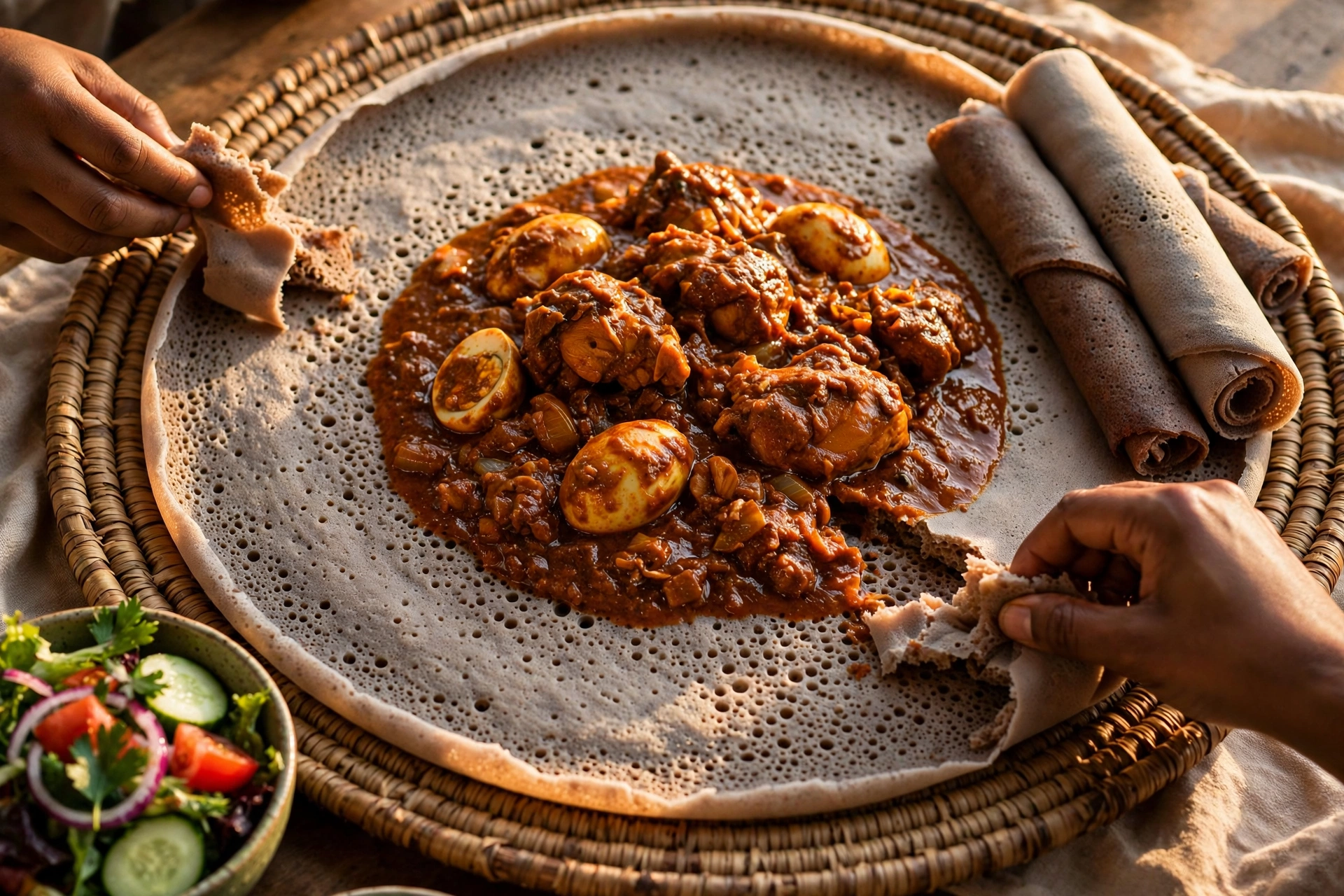
Doro wat is traditionally served on a large platter lined with injera. Lay a round of injera on the platter, spoon the stew over the top, and arrange the eggs around the chicken. Serve extra rolls of injera on the side for tearing and scooping. There are no plates and no cutlery. You tear off a piece of injera, pinch up some chicken and sauce, and eat it with your hands. It is messy, communal, and joyful.
Injera has a soft, spongy texture and a slightly sour taste, a bit like sourdough, which balances the rich, spicy stew perfectly. You can buy it from Ethiopian or Eritrean shops, or order it online. If you cannot find injera, serve the stew with flatbread or rice instead. It will not be the same, but it will still be delicious.
A simple salad of lettuce, tomato, and onion with lemon juice makes a fresh side, and a cold beer or sparkling water is the traditional drink. For a full Ethiopian spread, serve the doro wat with other small dishes like lentil stew and sautéed greens, all on the same injera-lined platter.
Leftovers keep in the fridge for up to 3 days. Reheat gently in a covered pan over low heat, adding a splash of water if the sauce has thickened too much. The chicken will be even more tender the next day. For longer storage, freeze the stew for up to 3 months, without the eggs, and add freshly boiled eggs when you reheat it. If you enjoy the warm, spiced comfort of this dish, the Authentic Chicken Tikka Masala (Creamy, Spiced, and Better Than Takeout) is a natural next cook, and the Authentic Pakistani Chicken Biryani (Fragrant, Spicy, and Made for Sharing) shares the same generous, celebratory spirit.
Easy Variations
For a vegetarian version, replace the chicken with hard-boiled eggs and chickpeas, and use vegetable stock instead of chicken stock. The berbere and onion base is so flavourful that the stew is wonderful even without meat. Add chunks of potato and carrot for extra body, and let them simmer until tender.
You can also make doro wat with lamb or beef. Lamb shoulder, cut into chunks, needs about an hour of simmering until it is tender. Beef shin works well too, and it gives the sauce a deep, rich flavour. Adjust the cooking time and check the meat with a fork. When it falls apart easily, it is ready.
If you like a milder stew, use half the berbere and add a teaspoon of sweet paprika instead. The colour will still be beautiful, and the flavour will be warm and aromatic rather than hot. For a hotter version, add a chopped fresh chilli with the garlic, or stir in a spoonful of chilli paste at the end.
For a richer sauce, add a knob of butter at the end and stir it in until it melts. A squeeze of extra lemon juice brightens the whole dish. And if you want to try another Ethiopian classic, a simple lentil stew made with the same berbere and onion base is a wonderful companion dish on the same platter. The Creamy Indian Butter Chicken with Rice (Rich, Buttery, and Mildly Spiced) is another rich, spiced stew worth trying if you love this style of cooking.
Frequently Asked Questions
What is berbere, and where can I buy it?
Berbere is an Ethiopian spice blend made from chilli, fenugreek, cardamom, coriander, cumin, and other warm spices. It is hot, earthy, and fragrant. You can find it in African, Middle Eastern, or Indian shops, or order it online. A good berbere is worth seeking out, because it is the heart of this dish.
What is injera, and can I make it at home?
Injera is a soft, spongy flatbread made from teff flour, which is naturally fermented to give it a slightly sour taste. It is traditionally made in a large round pan, a bit like a crêpe. Making it at home is possible but takes time, because the batter needs to ferment for a day or two. For most cooks, buying it ready-made is much easier.
Can I make doro wat less spicy?
Yes. Use half the berbere and add a teaspoon of sweet paprika to keep the colour and warmth without the heat. The stew will still taste rich and aromatic. Serve it with plain yoghurt on the side, which cools the spice. You can always add more berbere at the table if some people like it hotter.
Do I have to eat it with my hands?
Traditionally, yes, and it is part of the fun. You tear a piece of injera and use it to pinch up the chicken and sauce. But there is no rule. If you prefer, serve it on plates with a fork and knife, or spoon it over rice. The stew tastes just as good either way.
Can I make doro wat in advance?
Yes, and it tastes even better the next day. Cook it, cool it, and store it in the fridge for up to 3 days. Reheat it gently on the stove and add freshly boiled eggs if the originals have been eaten. The spices deepen overnight and the sauce thickens beautifully.
Final Thoughts
Doro wat is a dish that asks for your time and gives back something extraordinary. The slow-cooked onions, the warm berbere, the tender chicken, and the sour injera all come together into a meal that feels like a celebration, even on an ordinary evening. It is spicy, rich, and deeply comforting, and it is a wonderful introduction to one of the world’s great cuisines.
Make it when you have an afternoon to spare, share it with people you love, and eat it with your hands. And if the warm spices and slow cooking here have won you over, the Authentic Chicken Tikka Masala (Creamy, Spiced, and Better Than Takeout) is a fine next cook, and the Creamy Indian Butter Chicken with Rice (Rich, Buttery, and Mildly Spiced) shares the same rich, spiced comfort.