
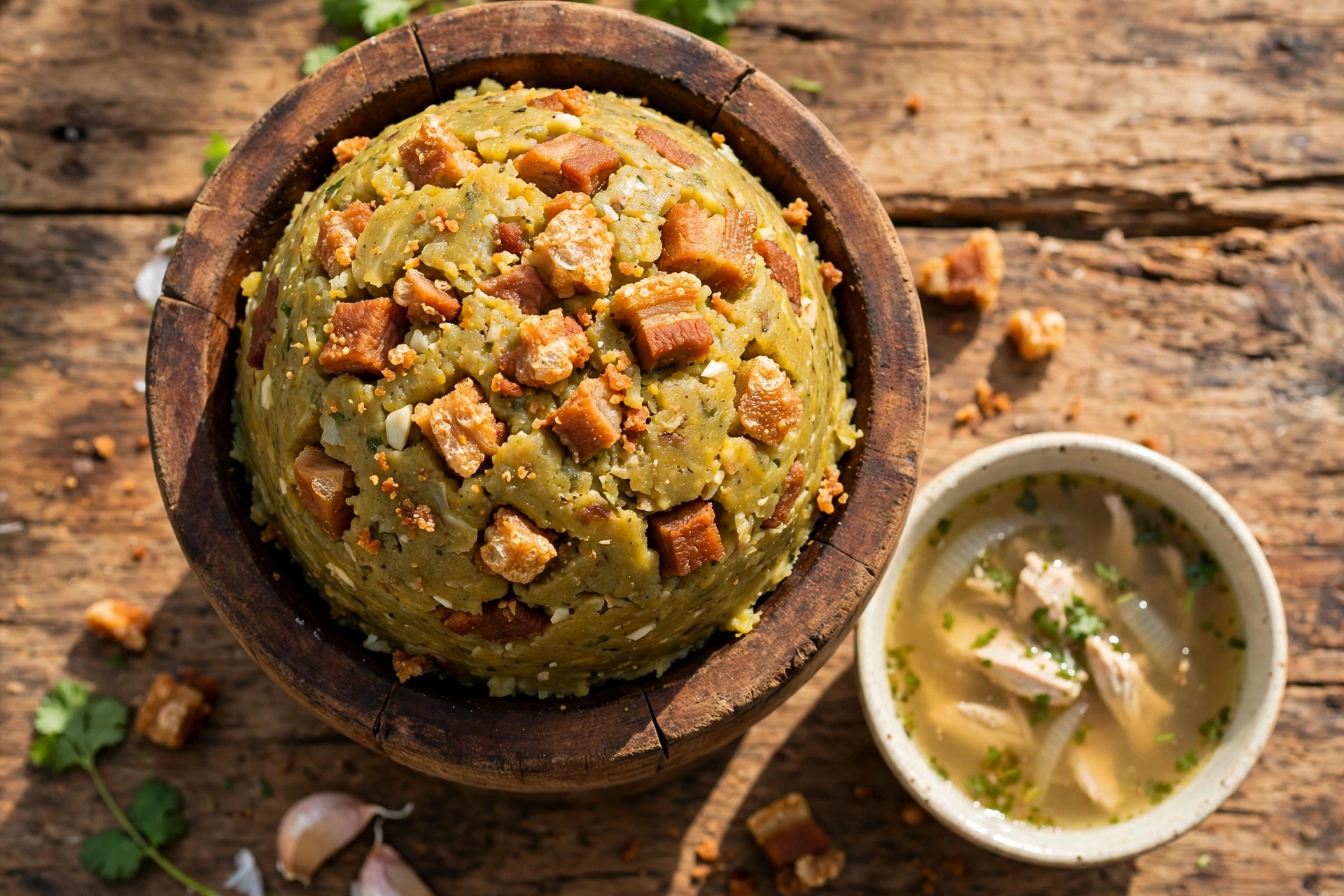
Puerto Rican Mofongo (Garlic Mashed Plantains with Crispy Pork) is the dish I make when I want dinner to feel like a celebration without spending the whole day in the kitchen. It starts with green plantains, fried until golden, then mashed in a wooden mortar with garlic, salt, and crispy pieces of pork. The result is a dense, garlicky dome that holds its shape on the plate and soaks up broth like a sponge. One bite tells you everything you need to know about Puerto Rican cooking: bold, unpretentious, and built around ingredients that have fed families for generations.
Mofongo comes from the African influence on Puerto Rican food, and it carries that history in every spoonful. The technique of mashing starchy plantains with garlic and fat travelled across the Atlantic and settled into the island’s kitchens, where it became a staple. Today you will find mofongo everywhere in Puerto Rico, from beachside kiosks to white-tablecloth restaurants, stuffed with shrimp, chicken, or beef, or served plain beside a bowl of hot broth. The version below is the classic pork one, and it is the best place to start.
What surprises most first-time cooks is how simple the process is. There are only a few ingredients, and the whole dish comes together in under an hour. The trick is getting the plantains fried just right, golden outside and tender inside, and mashing them while they are still hot so they bind together. This guide walks you through each step, including how to pick the right plantains and what to do if you don’t own a pilón, the traditional wooden mortar.
Ingredients
For the Mofongo
- 4 large green plantains, peeled and cut into 1-inch rounds
- Vegetable oil, for frying
- 4 cloves garlic, minced
- 1/2 cup chicharrones (fried pork cracklings), broken into small pieces
- 2 tablespoons olive oil or melted lard
- 1 teaspoon kosher salt
- 1/2 teaspoon black pepper
For the Broth and Serving
- 2 cups chicken broth, hot
- 1 tablespoon butter
- 1 clove garlic, minced
- 1/2 teaspoon adobo seasoning
- Fried pork or shrimp, for topping (optional)
- Fresh cilantro, chopped, for garnish
- Lime wedges, for serving
Green plantains are the key, and they must be properly green. Yellow plantains are too sweet and too soft, and they will turn your mofongo into a sticky paste instead of a firm, mouldable mash. Look for plantains that are firm, heavy for their size, and bright green with no yellow at all. If your store only has plantains that are starting to turn, wait a day or two and check again. The right plantain makes the whole dish work.
Chicharrones are the crispy pork cracklings that give mofongo its salty crunch and its porky depth. You can buy them ready-made in most Latin grocery stores, or in the snack aisle of a larger supermarket. If you can’t find them, crisp up some bacon until it is very crunchy and crumble it in instead. It is not the same, but it gets you close. A little pork fat, whether from lard or from the cracklings, helps the mash hold together and taste rich.
Step-by-Step Method
Step 1: Peel and Slice the Plantains
Cut off both ends of each plantain. Score the skin lengthwise in two or three places with a sharp knife, taking care not to cut into the flesh. Slip your thumb under the skin at one end and peel it away in strips. Green plantains have stubborn skins, so work slowly and use the knife to help if a strip sticks. Slice the peeled plantains into rounds about 1 inch thick. Try to keep them even so they fry at the same pace.
Step 2: Fry the Plantains Until Golden
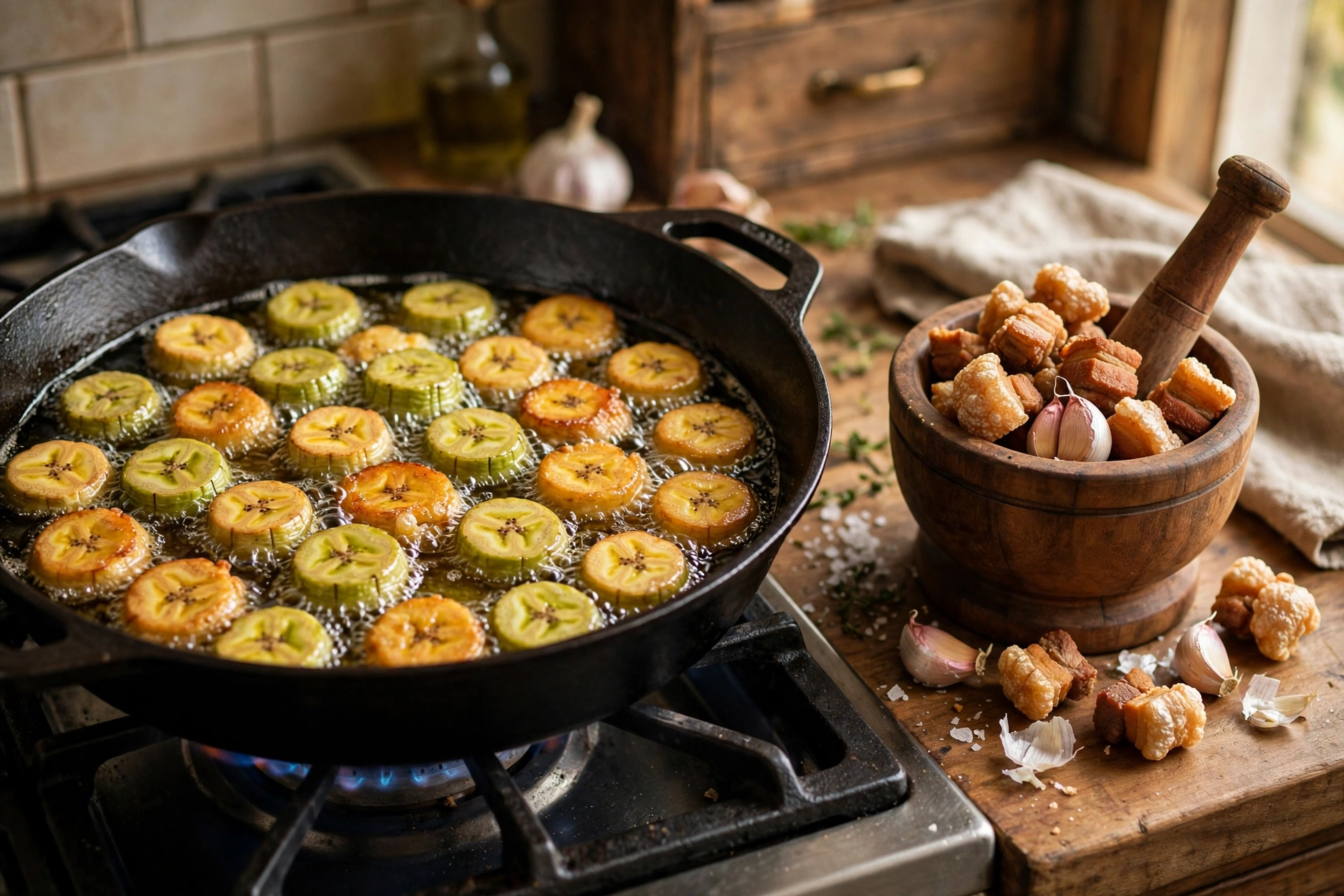
Pour about an inch of vegetable oil into a large, deep skillet and heat it over medium-high heat until it shimmers. A small piece of plantain dropped in should sizzle right away. Fry the plantain rounds in batches, giving them room so they don’t stick together. Cook for 3 to 4 minutes per side until they turn deep golden at the edges and feel tender when you press one with a fork. Lift them out with a slotted spoon and drain them on paper towels. Keep the oil hot between batches, and don’t crowd the pan.
Step 3: Mash the Garlic and Pork
While the plantains are still hot, start mashing. If you have a pilón, the traditional wooden mortar, put the garlic, salt, and chicharrones in it and pound them into a coarse paste. If you don’t have one, a large, sturdy bowl and the end of a rolling pin will do. The goal is to crush the garlic and cracklings together so their flavour spreads through the whole mash. Add the olive oil or melted lard and stir it in.
Step 4: Mash the Plantains and Shape the Mofongo
Add the hot fried plantains to the mortar a few pieces at a time and mash them into the garlic mixture. Press and fold rather than pounding wildly, and work quickly while the plantains are warm. When everything is combined, the mixture should hold together when you squeeze a handful. Taste and add more salt if it needs it. To shape, press the mash firmly into a small bowl, then turn it out onto a plate. It should stand up in a neat dome. If it crumbles, mash in a spoonful of hot broth and press it again.
Step 5: Make the Broth
Heat the butter in a small saucepan over medium heat. Add the garlic and cook for 30 seconds until fragrant. Pour in the chicken broth and adobo seasoning, and bring it to a gentle simmer. Let it cook for 5 minutes so the flavours come together. The broth is served alongside the mofongo, not poured over it at the start. Each person spoons hot broth over their own portion, which keeps the dome crisp on the outside and lets the inside soften as you eat.
Step 6: Serve Hot
Set the mofongo dome on a plate, spoon a little hot broth around the base, and top with fried pork, shrimp, or nothing at all. Scatter chopped cilantro over the top and put lime wedges on the side. Serve right away, while the outside is still crisp and the inside is steaming. Mofongo waits for no one, and it is at its best in the first ten minutes after it leaves the mortar.
Tips for Perfect Results
Fry the plantains in hot enough oil. If the oil is too cool, the plantains soak it up and turn greasy instead of golden. If it is too hot, they brown on the outside before the inside softens. Medium-high heat is the sweet spot, and the sizzle test tells you when you are there. Drop in one piece first. It should bubble hard right away but not spit oil everywhere. Adjust the heat between batches if the oil starts to smoke.
Mash while the plantains are hot. This is the one rule that matters most. Hot plantains are soft and sticky, and they bind into a firm dome. Once they cool, they turn stiff and crumbly, and no amount of mashing will bring them back. Have your garlic and cracklings ready before the plantains leave the oil, and work fast. If the mash cools down halfway through, sprinkle in a spoonful of hot broth to loosen it up.
Season as you go, and taste before you shape. The salt in the cracklings varies a lot from brand to brand, so don’t trust the recipe amount blindly. Mash a small piece, taste it, and adjust. The finished mofongo should taste boldly garlicky and well salted, because the plain plantain underneath needs that seasoning to shine. A squeeze of lime at the table brightens everything.
Don’t overwork the mash. You want some texture left, with visible bits of crackling and a slightly rough surface. If you mash it into a smooth paste, the dome turns dense and heavy, more like glue than food. Stop as soon as the mixture holds together when squeezed. A few rough edges are a good sign.
Serving and Storage
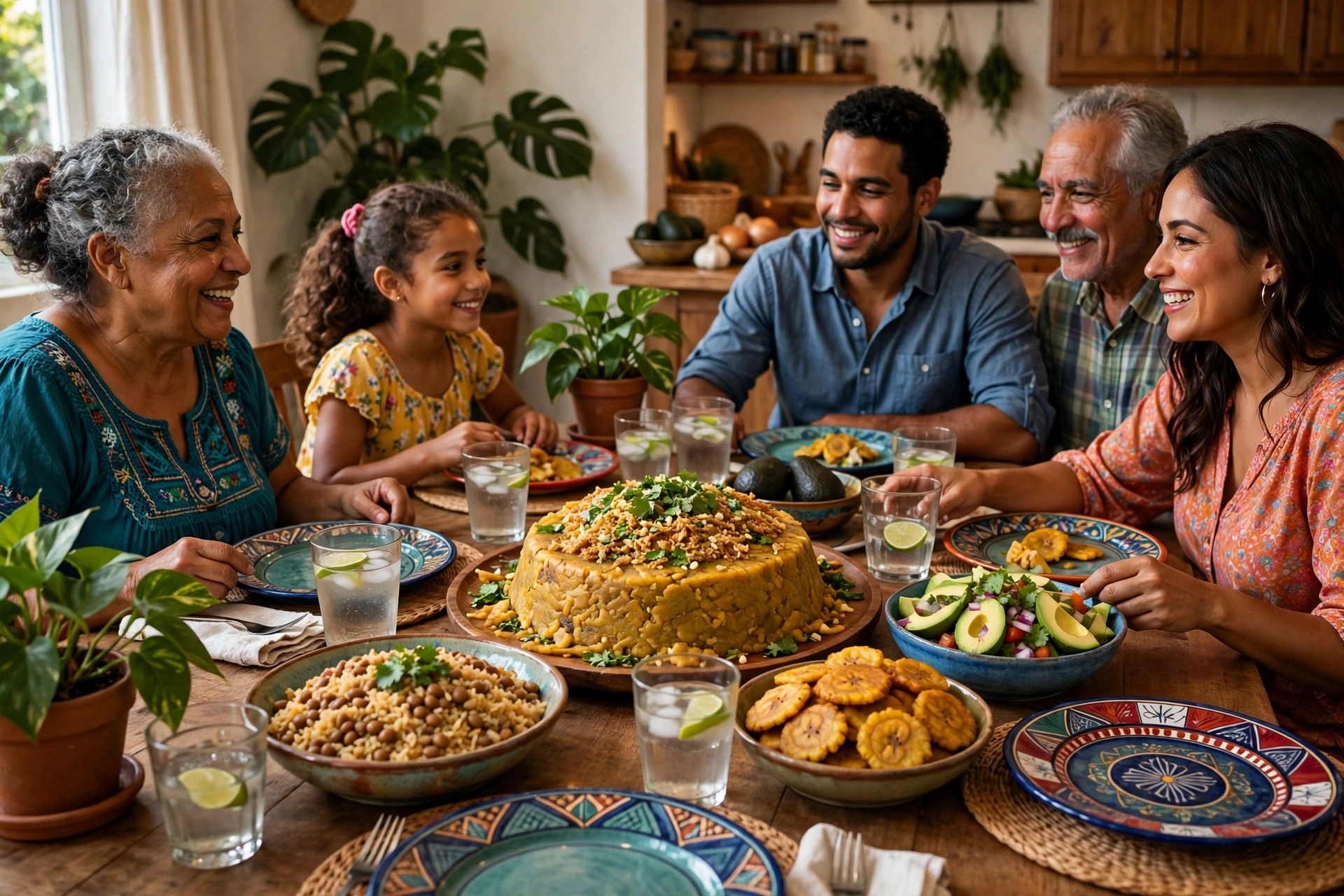
Mofongo is most often served as a main dish with a bowl of hot chicken broth on the side and a topping of fried pork, shrimp, or chicken. In Puerto Rico, it also shows up as a side dish next to arroz con gandules, rice with pigeon peas, and a simple salad. For a full plate, add tostones, the twice-fried plantain slices, and a few wedges of avocado. The meal is rich and filling, so a light, acidic salad with lime dressing helps balance it. If you want another Latin favourite for the table, the Venezuelan Cheese Arepas (Crispy Outside, Gooey Inside) make a wonderful companion, golden and crisp with a molten cheese centre.
Mofongo is best eaten fresh, and it does not reheat as well as most dishes. If you have leftovers, wrap them tightly and refrigerate for up to 2 days. To reheat, break the dome apart and warm it in a skillet with a splash of broth, pressing it back together as it heats. The texture will be softer than fresh, but the flavour holds up. You can also shape leftover mash into small patties and pan-fry them until crisp, which is a delicious second life for the dish.
Freezing is not a good idea. The plantains turn watery and grainy when thawed, and the dome loses its structure completely. If you want to prep ahead, you can fry the plantains and refrigerate them for a few hours, then reheat them in a hot oven for 5 minutes before mashing. That keeps the mashing step quick and the texture right. Make the broth ahead too, and keep it warm in a small pot on the stove.
Easy Variations
Mofongo de camarones, the shrimp version, is the most popular variation in Puerto Rico. Cook shrimp in garlic butter with a little white wine, then spoon them over the finished dome with some of their cooking juices. The sweet shrimp and the garlicky plantain are a perfect match. For a chicken version, top the mofongo with stewed chicken in tomato sauce, and let the sauce drip down the sides. Both versions use the same base recipe, so you only need to change the topping.
A vegetarian mofongo works well too. Leave out the chicharrones and mash the plantains with garlic, olive oil, and a handful of toasted, chopped nuts for crunch. Serve it with a vegetable broth and a topping of sautéed mushrooms or roasted vegetables. It won’t taste the same as the pork version, but it is satisfying in its own right, and the garlic and plantain carry the dish.
For a lighter take, you can bake the plantain rounds instead of frying them. Toss them in a little oil, spread them on a baking sheet, and roast at 425°F for 20 minutes, flipping halfway, until golden and tender. The mash will be a little drier, so add an extra spoonful of olive oil and a splash of hot broth while mashing. The result is not quite as rich, but it is still recognisably mofongo. And if you love crispy, golden food, the Crispy Fried Chicken (Golden, Juicy, and Extra Crunchy) is another great use of a hot pan and a little patience.
Some cooks add a spoonful of mayoketchup, the Puerto Rican mix of mayonnaise and ketchup with a little garlic, on the side for dipping. It sounds unusual, but the creamy, tangy sauce is a favourite with the crispy edges of the mofongo. Set a small bowl on the table and let people try it. You can also stuff the dome with cheese before shaping it, so the centre melts as the mofongo sits. Use a mild, melty cheese like mozzarella or queso de bola.
Frequently Asked Questions
What is mofongo made of?
Mofongo is made from green plantains, fried until golden and mashed with garlic, salt, and chicharrones, which are crispy fried pork cracklings. The mash is shaped into a dome and served hot with chicken broth, often topped with pork, shrimp, or chicken.
Can I make mofongo without a pilón?
Yes. A large, sturdy bowl and a potato masher or the end of a rolling pin work well. The key is to mash the plantains while they are still hot and to press the mixture firmly into a bowl to shape it. A pilón is traditional, but it is not required.
Why is my mofongo falling apart?
Mofongo falls apart when the plantains cool down before mashing, or when there is not enough fat to bind the mixture. Mash while the plantains are hot, add a spoonful of olive oil or melted lard, and press the mash very firmly into the bowl before turning it out. A splash of hot broth also helps it hold together.
What is the difference between mofongo and mangú?
Mofongo is made from fried green plantains mashed with garlic and pork cracklings, while mangú, from the Dominican Republic, is made from boiled green plantains mashed with butter and water. Mofongo is denser and garlicky, while mangú is softer and creamier, and it is usually served with sautéed onions on top.
What do you serve with mofongo?
Mofongo is served with hot chicken broth and a topping of fried pork, shrimp, or chicken. It also works as a side dish with arroz con gandules, tostones, and avocado salad. A squeeze of lime and a sprinkle of fresh cilantro finish the plate.
Final Thoughts
Mofongo is one of those dishes that teaches you something about a place with a single bite. The garlic, the pork, the plantain, and the hot broth all come together into something that is much more than the sum of its parts. It is humble food, made from ingredients that were cheap and available, and it became a national treasure because it tastes like home to the people who grew up with it.
Make it when you have an evening to enjoy the process, and serve it the moment it comes out of the mortar. Put the broth on the table, let everyone season their own plate, and don’t be surprised if the conversation goes quiet for a few minutes. That is the sound of a dish doing its job. For another Latin classic built on the same generous, hands-on spirit, try the Authentic Mexican Beef Tacos (Juicy Beef, Fresh Salsa, Warm Tortillas) next time the craving hits.