
Pad Thai might be Thailand’s most famous noodle dish, and its magic is all about balance: sweet, sour, salty and a little smoky, all in one glossy tangle of rice noodles. Street vendors in Bangkok toss it to order in a ripping-hot wok — and with a simple homemade sauce you can get remarkably close at home.
The secret is the sauce: real tamarind gives the gentle sourness, balanced by palm sugar and fish sauce. Prep everything before you turn on the heat, because once the noodles hit the wok, dinner is only minutes away.
Serves: 4 | Prep time: 25 minutes (including soaking) | Cook time: about 10 minutes
Ingredients
For the pad thai sauce
- 3 tablespoons tamarind paste (from a block soaked and strained, or ready-made concentrate)
- 3 tablespoons fish sauce
- 3 tablespoons palm sugar (about 45 g), or light brown sugar
- 1 tablespoon water, if needed to loosen the sauce
For the noodles and stir-fry
- 250 g (9 oz) dried flat rice noodles (about 3–5 mm wide, pad thai style)
- 3 tablespoons neutral oil (rice bran, sunflower or peanut oil)
- 200 g (7 oz) raw prawns (shrimp), peeled and deveined; or use chicken breast strips
- 150 g (5½ oz) firm tofu, cut into small batons and patted dry
- 3 cloves garlic, finely chopped
- 2 spring onions (scallions), cut into 3 cm pieces, whites and greens separated
- 3 large eggs, lightly beaten
- 2 cups (about 120 g) fresh bean sprouts
- ⅓ cup (50 g) roasted peanuts, roughly crushed
- 1 lime, cut into wedges, to serve
- Dried chili flakes, to serve (optional)
Step-by-Step Method
- Soak the noodles (20–30 minutes). Put the rice noodles in a large bowl, cover with warm (not boiling) water, and soak for 20–30 minutes until they are flexible and white but still firm — like uncooked spaghetti that bends without snapping. Drain well. If they boil first, they will turn to mush in the wok, so soaking is the safer route.
- Make the sauce (2–3 minutes). In a small bowl, stir the tamarind paste, fish sauce and palm sugar together until the sugar dissolves. Warming the bowl briefly in hot water helps. Taste: it should be sour first, then sweet, then salty. Set aside.
- Prep the protein (3–4 minutes). Heat 1 tablespoon of oil in a wok or large frying pan over high heat until it just starts to shimmer. Add the prawns and cook 1–2 minutes per side until pink and just cooked through. Remove and set aside. Add the tofu to the same pan and fry for 2–3 minutes until golden at the edges; set aside with the prawns.
- Start the stir-fry (1 minute). Add the remaining 2 tablespoons of oil to the wok. Add the garlic and the white parts of the spring onions and stir-fry for about 30 seconds, until fragrant but not browned.
- Add noodles and sauce (2–3 minutes). Add the drained noodles and pour the sauce over them. Toss constantly with tongs, lifting and turning, for 2–3 minutes until the noodles absorb the sauce and turn tender with a slight chew. If they are still firm, sprinkle in 1–2 tablespoons of water and keep tossing.
- Add the egg (1 minute). Push the noodles to one side, pour the beaten eggs into the empty space and let them set for 20–30 seconds. Scramble gently, then toss everything together so the egg coats the noodles in soft ribbons.
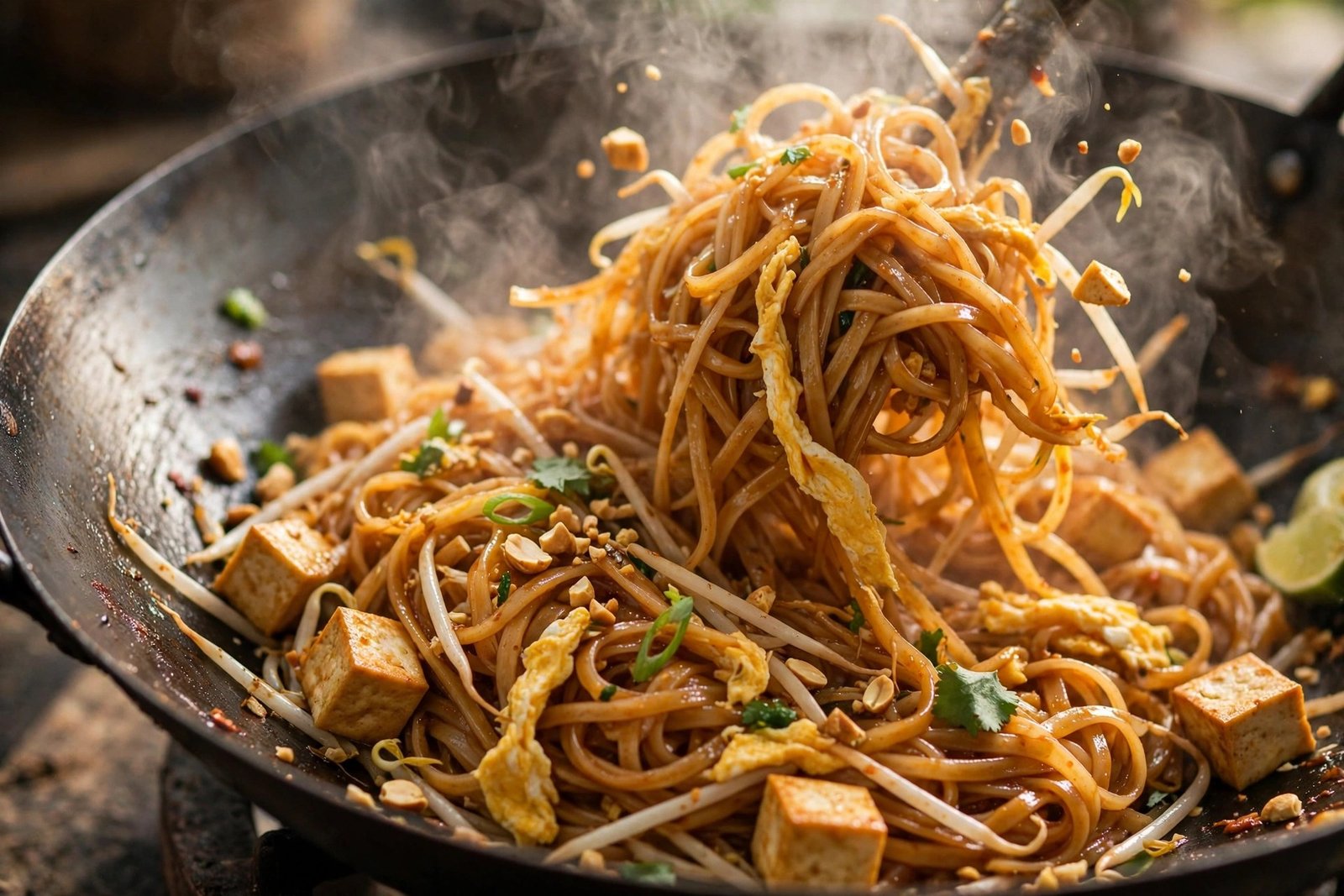
- Finish the dish (1 minute). Return the prawns and tofu to the wok. Add half the bean sprouts and the green parts of the spring onions. Toss for about 1 minute, just to warm through and wilt slightly. Remove from the heat and taste — adjust with a little more fish sauce, sugar or tamarind as you like.
Tips for Perfect Results
- Soak, don’t boil. Softened-but-firm noodles finish cooking in the sauce, soaking up flavour. Boiled noodles overcook and break apart in the wok.
- Prep everything first. Pad Thai cooks in minutes. Line up your sauce, protein, egg and garnishes before the wok goes on the heat — this is the single biggest difference between calm and chaos.
- Use a very hot wok, and don’t overcrowd it. High heat gives a hint of smoky char. If your pan is small, cook in two batches.
- Keep the sprouts crunchy. Add most of them at the very end so they stay fresh and crisp against the soft noodles.
- Balance at the end, like a Thai cook. A squeeze of lime, a pinch of sugar or a dash of fish sauce at the table lets everyone tune the dish to their taste.
Common mistakes: using boiling water to soak the noodles (they go gluey); skimping on the sauce so the noodles taste bland; cooking the eggs into dry bits by adding them too early; and walking away — Pad Thai needs constant tossing.
Serving and Storage
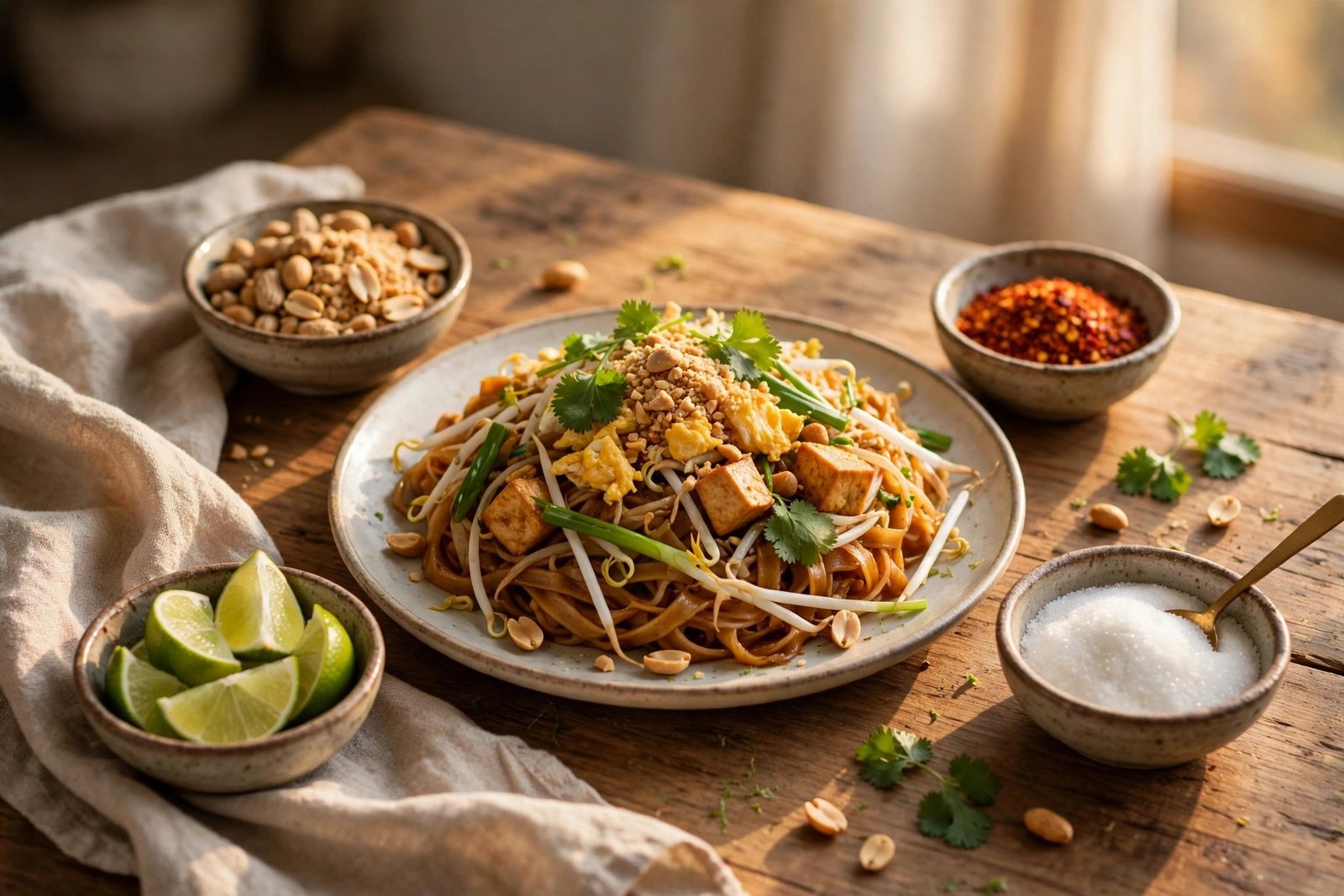
Pile the Pad Thai onto warm plates and top with the remaining bean sprouts, crushed peanuts, a lime wedge and chili flakes for those who want heat. In Thailand the seasonings come alongside — extra sugar, fish sauce, chili and peanuts — so everyone can adjust their plate.
Pad Thai is best fresh, but leftovers keep in the fridge for up to 2 days. Reheat in a wok over medium heat with a splash of water, tossing for 2–3 minutes until hot and glossy; prawns should be piping hot before serving. It does not freeze well — the noodles turn soft and the sprouts lose their crunch.
Frequently Asked Questions
Can I make Pad Thai without fish sauce?
Yes. Use light soy sauce with a tiny pinch of salt instead — the flavour will be a little different but still delicious, and it makes the dish vegetarian if you also skip the prawns and use extra tofu.
What can I use instead of tamarind?
Tamarind really is the soul of the dish, so try to find it — most supermarkets stock the paste. In a pinch, use 2 tablespoons of lime juice plus 1 teaspoon of rice vinegar, knowing it will taste brighter and less rounded.
Can I use chicken instead of prawns?
Absolutely. Use 250 g (9 oz) of thinly sliced chicken breast or thigh, cook it for 4–5 minutes until cooked through with no pink inside, and follow the recipe the same way.
Why are my noodles sticking together?
They were probably soaked too long, or the wok was not hot enough with too little sauce. Rinse soaked noodles briefly, keep the heat high, and toss constantly.
Are rice noodles gluten-free?
Yes, rice noodles are naturally gluten-free, but check your fish sauce and tamarind labels if cooking for someone with coeliac disease, as brands vary.
At FoodoraNest we love recipes that travel well from a Bangkok street stall to a home kitchen — and this Pad Thai is exactly that: fast, fresh and full of flavour.
Pingback: Thai Green Curry (Creamy, Fragrant, and Better Than Takeout) – FoodoraNest
Pingback: Indonesian Nasi Goreng (Smoky Fried Rice with a Fried Egg) – FoodoraNest