
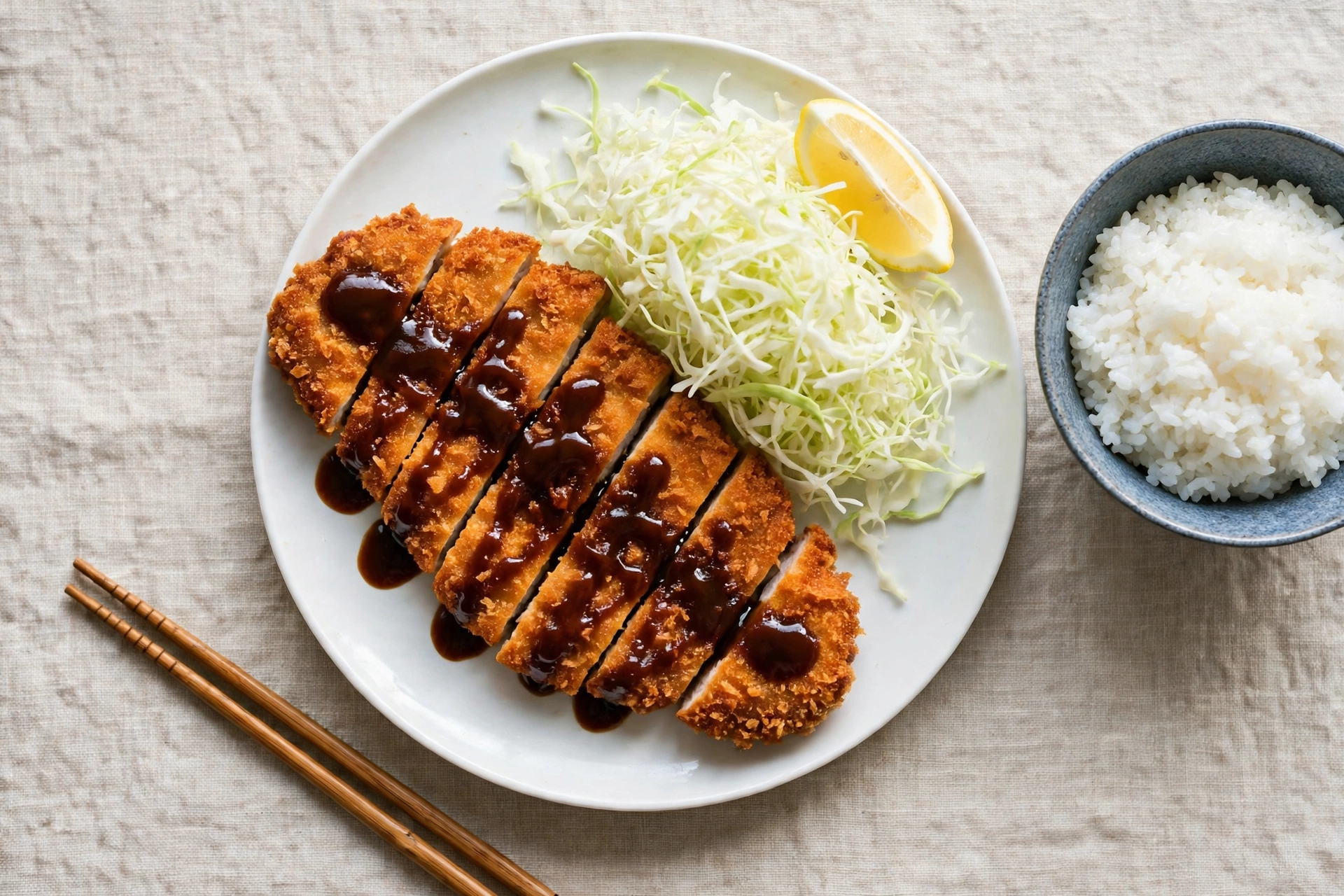
Japanese Tonkatsu (Crispy Pork Cutlet with Tonkatsu Sauce) is one of those dishes that sounds plain on paper and then completely wins you over at the first bite. It is a thick pork cutlet, coated in airy panko breadcrumbs and fried until the crust turns deep gold and shatters when you cut into it. Inside, the pork stays juicy and tender. Outside, it is all crunch. A drizzle of dark, tangy tonkatsu sauce ties the whole thing together.
I first had tonkatsu in a tiny Tokyo restaurant where the cook did nothing but tonkatsu, all day, every day. The cutlets came out in a perfect row, sliced into strips, with a mountain of shredded cabbage and a pot of sauce on the table. I went home and started frying my own, and after a few messy attempts, I worked out that the secret is not a special pan or a rare ingredient. It is the panko, the oil temperature, and giving the pork a little rest before you slice it.
This recipe is a weeknight-friendly version of that restaurant classic. You need pork loin or fillet, three shallow bowls for the coating, and a pan of hot oil. The tonkatsu sauce comes together from pantry bottles in two minutes, and the cabbage salad takes even less. Serve it with steamed rice and miso soup, and you have a proper Japanese set meal on the table in about forty minutes, with a crust that stays crisp right to the last strip.
Ingredients
For the Pork Cutlets
- 4 boneless pork loin chops, about 180 g each, 2 cm thick
- 1 teaspoon salt
- 1/2 teaspoon black pepper
- 60 g plain flour
- 2 large eggs, beaten
- 150 g panko breadcrumbs
- 500 ml vegetable oil, for frying
For the Tonkatsu Sauce
- 4 tablespoons tomato ketchup
- 2 tablespoons Worcestershire sauce
- 1 tablespoon soy sauce
- 1 tablespoon mirin
- 1 teaspoon sugar
- 1/2 teaspoon Dijon mustard (optional)
To Serve
- 1/4 small white cabbage, very finely shredded
- 1 lemon, cut into wedges
- Steamed short-grain rice, to serve
- 1 tablespoon sesame seeds, toasted (optional)
- 2 spring onions, finely sliced (optional)
Pork loin is the classic cut for tonkatsu because it has a little fat around the edge that keeps the meat moist. If your chops are uneven, flatten them gently with a meat mallet or the base of a heavy pan until they are an even 2 cm thick. Do not pound them flat — you want them even, not thin. Panko is non-negotiable here. Regular breadcrumbs make a dense, heavy crust, while panko fries up light, airy, and wonderfully crisp.
The sauce is a quick pantry mix that tastes remarkably close to the bottled kind. Ketchup gives it body and sweetness, Worcestershire sauce brings the tang, soy adds salt and depth, and mirin rounds the edges. If you have a bottle of ready-made tonkatsu sauce, by all means use it — but this homemade version takes two minutes and you can tune the sweetness to your taste. Make it while the pork rests and it will be ready when the cutlets are.
Step-by-Step Method
Step 1: Prepare the Pork
Take the pork chops out of the fridge 20 minutes before cooking so they lose their chill. Pat them dry with kitchen paper — a dry surface helps the coating stick and the crust turn crisp. Trim any very thick rind of fat down to about 5 mm, and snip the remaining fat edge in two or three places so the cutlet does not curl up in the hot oil. Season both sides with salt and pepper.
Step 2: Set Up the Coating Station
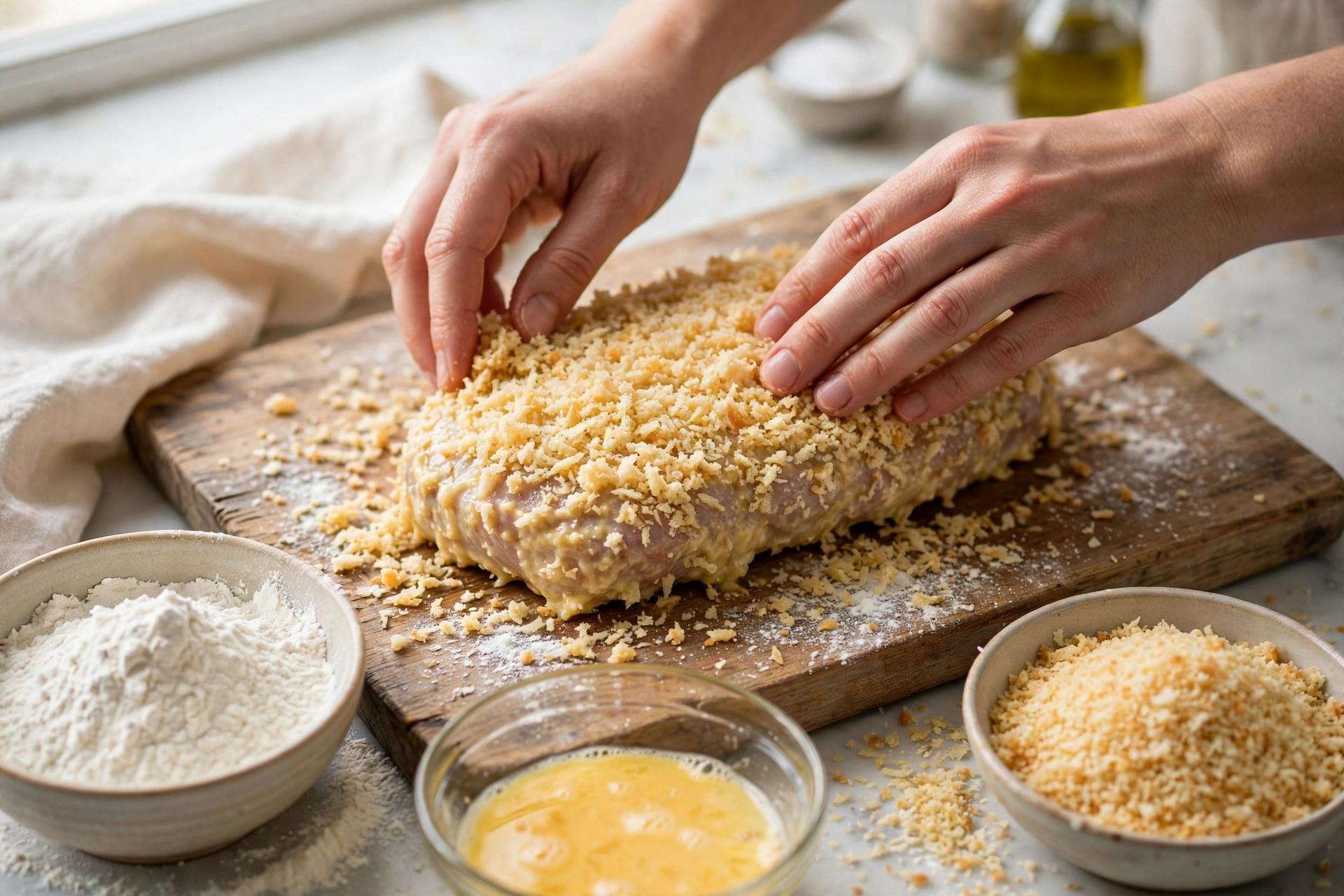
Put the flour in one shallow bowl, the beaten eggs in a second, and the panko in a third. Line them up in that order, with a clean plate at the end for the coated cutlets. Keep one hand for the dry bowls and one for the wet egg — it sounds fussy, but it keeps your fingers from turning into breadcrumb clubs. Have a wire rack ready on a tray for the fried cutlets.
Step 3: Coat the Cutlets
Take one chop and press it into the flour, coating both sides, then shake off the extra. Dip it into the beaten egg, letting the surplus drip back into the bowl. Lay it in the panko and press the crumbs on firmly with your palm, turning it over and pressing again so the coating is thick and even. Set it on the clean plate and repeat with the rest. Let the coated cutlets rest for 5 minutes — the coating sets and sticks better in the fryer.
Step 4: Mix the Tonkatsu Sauce
While the cutlets rest, whisk the ketchup, Worcestershire sauce, soy sauce, mirin, sugar, and mustard, if using, in a small bowl until the sugar dissolves. Taste it: it should be tangy, a little sweet, and deeply savoury. Add a pinch more sugar if it is too sharp, or a drop more Worcestershire sauce if you want more tang. Set the bowl aside — the sauce is served at the table, not cooked.
Step 5: Heat the Oil
Pour the oil into a deep, wide pan until it is about 3 cm deep. Heat it over medium-high heat to 170°C. If you do not have a thermometer, drop in a single panko crumb: it should sizzle at once and turn golden in about 30 seconds. Oil that is too cool makes a greasy crust, and oil that is too hot burns the crumbs before the pork cooks through. Take a moment to get it right.
Step 6: Fry the Cutlets
Lower two cutlets into the oil carefully, away from you, so the oil does not splash. Fry for 3 to 4 minutes on the first side without moving them, until the crust is deep gold. Turn them once with tongs and fry for 3 more minutes. The crust should be an even, rich gold and the pork should feel firm but springy. Lift the cutlets out and drain them on the wire rack, not on kitchen paper, which traps steam and softens the crust.
Step 7: Rest and Slice
Let the cutlets rest on the rack for 3 minutes. This short rest lets the juices settle back into the meat and the crust set crisp. Slice each cutlet across into strips about 2 cm wide, using a sharp knife and a gentle sawing motion so you do not drag the crust off. You will hear the crunch as you cut — that is the sound of a good tonkatsu. Fry the remaining cutlets the same way while the first batch rests.
Step 8: Plate and Serve
Arrange the sliced cutlets on plates, slightly overlapping, with the cut side facing up so the juicy pork shows. Pile the shredded cabbage beside the pork, add a lemon wedge, and spoon rice into a small bowl. Drizzle tonkatsu sauce over the cutlets at the table, or serve it in a small dish for dipping. Sprinkle with sesame seeds and spring onions if you like, and serve at once while the crust is at its crispiest.
Tips for Perfect Results
Keep the oil at the right temperature. This is the single biggest factor in a good tonkatsu. If the oil drops below 160°C, the crumbs soak up oil and turn heavy. If it climbs past 180°C, the crust darkens before the pork is done. Fry in batches of two, let the oil come back up to temperature between batches, and use a thermometer if you have one. It takes the guesswork out completely.
Press the panko on firmly. A loose coating falls off in the oil and leaves bald patches on the pork. Use your palm to press the crumbs into the egg layer on both sides, and give the cutlet a gentle shake — only loose crumbs should fall away. The resting time before frying also helps the coating bond, so do not rush the cutlets straight from the plate into the pan.
Rest the cutlets on a wire rack, never on a plate or paper towels. Steam is the enemy of crispness, and a flat surface traps it underneath the cutlet. A rack lets air flow all around, so the crust stays crunchy on both sides. The same rule applies to any fried food — a rack is a small investment that changes the result completely.
Slice with a sharp knife and a light touch. A dull knife tears the crust and drags it off the meat. Use a long, sharp blade and let the knife do the work with gentle strokes.
Serving and Storage
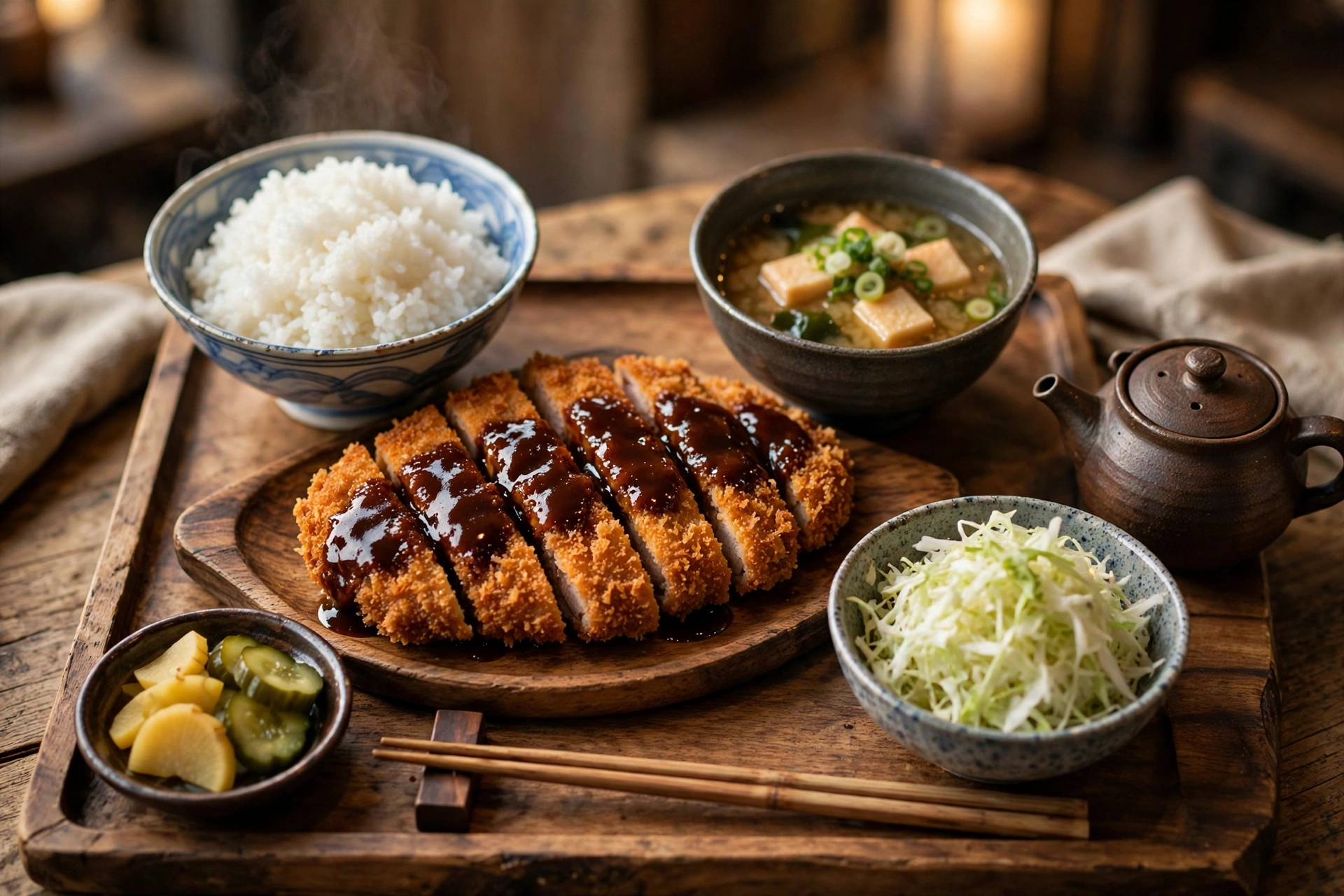
Tonkatsu is traditionally served as a set meal: the sliced cutlet, a mound of finely shredded cabbage with a little lemon, a bowl of steamed rice, and a bowl of miso soup. The cabbage is not just decoration — its cool crunch cuts through the richness of the fried pork, and a squeeze of lemon over it wakes everything up. A small dish of pickles on the side adds a sharp, salty note that works beautifully.
If you have leftovers, store the unsliced cutlets in the fridge for up to 2 days in a sealed container. Reheat them in a hot oven at 200°C for 8 to 10 minutes on a wire rack, which brings back much of the crunch. The microwave will make the crust soggy, so avoid it if you can.
You can also freeze uncooked, coated cutlets for up to a month. Freeze them flat on a tray, then wrap them well. Fry from frozen, adding 2 extra minutes per side and keeping the oil a touch cooler so the crust does not burn before the centre cooks. If you love Japanese comfort food, the Japanese Chicken Ramen (Rich Broth, Tender Noodles, Made from Scratch) is a natural next cook, and the Japanese Sushi Rolls for Beginners (Step by Step, No Experience Needed) is a fun project for a slower weekend.
Easy Variations
Try chicken katsu, the same method with boneless chicken thighs or breasts pounded to an even thickness. Chicken cooks a little faster — about 3 minutes a side — and the result is just as crisp. It is a great option if someone at the table does not eat pork, and the same sauce and cabbage work perfectly with it.
For a katsu curry, slice the tonkatsu and serve it over rice with a ladle of Japanese curry sauce made from curry roux blocks, onion, carrot, and potato. The mild, sweet curry and the crunchy cutlet are a classic pairing in Japan, and it turns a simple cutlet into a hearty one-bowl dinner. Add a soft fried egg on top if you want the full café-style plate.
Make a tonkatsu sandwich, or katsu sando, by tucking a whole unsliced cutlet into thick slices of soft white bread with shredded cabbage and plenty of tonkatsu sauce. Trim the crusts off the bread for the authentic look. It is a beloved convenience-store lunch in Japan, and it makes a brilliant packed lunch — just wrap it tightly and eat it within a few hours so the bread stays soft.
A lighter baked version is possible, though the crust will never be quite as shatteringly crisp as the fried one. Spray the coated cutlets generously with oil, bake at 220°C for 18 to 20 minutes on a wire rack, turning once halfway through. For another golden, crunchy classic from a different kitchen, the Crispy Fried Chicken (Golden, Juicy, and Extra Crunchy) uses a similar coating idea with a spiced buttermilk twist.
Frequently Asked Questions
What cut of pork is best for tonkatsu?
Boneless pork loin is the classic choice — it is lean but has enough fat at the edge to stay juicy. Pork fillet works too and is even more tender, though it cooks faster, so watch the time. Avoid very thin chops, which dry out, and avoid bone-in chops, which fry unevenly. About 2 cm thick is the sweet spot.
Can I use regular breadcrumbs instead of panko?
You can, but the result will be different. Regular breadcrumbs make a finer, denser crust that browns faster and feels heavier. Panko crumbs are larger and flakier, so they fry up light and stay crisp longer. Panko is easy to find in most supermarkets now, in the Asian food aisle, and it is worth buying for this recipe.
How do I know when the pork is cooked through?
A 2 cm loin chop needs about 3 to 4 minutes per side at 170°C. The crust should be deep gold and the meat should feel firm but springy when pressed. If you are unsure, cut one strip open — the pork should be white with clear juices and no pink in the centre. A meat thermometer should read 63°C in the thickest part after resting.
Why did my coating fall off in the oil?
The usual cause is a wet surface or a loose coating. Pat the pork very dry before flouring, shake off extra flour, and press the panko on firmly with your palm. Let the coated cutlets rest for 5 minutes before frying, and do not move them around in the oil for the first minute — the crust needs time to set before you turn it.
Can I make tonkatsu ahead of time?
You can coat the cutlets up to a day ahead and keep them covered in the fridge. Fry them just before serving for the best crunch — tonkatsu is at its finest in the first ten minutes out of the oil. If you must fry ahead, keep the cutlets on a wire rack in a warm oven for no more than 20 minutes, and slice only when you are ready to plate.
Final Thoughts
Tonkatsu proves that a simple idea, done properly, can be extraordinary. There is no long list of exotic ingredients here, no technique that takes years to learn — just good pork, a proper coating, hot oil, and a little patience. When the crust crackles under the knife and the pork inside is juicy and pink-free, you will understand why this dish has its own restaurants in Japan.
Make it once for a quiet dinner and you will find yourself making it again for friends, for a katsu curry night, or tucked into a sandwich for lunch the next day. It is the kind of recipe that becomes a habit, not a one-off. Fry it hot, rest it well, slice it generously, and serve it while the crust is still singing. That is tonkatsu at its best.