
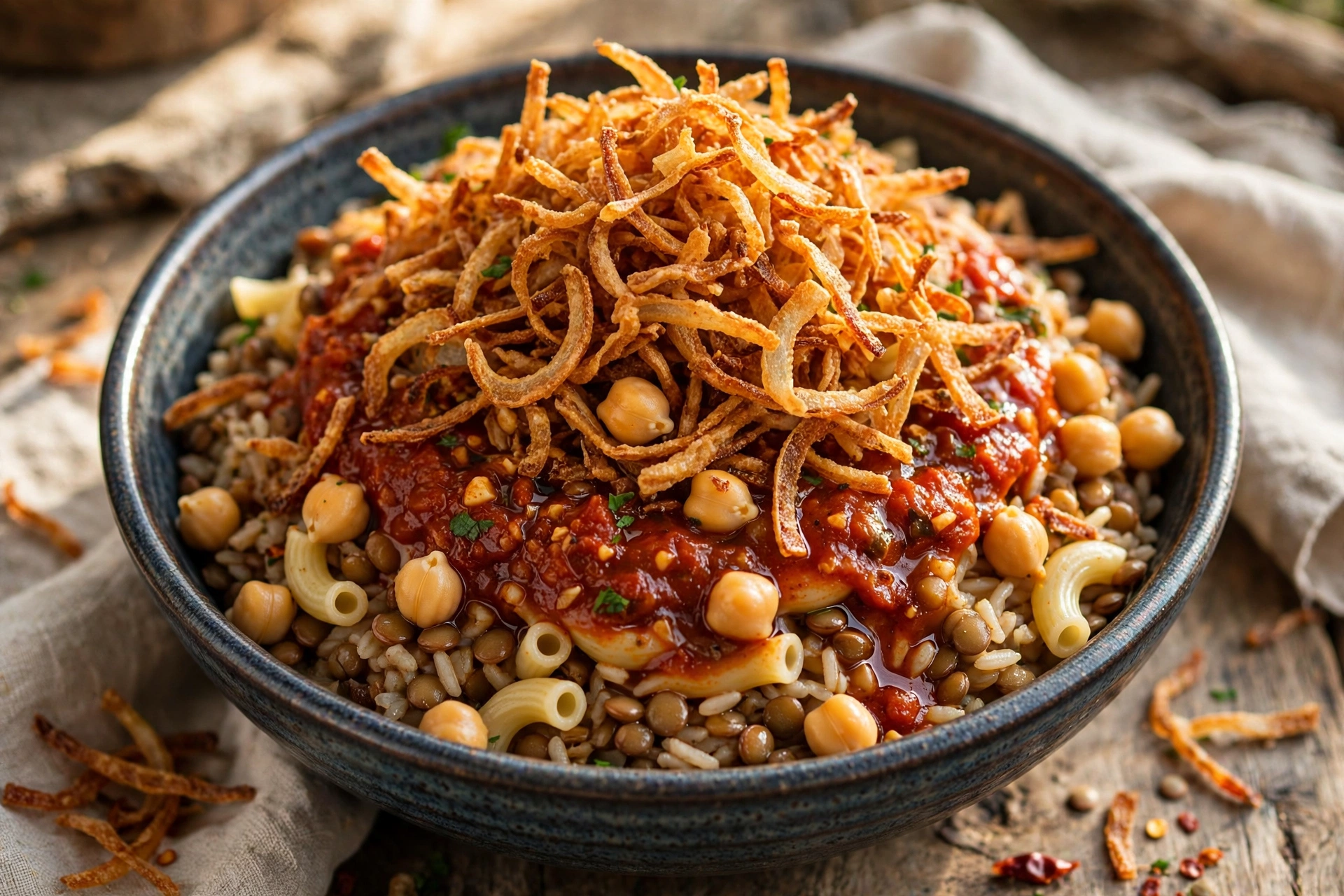
Egyptian Koshari (Hearty, Spiced, and Full of Texture) is the ultimate comfort food, and it is unlike anything else you have ever eaten. It is a pile of rice, lentils, and pasta, topped with chickpeas, a spiced tomato sauce, crispy fried onions, and a splash of garlicky chilli vinegar. It sounds like a strange combination, and it is, but somehow it works perfectly. Every spoonful has something different going on: soft, crunchy, spicy, sour, and savoury all at once.
I first tried koshari in Cairo, at a crowded restaurant where the waiter did not ask what I wanted. He just brought a bowl. It arrived in layers, the rice and lentils at the bottom, the pasta on top, the sauce spooned over, and a mountain of golden onions on top of everything. I took one bite and understood why Egyptians love this dish so much. It is cheap, it is filling, and it is completely delicious.
Koshari is a dish of layers, and each layer is simple on its own. The magic is in putting them together. The rice and lentils give you comfort, the pasta adds bulk, the tomato sauce adds warmth and spice, the chickpeas add bite, and the crispy onions add crunch and sweetness. The chilli vinegar ties it all together with a sharp, garlicky kick. It takes a bit of juggling to cook all the parts, but none of them is hard.
Ingredients
For the Base
- 1 cup basmati or long-grain rice, rinsed
- 1 cup brown or green lentils, rinsed
- 1 cup small pasta (ditalini or small macaroni)
- 1 tin (400 g) chickpeas, drained and rinsed
- 1 teaspoon cumin seeds
- 1 teaspoon salt, plus more to taste
For the Tomato Sauce
- 2 tablespoons olive oil
- 1 onion, finely chopped
- 4 garlic cloves, minced
- 1 tin (400 g) chopped tomatoes
- 1 tablespoon tomato paste
- 1 teaspoon ground cumin
- 1/2 teaspoon ground coriander
- 1/2 teaspoon chilli flakes
- 1 teaspoon white vinegar
- 1/2 teaspoon sugar
- Salt and pepper, to taste
For the Crispy Onions and Chilli Vinegar
- 3 large onions, sliced into thin rings
- 1/2 cup flour
- Vegetable oil, for frying
- 1/2 cup white vinegar
- 3 garlic cloves, minced
- 1 teaspoon chilli flakes
- 1/2 teaspoon ground cumin
The pasta might seem like the odd ingredient, but it is essential to koshari. Small pasta shapes like ditalini or macaroni are traditional, and they add a soft, comforting texture that makes the dish feel complete. Do not use spaghetti or large shapes. The pasta should be small enough to mix easily with the rice and lentils in every spoonful.
The crispy onions are the star of the show, so take your time with them. Slice the onions into thin, even rings, toss them in flour, and fry them in hot oil until they turn deep golden brown. They should be crisp, not soggy, and they should taste sweet and caramelised. Make more than you think you need, because everyone will want extra on top.
Step-by-Step Method
Step 1: Cook the Lentils
Put the rinsed lentils in a pan with plenty of water and a pinch of salt. Bring to a boil, then turn the heat down and simmer for 20 to 25 minutes until the lentils are tender but still hold their shape. Drain them and set them aside. Do not overcook them, because mushy lentils will disappear into the rice. You want them soft but distinct.
Step 2: Cook the Rice
While the lentils cook, put the rinsed rice in a pan with 1 1/2 cups of water and a pinch of salt. Bring to a boil, then turn the heat to the lowest setting, put the lid on, and cook for 12 to 15 minutes until the water is absorbed and the rice is tender. Take it off the heat and leave it covered for 10 minutes, then fluff it with a fork. Stir in the cumin seeds, toasted in a dry pan for a minute until fragrant.
Step 3: Cook the Pasta
Boil the pasta in a large pan of salted water until just tender, about 7 to 8 minutes. Drain it and toss it with a little olive oil so it does not stick together. Set it aside. The pasta should be cooked but still have a little bite, because it will soften slightly when the hot sauce goes over the top.
Step 4: Make the Tomato Sauce
Heat the olive oil in a pan over medium heat. Cook the chopped onion for 5 minutes until soft and golden. Add the garlic and cook for 1 minute more. Stir in the tomato paste and cook for another minute until it darkens. Add the chopped tomatoes, cumin, coriander, chilli flakes, vinegar, and sugar. Simmer for 15 minutes until the sauce thickens and turns a deep red. Season with salt and pepper. The sauce should be rich and slightly spicy, not thin or watery.
Step 5: Fry the Crispy Onions
Heat about 2 cm of vegetable oil in a deep frying pan over medium-high heat. Toss the onion rings in flour, shaking off the excess. Fry them in batches for 3 to 4 minutes per batch, until they turn deep golden brown and crisp. Lift them out with a slotted spoon and drain them on kitchen paper. Sprinkle with a little salt while they are hot. The onions should be crunchy, not soft, and they will crisp up more as they cool.
Step 6: Make the Chilli Vinegar
Put the vinegar, minced garlic, chilli flakes, and cumin in a small pan. Warm it gently over low heat for 2 to 3 minutes, just until it is hot. Do not boil it. Take it off the heat and let it cool. This sharp, garlicky vinegar is the secret weapon of koshari. A spoonful over the top wakes up the whole bowl. Serve it on the side so people can add as much as they like.
Step 7: Assemble the Koshari
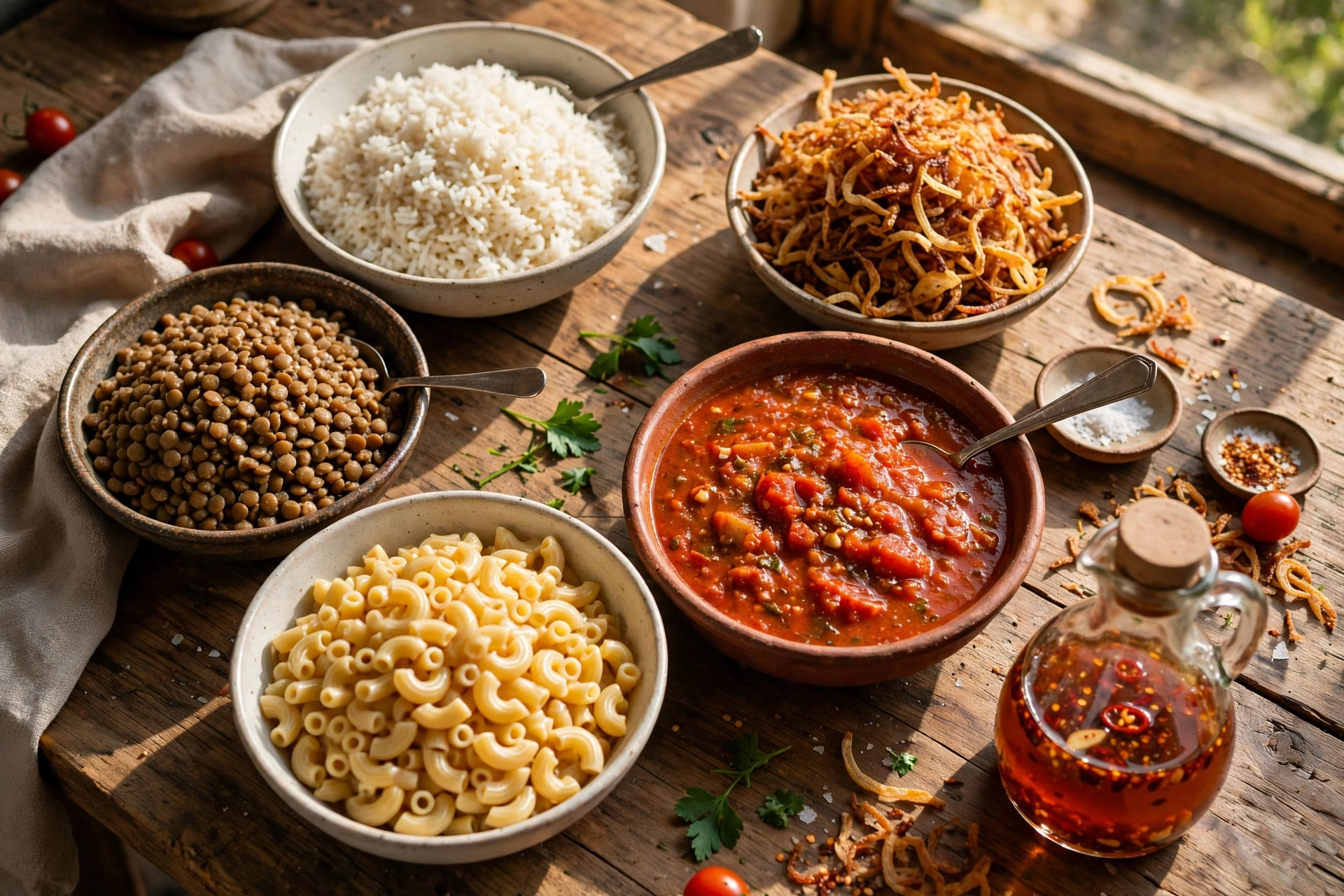
Warm the chickpeas in a pan with a little olive oil and a pinch of cumin. To assemble, spoon a layer of rice into each bowl, then a layer of lentils, then a layer of pasta. Top with a generous spoonful of chickpeas, a ladle of tomato sauce, and a big pile of crispy onions. Serve the chilli vinegar on the side. Let everyone add as much sauce, onions, and vinegar as they like.

Tips for Perfect Results
Cook each layer separately and keep them warm. It is tempting to cook everything in one pot to save washing up, but koshari works because each layer keeps its own texture. The rice should be fluffy, the lentils should be tender but distinct, and the pasta should have a little bite. If you cook them together, they turn into a mushy porridge. Use separate pans and combine them only in the bowl.
The crispy onions need hot oil and small batches. If you crowd the pan, the onions steam instead of frying and turn soggy. Fry them in batches, and do not walk away, because they go from golden to burnt in seconds. Drain them well on kitchen paper and let them cool before you pile them on top, because they crisp up as they cool.
Season each layer. The rice, the lentils, and the pasta all need their own salt, because the tomato sauce alone cannot season the whole bowl. Taste each part as you cook it. A well-seasoned base makes the difference between a good koshari and a great one. The chickpeas need salt too, so warm them with a pinch of cumin and salt.
Do not skip the chilli vinegar. It might seem like a small thing, but it is what makes koshari special. The sharp, garlicky vinegar cuts through the richness of the starches and wakes up the whole bowl. Serve it on the side in a small jug, and let people add as much as they like. Some people want a spoonful, others want a flood.
Make the tomato sauce properly. It should be thick, rich, and well spiced, not thin and watery. Simmer it for the full 15 minutes, and let it reduce until it coats a spoon. The sauce is the glue that holds the whole dish together, so it needs to be bold. If it tastes flat, add a pinch more salt, a little more vinegar, or an extra pinch of chilli flakes.
Serving and Storage
Koshari is a meal in itself, and it does not need much else. Serve it in deep bowls, family-style, with the chilli vinegar on the side and extra crispy onions in a bowl on the table. A simple salad of tomatoes and cucumber with lemon juice makes a fresh contrast. A cold drink is essential, because the dish is hearty and the vinegar is sharp.
For a crowd, set up a koshari bar. Put the rice, lentils, pasta, chickpeas, sauce, and onions out in separate bowls and let everyone build their own. It is fun, it is interactive, and it feeds a lot of people for very little money. This is how koshari is often served in Egypt, where it is the ultimate cheap, filling street food.
Leftovers keep in the fridge for up to 3 days, but store the layers separately if you can. The rice, lentils, and pasta reheat well in the microwave or in a pan with a splash of water. The crispy onions will go soft in the fridge, so reheat them in a hot oven for a few minutes to crisp them up again, or fry a fresh batch. The tomato sauce and chilli vinegar keep well and can be reheated gently.
For longer storage, freeze the rice, lentils, and tomato sauce separately for up to 2 months. Thaw overnight in the fridge and reheat gently. Cook fresh pasta and onions when you serve it again. If you enjoy the hearty, layered comfort of this dish, the Authentic Pakistani Chicken Biryani (Fragrant, Spicy, and Made for Sharing) is another layered rice dish worth trying, and the Nigerian Jollof Rice with Chicken (Smoky, Spicy, and Full of Flavour) shares the same generous, satisfying spirit.
Easy Variations
For a quicker version, use tinned lentils and tinned chickpeas, and cook the rice and pasta in the same pot. It will not be quite the same as the traditional version, but it is ready in half the time and still tastes wonderful. The crispy onions and tomato sauce are the parts you should never skip, because they make the dish.
You can add other vegetables to the mix. Roasted aubergine, sautéed spinach, or fried cauliflower all work well layered into the bowl. A spoonful of yoghurt on top adds a cool, creamy contrast. For extra protein, add a fried egg on top, or serve the koshari with grilled chicken on the side.
For a spicier version, increase the chilli flakes in the tomato sauce and add a chopped fresh chilli to the vinegar. For a milder version, leave the chilli out of the sauce and serve the vinegar on the side so people can choose their own heat. The dish is flexible, so adjust it to your taste.
You can also make koshari with different grains. Brown rice, quinoa, or bulgur wheat all work well instead of white rice. The texture will be slightly different, but the spirit of the dish stays the same. And if you like the crispy onion topping here, the Middle Eastern Falafel (Crispy, Golden, and Made with Chickpeas) is another dish where crispy, golden food takes centre stage.
Frequently Asked Questions
What is koshari, and where does it come from?
Koshari is the national dish of Egypt, a layered bowl of rice, lentils, pasta, and chickpeas, topped with tomato sauce, crispy onions, and chilli vinegar. It is street food, sold from carts and small restaurants all over Egypt, and it is beloved for being cheap, filling, and delicious. It has roots in Indian and Italian cooking, brought to Egypt in the 19th century.
Can I make koshari vegan?
Yes, koshari is naturally vegan. The rice, lentils, pasta, chickpeas, tomato sauce, and onions are all plant-based. Just make sure the oil you use for frying the onions is vegetable oil, not butter or ghee. It is one of the most satisfying vegan meals you can make.
Why is my koshari bland?
Bland koshari usually means the layers were not seasoned separately. Each layer needs its own salt, and the tomato sauce needs to be bold and well spiced. Make sure you add enough salt to the rice, lentils, and pasta as you cook them, and do not forget the chilli vinegar, which adds the sharp kick that ties everything together.
Can I use tinned lentils and chickpeas?
Yes, tinned lentils and chickpeas save time and work well. Drain and rinse them, then warm them gently before assembling the bowl. Dried lentils give you a slightly better texture, but tinned ones are perfectly fine for a weeknight version. The crispy onions and tomato sauce are the parts that matter most.
How do I keep the onions crispy?
Fry them in small batches in hot oil, drain them well on kitchen paper, and let them cool completely before you store them. Keep them in an airtight container at room temperature, not in the fridge, where they will go soft. If they do soften, reheat them in a hot oven for a few minutes to crisp them up again.
Final Thoughts
Koshari is a dish that should not work, and yet it works beautifully. Rice, lentils, pasta, chickpeas, sauce, onions, and vinegar, all in one bowl, all doing their own thing, and somehow adding up to something greater than the sum of its parts. It is cheap, it is filling, it is vegan, and it is completely delicious. It is a reminder that great food does not have to be expensive or complicated.
Make it when you want a hearty, comforting meal that feeds a crowd for very little money. And if you enjoy the layered, generous spirit of this dish, the Authentic Pakistani Chicken Biryani (Fragrant, Spicy, and Made for Sharing) is a natural next cook, and the Nigerian Jollof Rice with Chicken (Smoky, Spicy, and Full of Flavour) shares the same big, satisfying energy.