
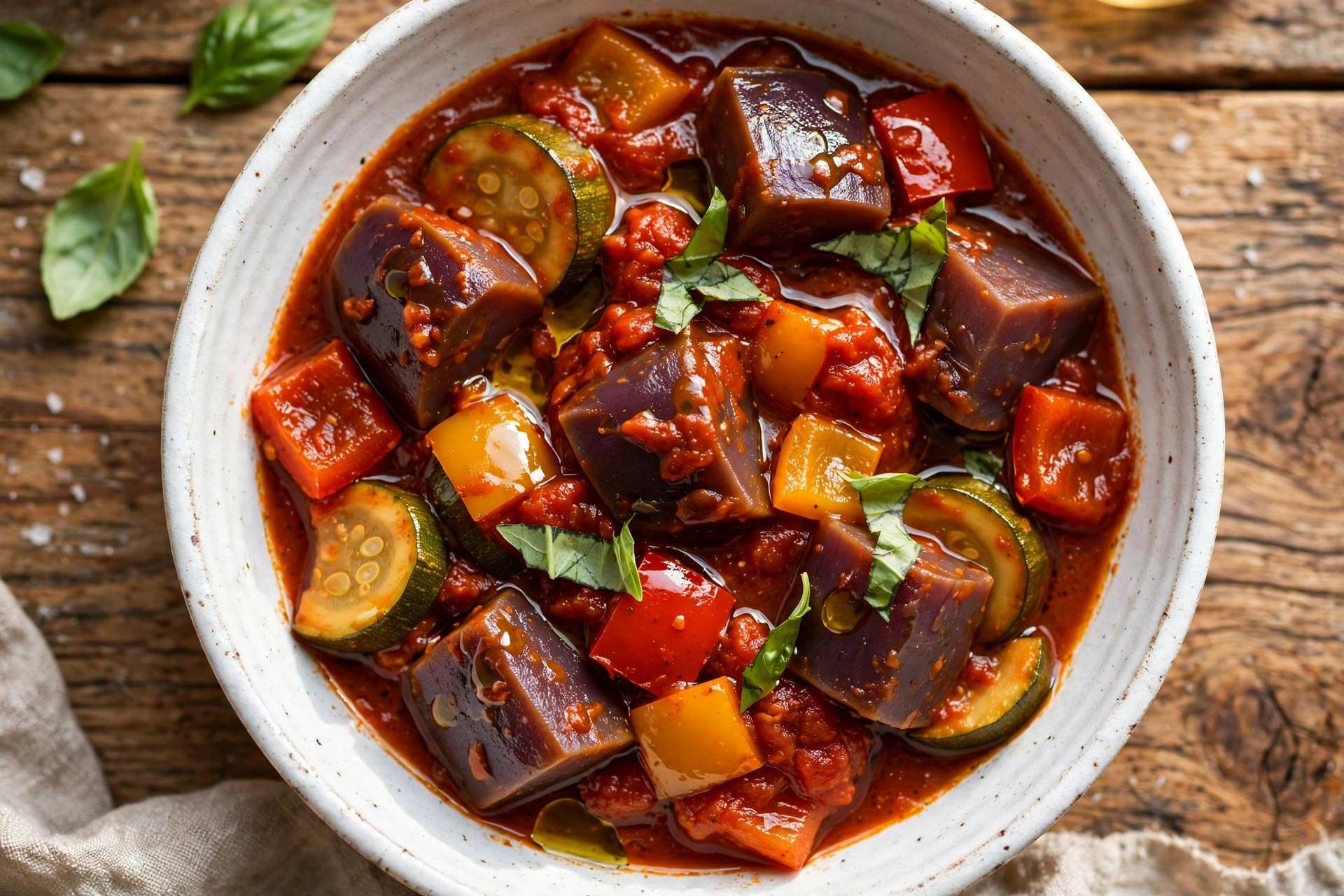
French Ratatouille (Colourful, Comforting, and Easy) is the dish I turn to when the market stalls are piled high with aubergines, courgettes, and tomatoes, and I want dinner to taste like a long summer evening in the south of France. It is a humble vegetable stew, nothing fancy, but it has a way of making a plain weeknight feel special. The vegetables soften into each other, the garlic and herbs fill the kitchen, and by the time it reaches the table, it smells like sunshine.
I first learned to make ratatouille from a neighbour who had spent a summer in Provence and came home obsessed with the dish. She told me the secret was patience, not skill. You cook the vegetables in stages, let each one get properly golden before the next goes in, and then let the whole pot simmer until the flavours melt together. That advice has never failed me. A rushed ratatouille tastes like boiled vegetables. A slow one tastes like a restaurant dish.
What I love most about this recipe is how forgiving it is. You can serve it hot as a main with crusty bread, spoon it over rice or pasta, or eat it cold the next day straight from the fridge, when it somehow tastes even better. It is naturally vegan, it uses up a glut of summer vegetables, and it freezes beautifully. If you have never cooked French food before, this is a wonderful place to start.
Ingredients
For the Vegetables
- 2 medium aubergines (about 500 g), cut into 2 cm cubes
- 2 medium courgettes, cut into 2 cm half-moons
- 1 red pepper, deseeded and cut into chunks
- 1 yellow pepper, deseeded and cut into chunks
- 1 large onion, finely chopped
- 4 large ripe tomatoes, chopped, or 1 tin (400 g) chopped tomatoes
- 4 garlic cloves, thinly sliced
For Cooking and Seasoning
- 6 tablespoons olive oil, plus extra for drizzling
- 1 teaspoon sea salt, plus more to taste
- 1/2 teaspoon black pepper
- 1 teaspoon dried thyme
- 1 bay leaf
- 1 tablespoon tomato paste
- A small handful of fresh basil leaves, torn
- A small handful of fresh parsley, chopped
The quality of the vegetables matters more here than in almost any other stew, because there is nothing to hide behind. Pick aubergines that feel heavy for their size with smooth, shiny skin. Courgettes should be firm and small rather than huge and watery. And if you can get ripe, sweet tomatoes in summer, use them. Out of season, a good tin of chopped tomatoes gives you a better result than pale, flavourless fresh ones.
Good olive oil is worth using too. You need a fair amount of it, and it carries the flavour of the herbs and garlic through the whole dish. A fruity extra virgin oil is ideal. If you only have regular olive oil, that works fine, just save the fancy bottle for drizzling at the end.
Step-by-Step Method
Step 1: Salt the Aubergines
Put the aubergine cubes in a colander, sprinkle them with a teaspoon of salt, and toss them well. Leave them for 20 to 30 minutes. You will see beads of moisture appear on the surface. This step draws out some of the bitter liquid and helps the aubergine fry up golden instead of soaking up oil like a sponge. Rinse the cubes quickly under cold water and pat them very dry with a clean tea towel or kitchen paper.
Step 2: Fry the Aubergines
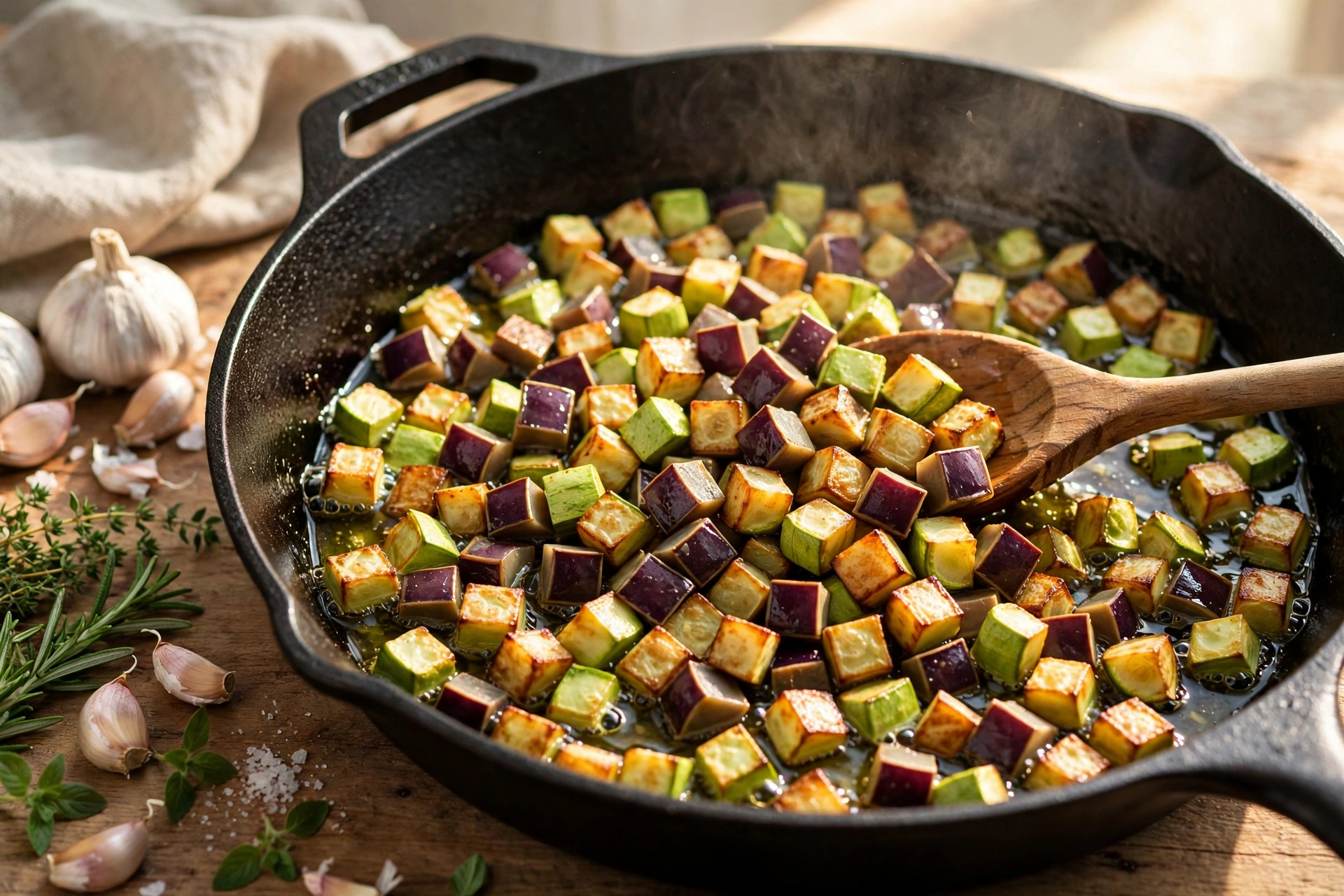
Heat 3 tablespoons of olive oil in a large, heavy pot or deep frying pan over medium-high heat. Add the aubergine cubes in a single layer. Do not crowd the pan, because crowded aubergine steams instead of frying. Cook for 5 to 7 minutes, turning the cubes now and then, until they are golden brown on most sides and soft in the middle. Lift them out with a slotted spoon and set them aside on a plate.
Step 3: Cook the Courgettes and Peppers
Add another tablespoon of oil to the same pot. Fry the courgettes for about 4 minutes until they pick up a little colour at the edges. They should still have some bite. Remove them to the plate with the aubergine. Add the peppers and cook for 3 to 4 minutes until they soften slightly and the skins begin to blister in places. Set them aside with the other vegetables.
Step 4: Build the Base
Lower the heat to medium and add the last of the oil. Cook the onion gently for 5 minutes until it turns soft and sweet. Stir in the garlic and cook for 1 minute more, just until you can smell it. Garlic burns fast, so keep the pan moving. Stir in the tomato paste and cook it for another minute. It will darken a shade and smell rich and caramelised, and that little bit of cooking takes away any raw, tinny taste.
Step 5: Add the Tomatoes and Herbs
Tip the chopped tomatoes into the pot, along with the thyme and the bay leaf. Season with salt and pepper. Let the sauce bubble gently for 5 minutes so the tomatoes break down and the flavours start to come together. If you are using fresh tomatoes, they should collapse into a loose sauce. If you are using tinned, the sauce will look thicker and glossier.
Step 6: Combine Everything and Simmer
Return all the fried vegetables to the pot and stir them gently into the sauce. Turn the heat down low, put the lid on, and let the ratatouille simmer for 25 to 30 minutes. Stir it now and then, but gently, so you do not mash the vegetables into mush. The dish is ready when the vegetables are completely tender and the sauce has thickened and turned a deep, rich red. Taste it and adjust the salt and pepper.
Step 7: Rest and Finish with Herbs
Take the pot off the heat, fish out the bay leaf, and stir in the torn basil and chopped parsley. Leave the ratatouille to rest for 10 minutes before serving. This rest matters more than people think. The vegetables settle, the sauce thickens a little more, and the herbs release their scent into the steam. Drizzle with a little extra olive oil at the table.
Tips for Perfect Results
The single biggest mistake with ratatouille is throwing everything into the pot at once. The vegetables cook at different speeds, and if they all go in together, the courgettes turn to mush while the aubergine is still firm. Cooking them in stages takes a little more time, but it is the difference between a good ratatouille and a great one. Each vegetable keeps its own shape and texture, and you can actually taste them all.
Do not skimp on the oil. Ratatouille is not a low-fat dish, and it was never meant to be. The olive oil is part of the flavour, not just a cooking medium. If you use too little, the vegetables stick, the garlic burns, and the sauce tastes thin. Use the amount in the recipe and you will be rewarded with a silky, glossy stew.
Cut the vegetables into similar-sized pieces so they cook evenly. Big chunks of aubergine next to tiny slivers of courgette will never finish at the same time. Aim for pieces around 2 cm, and take a minute to cut them properly. It is boring prep work, but it pays off in the pot.
Let the finished dish rest before you serve it. Ratatouille is one of those dishes that improves as it sits, and it is genuinely better the next day. If you have the time, make it in the morning and reheat it gently for dinner. The flavours deepen, the sauce thickens, and the whole thing tastes more settled and rich.
Taste at the end and be bold with the seasoning. A pinch more salt or a squeeze of lemon juice can wake the whole pot up. Tomatoes vary a lot in sweetness, so a tiny pinch of sugar can help if your tomatoes are sharp. Trust your tongue over the recipe at this stage.
Serving and Storage
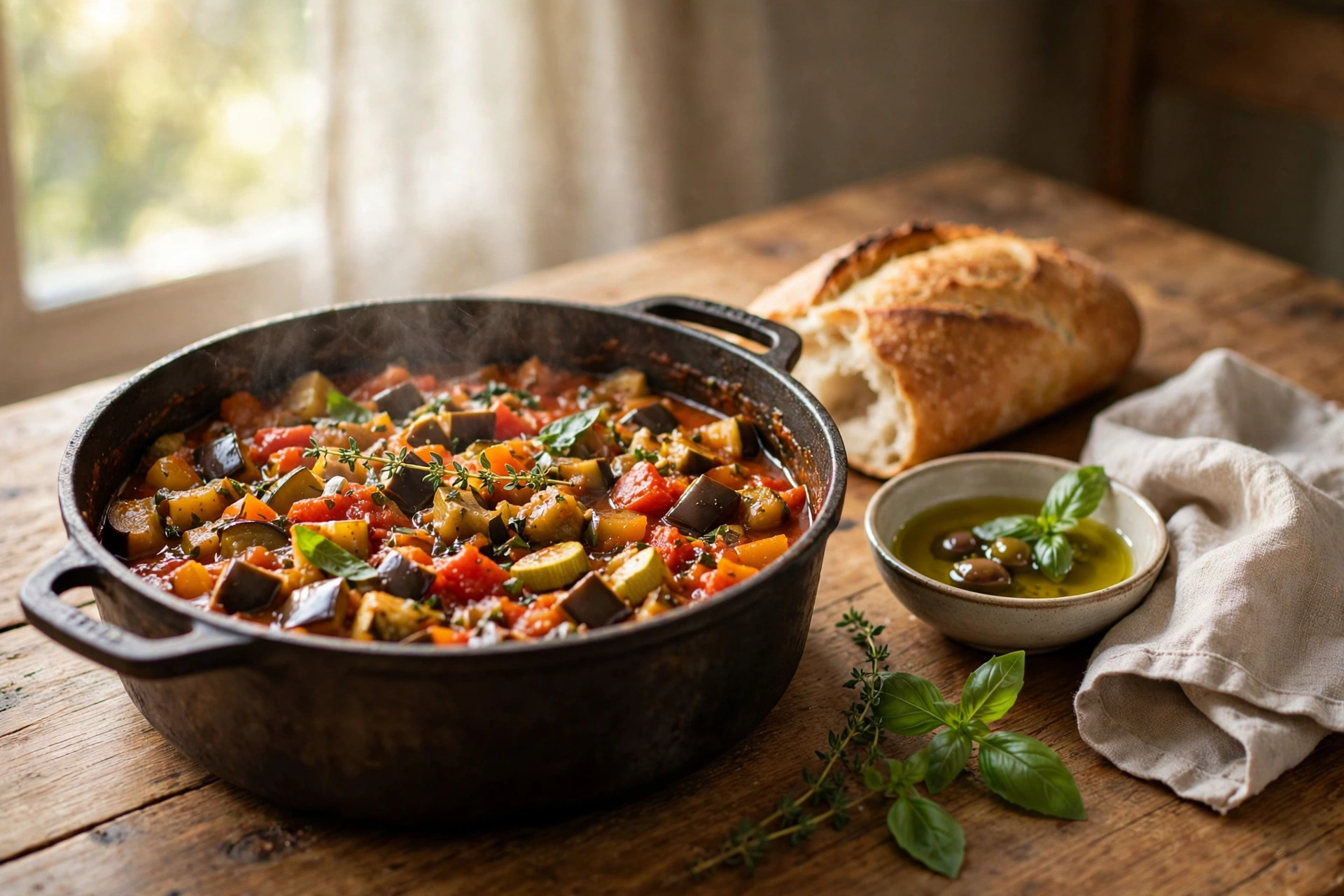
Ratatouille is wonderfully flexible at the table. Serve it hot as a main course with a loaf of crusty bread to mop up the sauce, or spoon it over rice, polenta, or mashed potatoes for a heartier meal. It is also lovely as a side dish next to grilled chicken or fish. For a light lunch, pile it onto toasted sourdough with a crumbling of goat cheese on top.
Leftovers keep in the fridge for up to 4 days in a sealed container, and the flavour actually gets better on day two. Reheat it gently in a pan over low heat with a splash of water or olive oil. You can also eat it cold or at room temperature, spooned over salad leaves, which is how it is often served in the south of France.
For longer storage, ratatouille freezes well for up to 3 months. Let it cool completely, portion it into freezer containers, and label them. Thaw it overnight in the fridge and reheat gently. The vegetables soften a little more after freezing, but the flavour stays wonderful. It makes an excellent emergency dinner to have on hand.
If you are serving it to guests, a simple garnish makes it look restaurant-worthy. A swirl of olive oil, a scattering of fresh basil, and a wedge of good bread on the side is all it needs. For a richer plate, add a dollop of soft goat cheese or a fried egg on top. For a lighter summer table, the Traditional Greek Moussaka (Layers of Eggplant, Meat, and Creamy Béchamel) shares the same love of aubergine and slow cooking, if you want another Mediterranean classic to try.
Easy Variations
Once you know the basic method, ratatouille is easy to make your own. Add a tin of chickpeas in the last 10 minutes of cooking for extra protein and a heartier stew. Stir in a handful of green olives and a few capers for a salty, briny twist that works beautifully with the sweet peppers.
For a smoky version, use smoked paprika instead of plain thyme, and roast the peppers over a flame before you peel them. The smoke adds a whole new layer of flavour and makes the dish taste like it came off a grill. A pinch of chilli flakes gives it a gentle warmth without turning it spicy.
You can also bake it as a layered dish in the style of the famous film version. Slice the vegetables into thin rounds, arrange them in overlapping rows over the tomato sauce in a baking dish, and bake covered at 190°C for 45 minutes. It looks stunning on the table and tastes just as good, though it takes more time to assemble.
In winter, when fresh tomatoes are out of season, use a tin of whole plum tomatoes and crush them with your hands. Add a diced potato or a handful of butter beans to make it more filling. The spirit of ratatouille is using what you have, so do not be afraid to swap vegetables around. Sweet potatoes, mushrooms, and butternut squash all work well in the mix.
Frequently Asked Questions
Do I need to peel the aubergines for ratatouille?
No, leave the skin on. It holds the cubes together while they fry and adds colour and texture to the finished dish. The skin softens during the long simmer, so it is never tough. Just make sure you salt the cubes first, which keeps them from tasting bitter.
Can I make ratatouille in advance?
Yes, and you should. Ratatouille tastes better the next day, after the flavours have had time to settle together. Make it a day ahead, cool it, and store it in the fridge. Reheat it gently on the stove and finish with fresh herbs just before serving.
Why is my ratatouille watery?
Watery ratatouille usually means the vegetables were crowded in the pan and steamed instead of frying, or the sauce did not simmer long enough. Fry in batches, and let the finished pot simmer with the lid off for the last 10 minutes if the sauce looks thin. The sauce should coat the vegetables, not pool at the bottom.
What do you serve with ratatouille?
Crusty bread is the classic partner, along with rice, polenta, or pasta. It also works as a side dish with grilled meat or fish. For a filling vegetarian dinner, serve it over creamy polenta with a spoonful of soft cheese, or fold it into an omelette the next morning.
Is ratatouille the same as a vegetable stew?
It is a type of vegetable stew, but the method is what makes it special. The vegetables are cooked separately first, then combined and simmered slowly. That extra step keeps each vegetable distinct instead of turning everything into one soft mass, and it is what sets ratatouille apart from a simple mixed stew.
Final Thoughts
Ratatouille is proof that simple food, cooked with care, can be extraordinary. There is no expensive ingredient here, no tricky technique, just good vegetables, good oil, and a little patience. It is the kind of dish that makes a kitchen smell like summer and a table feel generous, even on an ordinary Tuesday.
Make it once and you will find yourself making it all summer, every time the vegetables look good. And when the weather turns, remember that it freezes well, so a pot made in August can still warm up a cold evening in November. For another slow-cooked comfort dish built on the same idea of patience, the Classic British Shepherd’s Pie (Hearty, Creamy, and Comforting) is a fine next cook, and if you are in the mood for a rich, layered pasta bake, the Classic Italian Lasagna with Meat Sauce (Cheesy, Hearty, and Baked to Perfection) will not disappoint.